



Parquetry Wood Commode
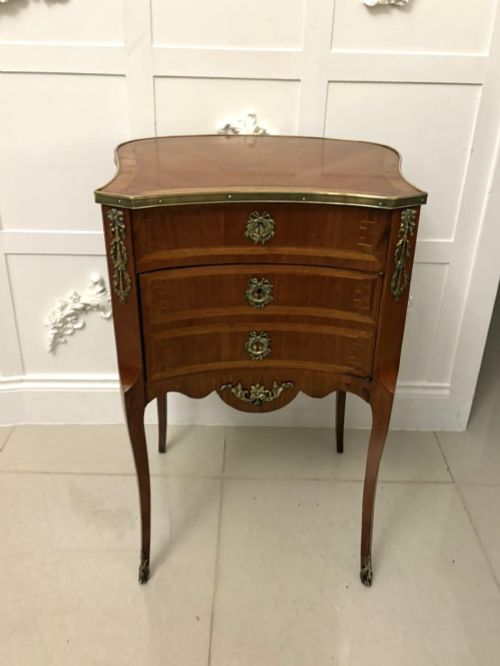
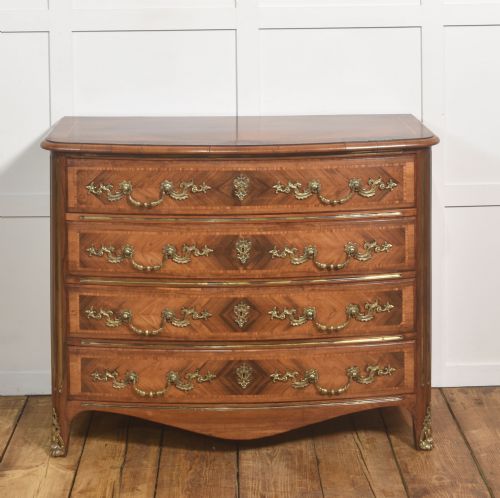
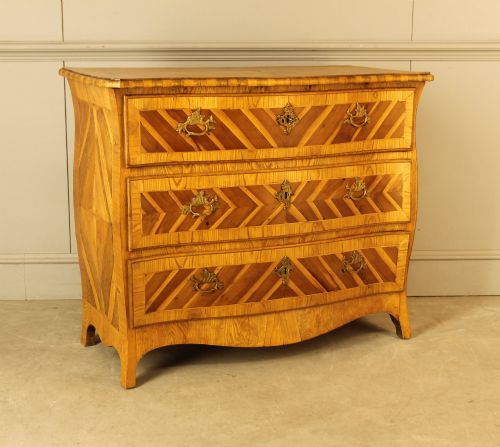
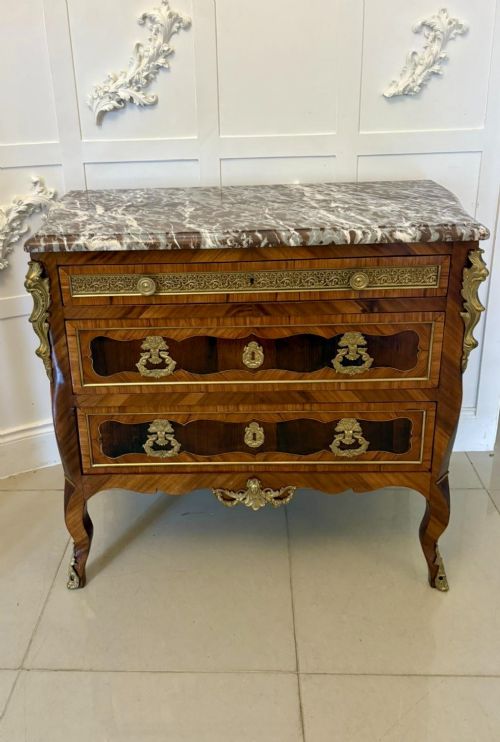
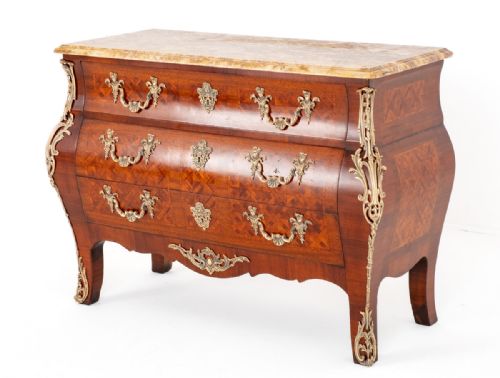
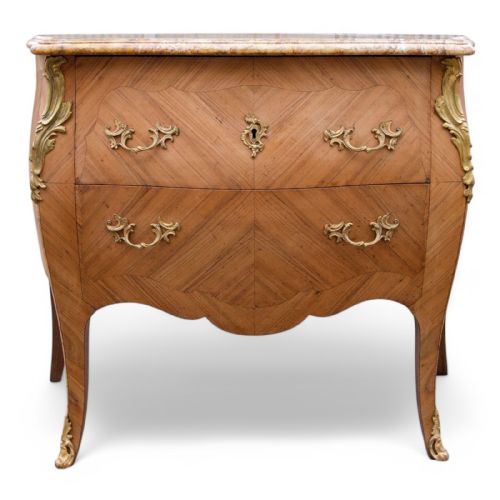
A parquetry wood commode brings geometric wooden floors into miniature upon the front of a serpentine storage chest.
Parquetry Wood Commode
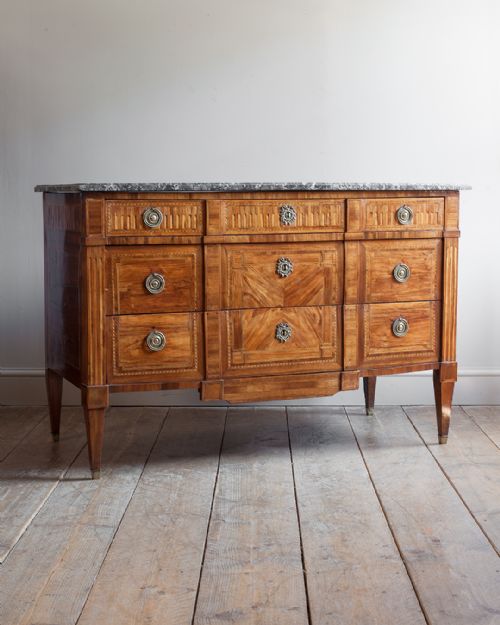
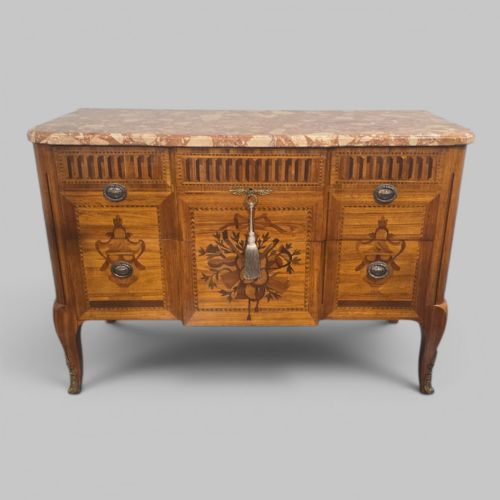
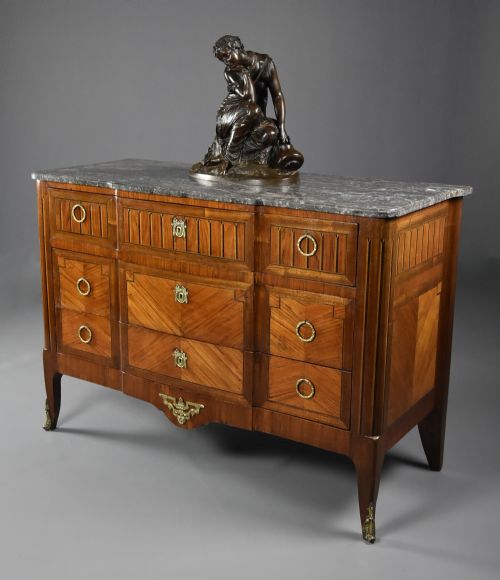
A parquetry wood commode serves primarily as a decorative chest of drawers or low storage cabinet, often topped with fitted marble. The pieces seen here span from the eighteenth century through the Victorian era and into the early twentieth century, with French Rococo and Louis styles dominating the forms.
Buyers meet serpentine fronts, bombe profiles, and straight breakfront designs alongside smaller bedside tables and side cabinets. Walnut, kingwood, tulipwood, and fruitwood form the primary carcases, frequently accented with brass or ormolu mounts.
Eighty percent of the selections lean towards French provenance, ranging from substantial eighteenth-century examples to later revival pieces from nineteen hundred. Italian workshops also contribute olive-wood and walnut iterations with distinct regional outlines.
Construction and materials
Cabinetmakers constructed these pieces by applying thin veneers of kingwood, tulipwood, and fruitwood onto a secondary carcase wood in precise geometric or marquetry patterns. This geometric tiling creates the characteristic parquetry surface effect seen across the drawer fronts and sides.
Gilt bronze and ormolu mounts frame the corners, drawer edges, and aprons, secured with heavy brass hardware. Polished marble slabs, including breche d'alep varieties, rest directly upon the timber tops of the nineteenth and twentieth-century examples.
One persistent eighteenth-century cabinetmaker ensured his geometric veneer patterns survived by hiding extra secret compartments behind the lower plinth.
Evaluating the standard of execution
Quality rests in the precision of the timber matching and the crispness of the bronze mounts rather than mere age. Superior examples display seamless grain transitions across geometric veneer panels that remain flat and stable.
Heavier hand-chased ormolu mounts and substantial, unwarped marble tops separate master-workshop output from standard commercial production. The articulation of drawer linings and secondary timbers reveals the underlying discipline of the maker.
Maison Millet·Edmond Poteau
The Parquetry Wood Commode Glossary
- Parquetry
- A mosaic of geometric wood veneers arranged to form decorative patterns across a furniture surface.
- Bombé
- A swelling, outward-curving chest profile that expands toward the base with pronounced convex lines.
- Ormolu
- Gilt bronze mounts applied to furniture edges, feet, and corners for both structural protection and decoration.
- Serpentine
- A front outline curving inward at the centre and outward at the ends in a continuous wave.
- Kingwood
- A dense, heavily figured tropical timber utilised extensively for decorative veneers on fine European cabinetry.
Parquetry Wood Commode: Frequently Asked Questions
What is a parquetry wood commode?
A parquetry wood commode is a decorative chest of drawers or low cabinet featuring geometric wood veneer patterns across its exterior. These pieces combine practical storage with elaborate cabinetwork.
Originating mostly from French and Italian workshops, they date from the eighteenth century to the early twentieth century and frequently incorporate marble tops.
How do I care for marble top commodes?
Marble surfaces require gentle cleaning with warm water and neutral soap to preserve the polish without eroding the calcium content. Avoid acidic liquids and abrasive cleaners entirely.
The underlying wood benefits from periodic application of specialist wax rather than modern silicone polishes.
How do I distinguish Louis XV from Louis XVI style?
Louis XV furniture relies on asymmetrical curves, cabriole legs, and flowing Rococo scrolls without rigid straight lines. The forms appear organic and undulating.
Louis XVI pieces introduce neoclassical symmetry, fluted straight legs, and geometric panel framing with crisp right angles.
Where should I place a serpentine commode?
A serpentine commode works well in hallways, reception rooms, or bedrooms where the curved front profile can catch angled light. The shaped outline demands adequate floor space to be fully visible.
Avoid placing these pieces in direct sunlight to protect sensitive kingwood and tulipwood veneers from fading.