






Parquetry Credenza
A parquetry credenza offers structured timber geometry and fitted marble surfaces that anchor a formal room with architectural poise.
Parquetry Credenza
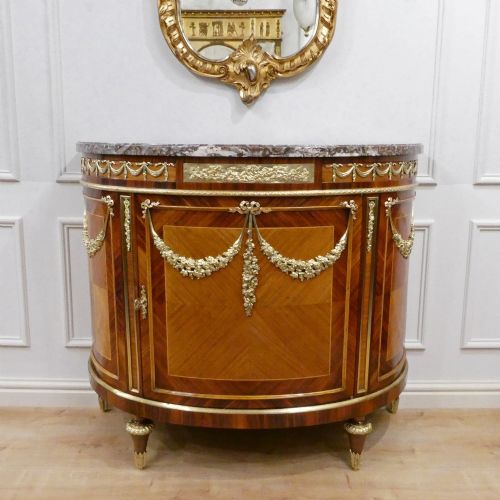
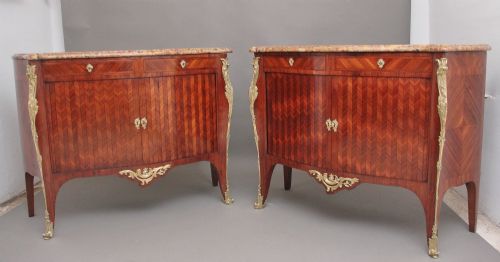
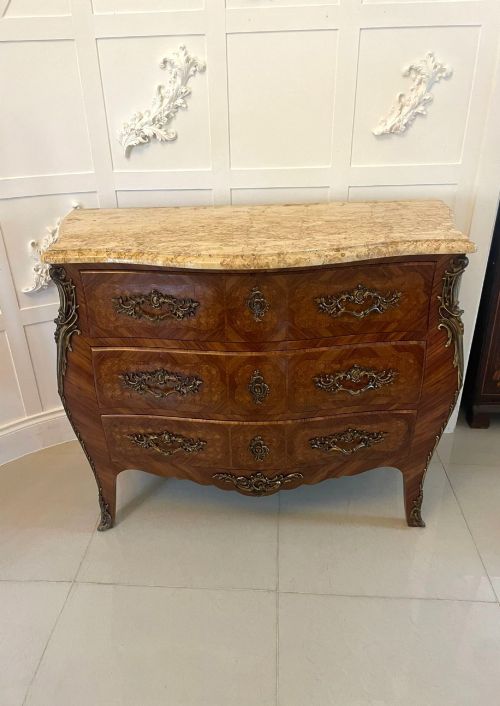
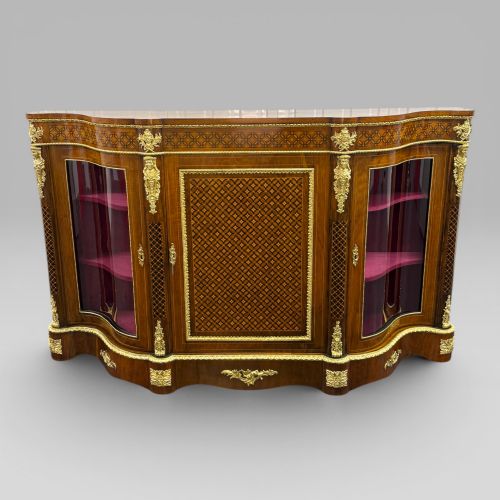
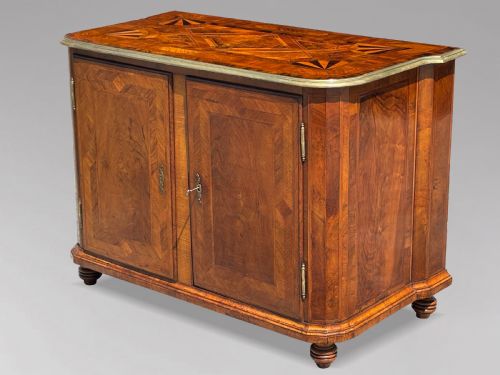
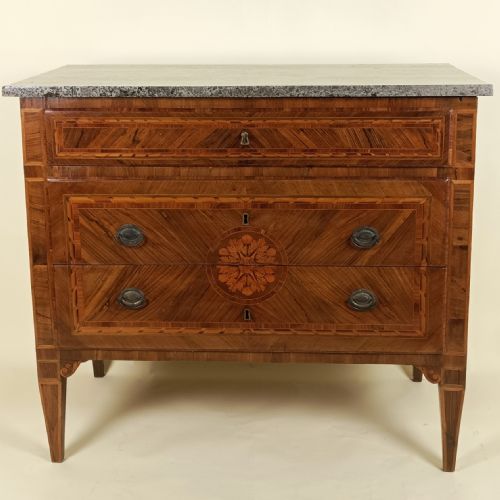
A parquetry credenza is a low-profile storage cabinet defined by geometric wood veneer patterns laid across its exterior surfaces. When searching this phrase, buyers encounter formal French and continental case pieces designed to hold display items or dining ware while adding surface presence.
The versions most commonly met on this page date from the nineteenth century, reflecting revival aesthetics such as Louis XVI and French Rococo styles. These pieces combine enclosed lower cupboards with heavy stone tops, serving as focal points within reception rooms.
The corpus spans sideboards, commodes, and specialised side cabinets alongside traditional credenzas. Each form shares a low, horizontal massing that accommodates decorative marble or timber tops.
Materials and Construction
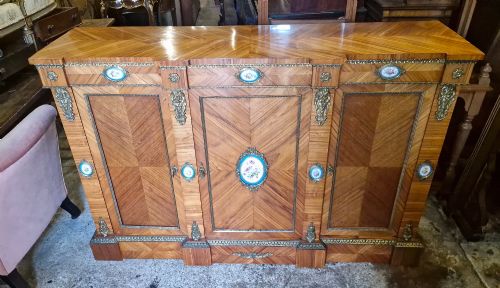
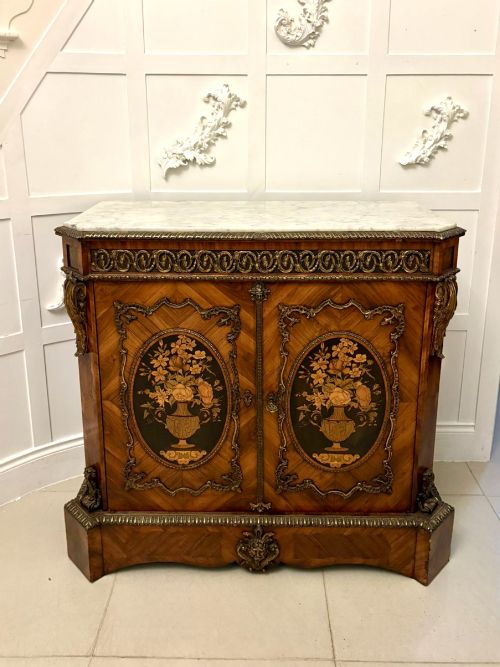
Cabinetmakers constructed these pieces using dense structural timbers like walnut, mahogany, and oak, overlaid with decorative veneers including kingwood, goncalo alves, and walnut. Artisans cut these woods into precise geometric segments to form complex parquetry patterns across the doors and sides.
Mounts cast in ormolu and gilt bronze punctuate the timber surfaces, reinforcing corners and framing door panels. Heavy slabs of marble, often shaped with serpentine edges, sit atop the carcasses to provide durable, polished display surfaces.
Parquetry Credenza Retail Price Guide 2026
Typical asking prices for parquetry credenza among the pieces listed under this phrase on Sellingantiques today, from the lower quarter to the upper quarter. They describe what is for sale here now, not the wider market.
Some nineteenth-century cabinets hide their structural secrets beneath clever parquetry cubes that play tricks on your depth perception.
Distinctions in Quality
Quality reveals itself in the precision of the veneer work and the integration of metal mounts. Superior pieces display seamless geometric alignment across moving joints, where grain directions balance symmetrically and individual wood tesserae fit without visible gaps.
The distinction between standard workshop production and master maker output lies in the weight and chisel-finishing of the ormolu mounts. Finer examples utilise heavy, fire-gilded bronze chased by hand, whereas simpler pieces rely on lighter, unchased brass fittings.
Maison Gagneau·Maison Millet·Paul Sormani·Edmond Poteau
The Parquetry Credenza Glossary
- Parquetry
- A geometric mosaic of wood veneers used to cover floors or furniture surfaces. It relies on precise angular fitting of contrasting timbers.
- Ormolu
- Sub-gilded bronze mounts applied to furniture for decorative enrichment. The technique involves treating brass or bronze with an amalgam of gold.
- Commode
- A low, freestanding chest of drawers or cupboard developed in France. These pieces frequently feature marble tops and elaborate veneering.
Parquetry Credenza: Frequently Asked Questions
Where should I place a credenza?
These low cabinets suit formal dining rooms, long hallways, or spacious living areas where their decorative tops remain visible. Their horizontal proportions work well beneath large mirrors or artwork.
Ensure the room allows enough clearance for the doors to open fully without striking surrounding furniture.
How do I clean marble tops?
Wipe the marble surface regularly with a soft cloth dampened in warm water and mild, neutral soap. Avoid acidic cleaners, vinegar, or citrus products that etch the polished stone.
Dry the surface thoroughly with a clean cloth to prevent water spots and maintain the natural sheen.
Can these cabinets hold heavy items?
The internal wooden shelving provides sturdy storage for dinnerware, linens, and books. Solid timber construction supports substantial weight within the enclosed compartments.
Avoid placing excessive point loads on older shelves to prevent long-term sagging of the historical wood.
How do I identify Louis XVI style?
Louis XVI style pieces feature straight tapered legs, neoclassical symmetry, and restrained geometric mounts rather than the asymmetrical curves of earlier Rococo designs. Look for fluted columns and architectural mouldings.
This aesthetic draws heavily on classical Greek and Roman antiquity, favouring ordered proportions.