




Parquetry Bureau Cabinet
These parquetry bureau cabinet examples combine fitted writing surfaces with concealed compartments, offering serious collectors structured storage dressed in decorative timber veneers.
Parquetry Bureau Cabinet
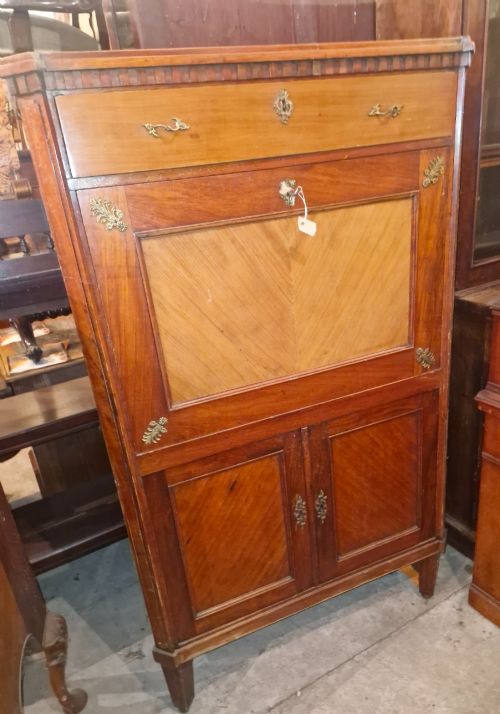
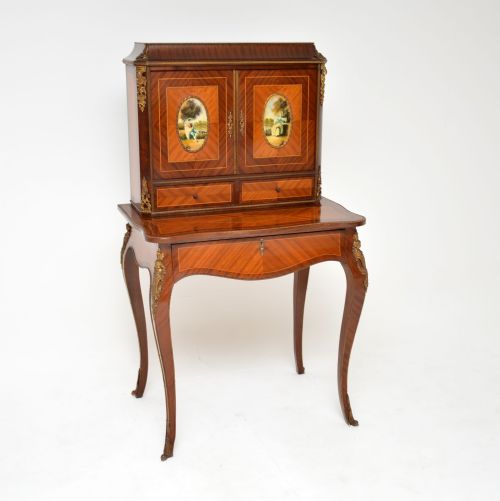
A parquetry bureau cabinet is primarily encountered here through French writing desks, bonheur du jour variants, and vertical secretaire abattant forms originating in the eighteenth and nineteenth centuries. These pieces combine a fall-front writing flap or cylinder desk mechanism with upper display or storage cabinetry.
The prevailing style relies heavily on continental revival aesthetics, notably Louis XV and Louis XVI interpretations, featuring geometric wood veneers. Many examples incorporate specialised formats such as drinks cabinets or ladies desks alongside traditional writing furniture.
Materials and construction methods
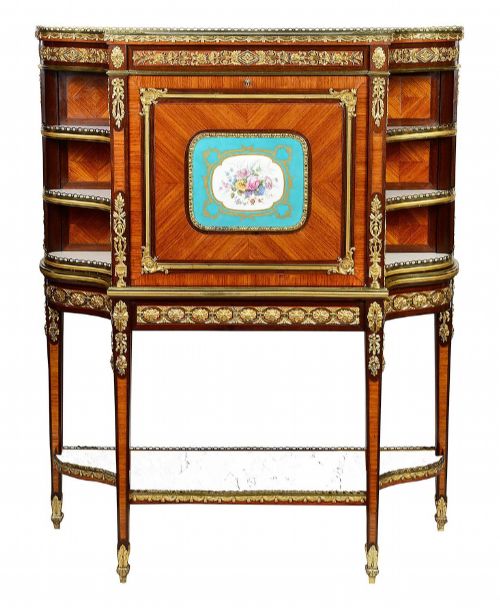
Construction centres on dense cabinet timbers such as kingwood, rosewood, tulipwood, and walnut, which provide stable foundations for intricate geometric wood veneers. Artisans applied these thin timber sections piece by piece to create complex surface patterns.
Metalwork and ceramics frequently integrate directly into the framework through cast or chased ormolu mounts, gilt bronze details, and inset porcelain plaques. Marble tops and vernis martin panels complete the surface ornamentation on select continental variants.
Parquetry Bureau Cabinet Retail Price Guide 2026
Typical asking prices for parquetry bureau cabinet among the pieces listed under this phrase on Sellingantiques today, from the lower quarter to the upper quarter. They describe what is for sale here now, not the wider market.
Some writing cabinets cleverly disguise cocktail compartments behind traditional drop-front veneers for unexpected refreshment access.
Judging cabinet quality and execution
Quality rests upon the precision of the geometric veneer work and the integration of secondary elements like mounts and marble slabs. Finer execution shows seamless alignment across opening flaps and drawers.
The sophistication of the internal mechanism and the crispness of cast ormolu mounts separate standard production from superior pieces. Workshops known for exhibition-grade furniture applied higher standards of finish to interior compartments and concealed fittings.
Blake London·Jean Werner·Millet
The Parquetry Bureau Cabinet Glossary
- Parquetry
- A mosaic of geometric wood veneer pieces arranged to form decorative patterns on furniture surfaces. This technique defines the primary visual aesthetic of the exterior panels.
- Secrétaire à abattant
- A tall vertical cabinet featuring a hinged drop-front writing flap that conceals an interior arrangement of small drawers and pigeonholes. It serves as a space-efficient writing desk.
- Bonheur du jour
- A light lady writing desk typically featuring a small cabinet or set of shelves mounted on top of the writing surface. These pieces gained popularity during the eighteenth century.
- Ormolu
- Gilt bronze ornamentation applied to furniture mounts, feet, and corners. The metal is cast and chased before receiving a layer of gold gilding.
- Vernis martin
- A simulated Japanese lacquer technique developed in France during the eighteenth century. It employs multi-layered resin varnishes to achieve a glossy decorative finish.
Parquetry Bureau Cabinet: Frequently Asked Questions
How do I use a secretaire abattant?
The drop-front writing flap lowers to reveal a fitted interior containing small drawers and compartments for correspondence. Many examples incorporate a leather or fabric writing surface inset directly into the fold-down panel.
When closed, the drop-front locks securely to conceal the contents and maintain the clean architectural lines of the upper cabinet.
What is a bonheur du jour used for?
This compact writing desk functions as a dedicated station for letter writing and light correspondence. The superstructure provides accessible storage for stationery, inkwells, and small decorative items.
Designed to stand away from the wall in smaller reception rooms, these tables combine display space with a functional writing surface.
How do I distinguish Louis XV from Louis XVI style?
Louis XV pieces feature asymmetrical curves, flowing Rococo lines, and cabriole legs. The ornamentation emphasises naturalistic motifs and sweeping floral marquetry.
Louis XVI design introduces neoclassical straight lines, symmetrical geometry, fluted columns, and restrained ormolu mounts. The overall silhouette appears more architectural and balanced.
Where should I place a kingwood cabinet?
Position these pieces away from direct sunlight and heat sources to protect sensitive wood veneers and prevent timber cracking. Stable indoor humidity preserves both the timber substrate and the delicate gilt bronze mounts.
Allow sufficient clearance around drop-front flaps and cabinet doors to ensure smooth operation during daily use.