


Parcel Gilt Hall Table
A parcel gilt hall table brings architectural grandeur to an entrance, combining rich timber and gilded detail to catch the light.
Parcel Gilt Hall Table
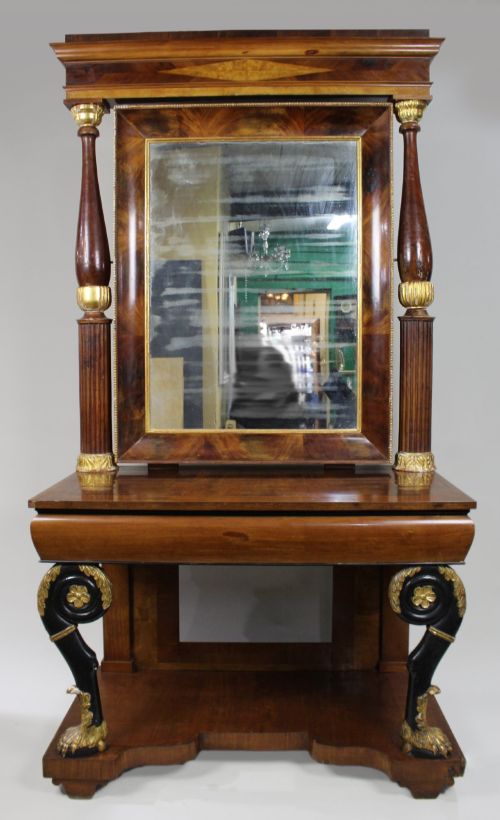
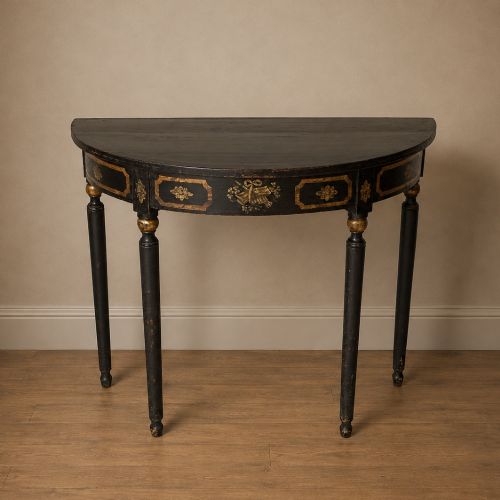
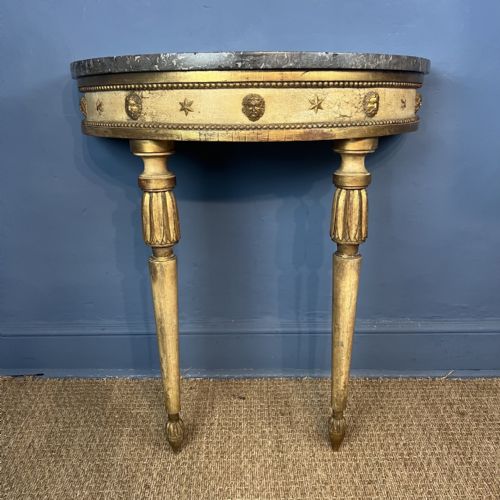
A parcel gilt hall table combines carved wood with selective gilding to highlight specific architectural details. These pieces function primarily as console tables, centre tables, and pier tables designed for grand entryways.
The versions most commonly met on this page span the eighteenth, nineteenth, and early twentieth centuries. Regional variations include Italian Neoclassical, Regency, and French Rococo interpretations.
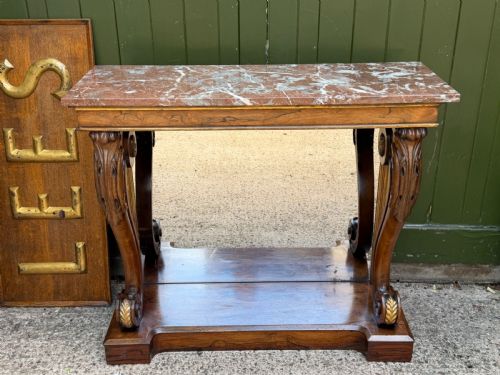
Makers utilised woods such as mahogany, walnut, and rosewood, often paired with marble tops or integrated mirrors. Forms range from demi-lune shapes to rectangular console tables with matching mirrors.
How they were made
Cabinetmakers constructed the main framework from dense timbers like mahogany, walnut, and rosewood, or utilised painted wood surfaces. Carved elements received thin layers of gold leaf or parcel gilding to create contrast against dark or painted bodies.
Many examples feature heavy figured marble tops inset into the wooden frames. Mirror-back designs and matching giltwood pier mirrors required specialised joinery to support reflective glass panels.
Materials appearing across these tables include marble, mahogany, walnut, rosewood, and hand-applied gold leaf.
What varies in quality
The refinement of the carved woodwork and the crispness of the parcel gilding distinguish finer examples from simpler provincial work. Hand-applied gold leaf demonstrates superior craftsmanship compared to basic metallic paint.
The quality of the primary timber, such as highly figured burr walnut or dense mahogany, dictates the stature of the table. Integrated elements like heavy marble slabs and original mirror glass elevate the overall execution.
The Parcel Gilt Hall Table Glossary
- Parcel Gilt
- Decoration where only specific carved areas, mouldings, or motifs receive a thin application of gold leaf while the rest of the object remains painted or shows natural wood.
- Console Table
- A table fixed to a wall or designed to stand against one, frequently supported by decorative brackets or console legs rather than four standard posts.
- Pier Mirror
- A tall mirror specifically designed to hang on the wall space between two windows, often paired directly with a matching console table beneath it.
- Demi-Lune
- A half-moon shape used for table tops and frames, allowing the furniture to sit flush against an entryway wall.
- Giltwood
- Wood that has been entirely covered with gold leaf or gold powder over a prepared gesso ground, standard in decorative revival styles.
Parcel Gilt Hall Table: Frequently Asked Questions
Where should a parcel gilt hall table go?
These tables sit naturally in entrance halls, corridors, and reception rooms where wall space accommodates a console or pier table.
Pairing a console with a matching mirror creates a balanced focal point immediately upon entering a home.
How do I care for a marble top?
Wipe marble surfaces gently with a soft, damp cloth and avoid acidic cleaners that can etch the polished stone.
Use coasters and protective mats to prevent rings and stains on historical tabletops.
What is the difference between a console and a centre table?
Console tables are designed to stand flat against a wall, often secured with brackets for stability.
Centre tables are freestanding pieces meant to be viewed from all sides in the middle of a room.
How do I identify a Regency period table?
Regency pieces often display classical architectural motifs, dark painted finishes, and rosewood veneers characteristic of early nineteenth-century British design.
Proportions tend to be clean and restrained, drawing inspiration from ancient Greek and Roman forms.