

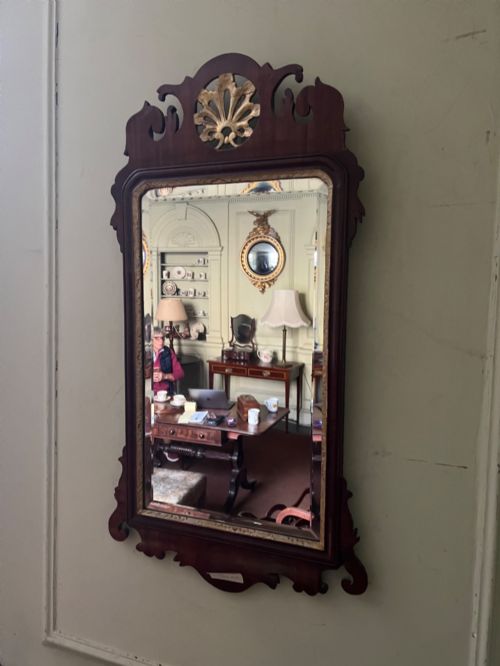
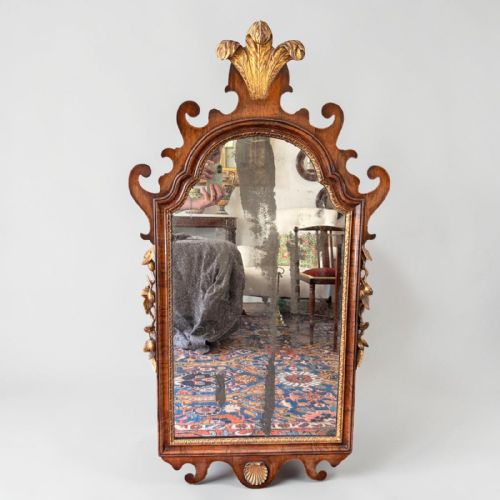
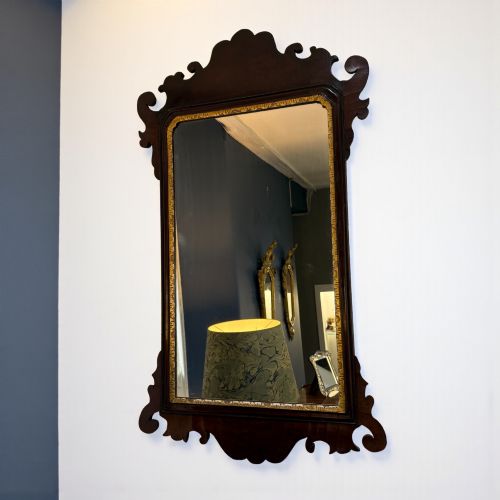
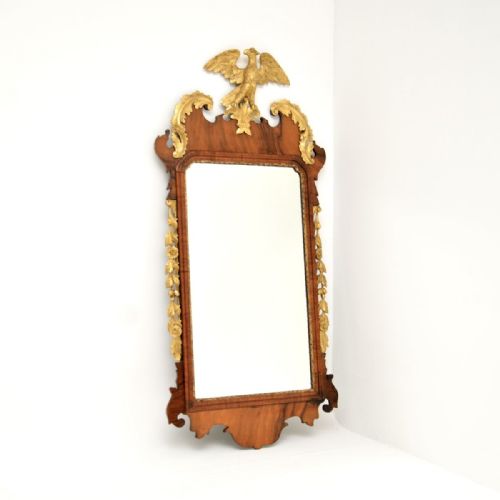
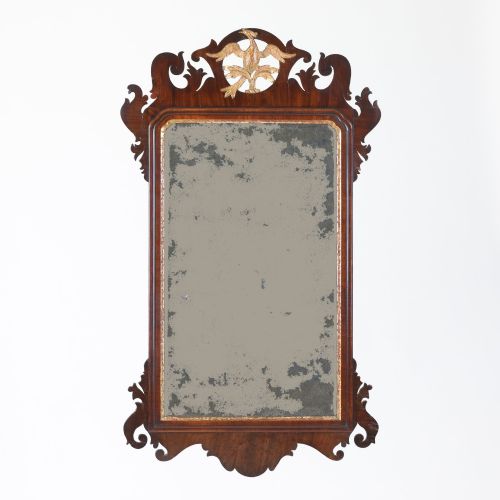
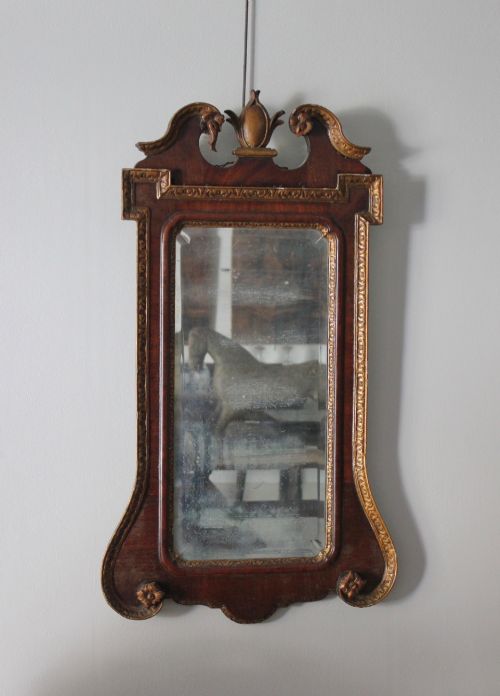
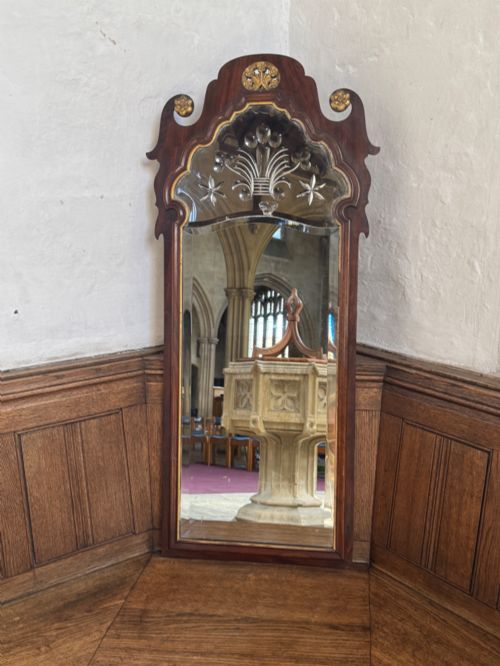


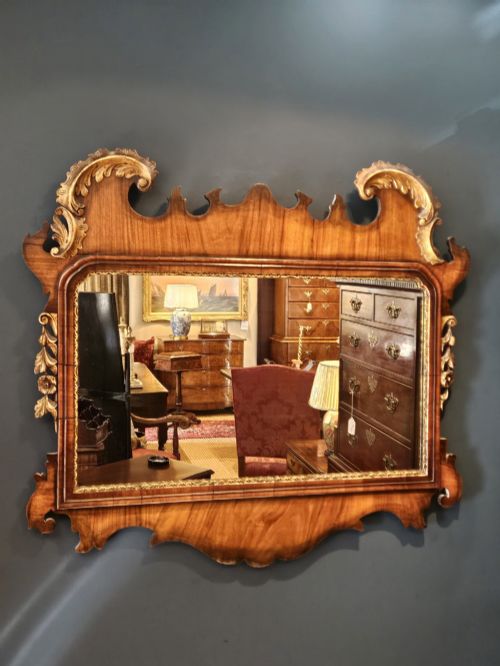


Parcel Gilt Fretwork Mirror
A parcel gilt fretwork mirror brings lightness and architectural precision to a room through pierced wooden frames and gilded highlights.
Parcel Gilt Fretwork Mirror
A parcel gilt fretwork mirror is a wall-hanging glass plate set within a pierced wooden frame, often accented with gold leaf or gilded details on raised carved elements. When searching for a parcel gilt fretwork mirror, buyers encounter examples spanning the eighteenth century through to later revival periods.
The primary woods found in these pieces are mahogany and walnut, paired with original or replacement mirror glass. Forms range from vertical wall mirrors and pier mirrors to landscape formats and overmantel pieces.
Origins stretch across Georgian eras, Victorian interpretations, and Edwardian reproductions. The most common survivals on this page are eighteenth-century Georgian designs alongside nineteenth-century Chippendale revival pieces.
How they were made
Makers constructed these frames using solid hardwoods like mahogany and walnut, frequently utilising sawn fretwork plates to create intricate scrollwork and silhouetted outlines. Pierced fret panels required steady hand-sawing with a fretsaw to achieve the elaborate ear pieces and scrolling crests.
Parcel gilding was applied by laying thin sheets of gold leaf onto a prepared gesso ground on selected carved details, such as side pendants, bezel edges, or perched birds. This partial gilding contrasted sharply with the dark polished grain of the underlying mahogany or walnut timber.
Parcel Gilt Fretwork Mirror Retail Price Guide 2026
Typical asking prices for parcel gilt fretwork mirror among the pieces listed under this phrase on Sellingantiques today, from the lower quarter to the upper quarter. They describe what is for sale here now, not the wider market.
Keep an eye out for carved ho-ho birds perched atop the crests, keeping a watchful wooden eye over every room.
What varies in quality
The distinction between superior examples and simpler work rests upon the crispness of the hand-carved fretwork and the depth of the silhouette. Finely executed pieces display sharp internal pierced corners and subtle modelling on carved motifs like the ho-ho bird.
Proportion and timber selection dictate the visual balance of the frame, with dense, well-figured mahogany or richly grained walnut sitting at the upper end. The quality of the original gilding application and the preservation of the antique mirror plate further separate standard workshop output from exceptional examples.
The Parcel Gilt Fretwork Mirror Glossary
- Parcel gilt
- Partially gilded, where gold leaf is applied only to specific carved highlights while the surrounding wood remains exposed. This technique emphasises decorative motifs against a dark timber ground.
- Fretwork
- Woodwork cut into decorative openwork patterns using a fine saw. It forms the distinctive silhouetted frame borders on these mirrors.
- Ho-ho bird
- A stylized Chinese phoenix commonly carved onto the crests of mid-eighteenth-century mirrors. This mythical creature became a hallmark of the Chippendale style.
- Pier mirror
- A tall, narrow mirror designed to hang on the wall between windows, often placed above a pier table. They reflect ambient light into the centre of a room.
- Reverse cut plate
- A mirror glass decorated with a border design etched into the rear silvering. This specialist technique creates depth when viewed from the front.
Parcel Gilt Fretwork Mirror: Frequently Asked Questions
Where should I hang a parcel gilt fretwork mirror?
These mirrors suit principal reception rooms, hallways, or above fireplace mantels where their reflective glass maximises natural light.
Because of their decorative frames, they work well against plain or softly coloured walls that allow the fretwork silhouette to stand out clearly.
How do I identify a Georgian mirror?
Georgian mirrors typically display dense mahogany or walnut timbers, hand-cut fretwork borders, and old construction methods such as pegged mortise and tenon joints.
Examining the backboards and fixings often reveals period hand-cut nails or screw heads consistent with eighteenth-century workshop practices.
Are the mirror plates usually original?
Many mirrors retain their original antique glass, which frequently exhibits minor foxing, slight oxidation, and charming surface irregularities.
Replacement glass also occurs in surviving examples, as fragile mirror plates were regularly updated or repaired over centuries of use.
What is a Chippendale style mirror?
A Chippendale style mirror refers to designs influenced by the pattern books of Thomas Chippendale, featuring asymmetrical scrolls, gilded birds, and elaborate pierced fretwork.
These pieces were produced both during the eighteenth century and subsequently copied during Victorian and Edwardian revival periods.