

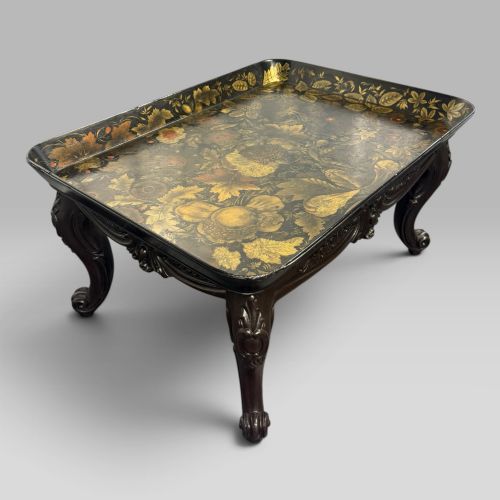
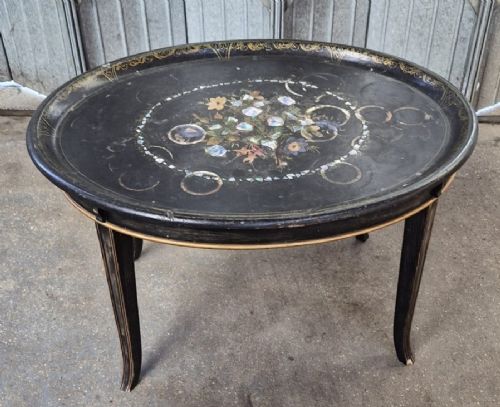
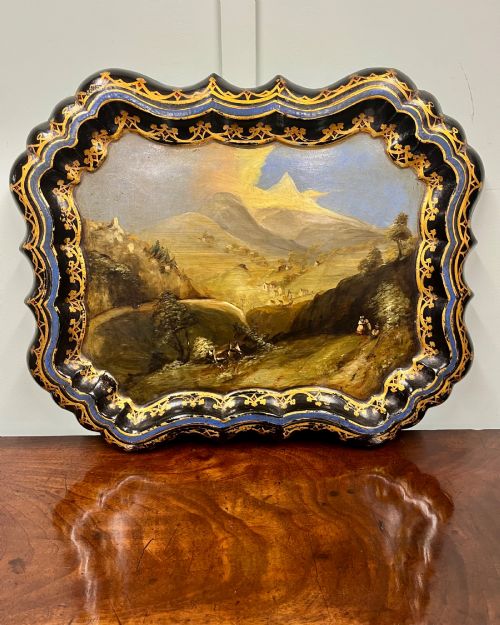

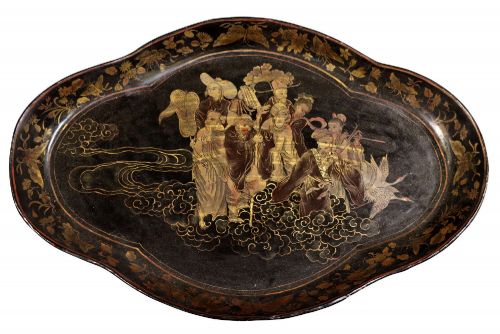


Papier Mache Tea Table
A papier mache tea table brings deep gloss, gold leaf, and painted Chinoiserie directly into a modern sitting room.
Papier Mache Tea Table
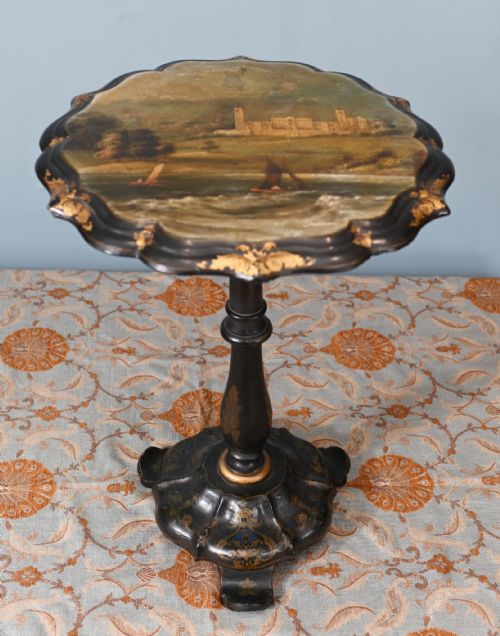
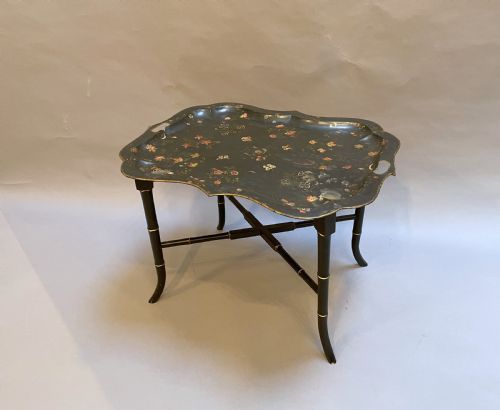
When you search for a papier mache tea table, you enter a world of light yet sturdy occasional furniture designed for service and display. The pieces listed on this page encompass various forms, including wine tables, tilt-top tables, side tables, and trays mounted on later stands.
You are most likely to meet Victorian examples featuring Chinoiserie decoration, alongside Regency pieces and earlier works from the eighteenth century. These surfaces were built to hold porcelain cups and teapots while adding rich colour and pattern to the interior.
The inventory also records specific regional and maker-attributed pieces, such as Kashmiri tables and items bearing the marks of known workshops. Their lightweight construction made them portable enough to move beside a chair or sofa as needed.
Construction and Finish
Makers built the core structure using layered paper pulp combined with glue and resin, pressed into heavy iron moulds and baked until rigid. This produced a surprisingly strong board that accepted smooth layers of dark lacquer and black paint without warping.
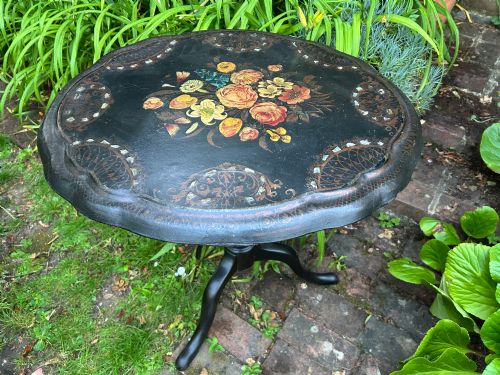
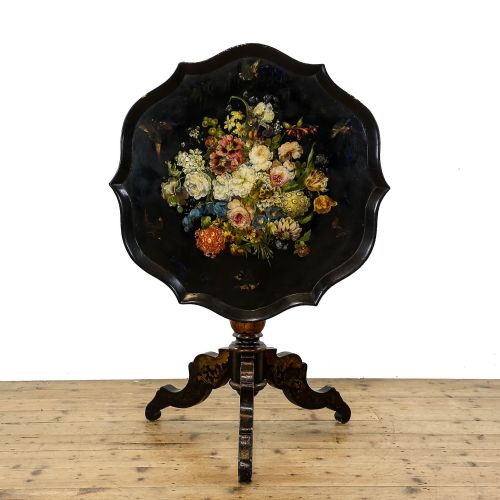
Artisans applied intricate surface details using gold leaf, hand painting, and inlaid mother of pearl, often rendered in Victorian Chinoiserie or floral motifs. Brass fittings and wooden tripod or folding stands supported these decorated tops.
Tilt-top mechanisms allowed the surface to stand vertically against a wall when not in use, displaying the painted panel as a picture. Japanning techniques sealed the paper base, creating a durable finish designed to resist moisture from tea service.
Papier Mache Tea Table Retail Price Guide 2026
Typical asking prices for papier mache tea table among the pieces listed under this phrase on Sellingantiques today, from the lower quarter to the upper quarter. They describe what is for sale here now, not the wider market.
Listings span the eighteenth, nineteenth, and early twentieth centuries, incorporating Georgian, Regency, Victorian, and Kashmiri styles.
Assessing Quality
The distinction between ordinary and exceptional pieces rests primarily on the depth and execution of the hand-painted decoration. Finer examples display meticulous brushwork, crisp gold leaf, and carefully shaped mother of pearl inlay rather than stenciled or hurried ornamentation.
Makers' signatures or attributions to prominent workshops elevate a piece significantly above unmarked commercial output. The crispness of the moulded edge and the stability of the tilt-top mechanism further separate superior items from standard production.
Jennens & Bettridge·Henry Clay·Gillows
The Papier Mache Tea Table Glossary
- Papier-mache
- A composite material made from paper pulp or sheets of paper mixed with glue, chalk, and resin, then pressed and dried. It forms a remarkably tough, lightweight foundation for lacquer and paint.
- Chinoiserie
- European theatrical interpretations of Chinese and East Asian artistic traditions, popular in furniture decoration. This style employs motifs of figures, pavilions, and pagodas rendered in gold and colour.
- Japanning
- A European imitation of East Asian lacquerwork involving layers of dark varnish cured by heat. It created the glossy black surfaces characteristic of these tables.
- Mother of Pearl
- The iridescent inner layer of certain mollusc shells, inlaid into the dark lacquer surface. It catches the light to highlight flowers, birds, and architectural details.
- Tilt-top
- A table mechanism featuring a catch that allows the flat top to pivot into a vertical position. This saved floor space in historical rooms and protected the delicate surface.
Papier Mache Tea Table: Frequently Asked Questions
How were these tables used historically?
They served primarily as portable surfaces for pouring and drinking tea, holding delicate porcelain cups and pots. The tilt-top design allowed servants to fold the table flat against the wall when the room needed clearing.
Their mobility meant they could easily be positioned beside armchairs for social gatherings.
How do I care for papier mache furniture?
Keep these pieces away from direct sunlight, excessive heat, and high humidity to prevent the lacquer from cracking or lifting. Dust them gently with a dry, soft cloth and avoid chemical polishes or water.
Using coasters will protect the historical painted surface from moisture rings.
How do I date a papier mache table?
Dating relies on examining the style of the hand-painted Chinoiserie, the configuration of the wooden stand, and any maker signatures on the underside. Eighteenth-century examples often feature simpler tray formats, while Victorian pieces lean toward elaborate floral and mother-of-pearl decoration.
Many nineteenth-century trays were mounted onto later stands during subsequent decades.