

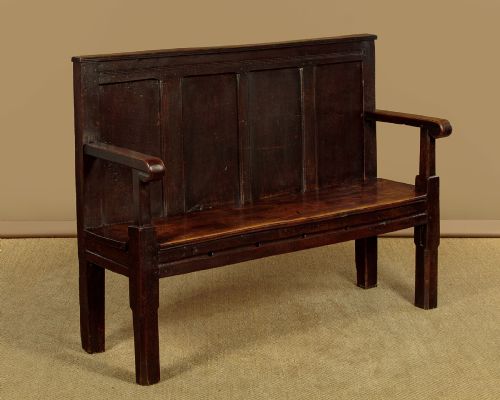
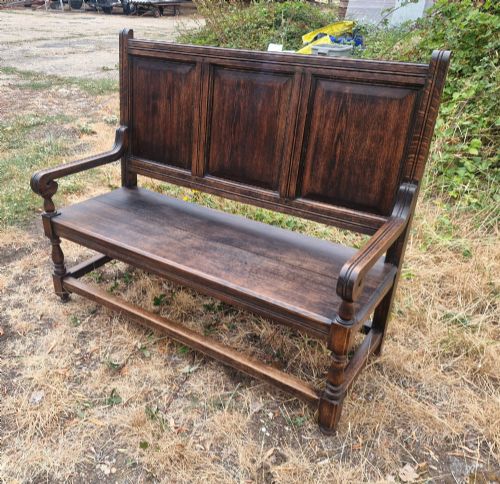


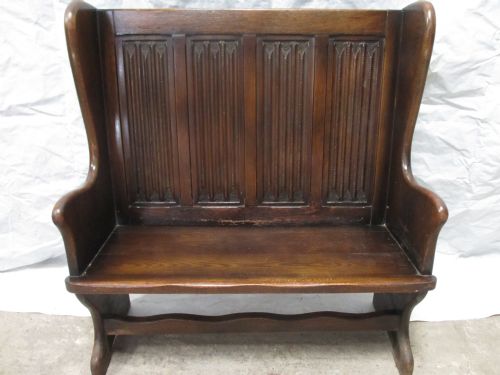


Panelled Oak Pew
Panelled oak pews bring centuries of solid craftsmanship and communal history straight into a domestic interior.
Panelled Oak Pew
A panelled oak pew search reveals sturdy timber seating derived from ecclesiastical and vernacular traditions. These pieces range from eighteenth century country workshops to revival periods, offering deep seats and upright backs built to last generations.
Most examples encountered here take the form of settles, benches, and hall seats constructed predominantly from solid oak. Pieces date from the mid eighteenth century through to the early twentieth century, incorporating panelled backs and substantial wooden frames.
Assessing quality in timber seating
Quality rests on the integrity of the timber and the depth of the hand carving on the panelled back. Pieces retain distinction through original patination on the solid oak surfaces rather than heavy restoration.
Proportion and scale dictate the success of the form, from small two seater settles to high back Welsh vernacular designs. Structural soundness in the joints separates superior vernacular examples from later revival pieces.
Panelled Oak Pew Retail Price Guide 2026
Typical asking prices for panelled oak pew among the pieces listed under this phrase on Sellingantiques today, from the lower quarter to the upper quarter. They describe what is for sale here now, not the wider market.
The inventory records vernacular forms including high back settles, benches, and church pews originating from regional workshops.
The Panelled Oak Pew Glossary
- Settle
- A wooden bench with a high back, solid arms, and often a storage box beneath the seat. This form provides shelter from draughts in older properties.
- Panelled
- A method of construction where flat sections of timber are fitted within a surrounding frame to allow for natural wood movement. This technique prevents warping in large wooden surfaces.
- Vernacular
- Architecture and furniture built by local craftsmen using traditional regional styles and locally sourced materials. These pieces reflect the specific needs and tastes of their geographic origin.
- Patina
- The surface sheen and colour developed by timber over years of handling, polishing, and exposure to light. A natural patina indicates age and regular use.
Panelled Oak Pew: Frequently Asked Questions
Where should a panelled oak pew be placed?
These substantial seats function well in spacious hallways, large kitchens, or against long dining room walls. Their high backs provide a strong architectural anchor in a room.
Ensure the floor is level to support the heavy timber frame without placing undue stress on the joinery.
How do I care for solid oak furniture?
Maintain the timber by dusting regularly with a soft, dry cloth and applying traditional beeswax sparingly to nourish the grain. Avoid placing the wood near direct heat sources or strong sunlight.
Consistent indoor humidity prevents the oak from drying out and splitting over time.
How can I tell an eighteenth century settle from a revival piece?
Look closely at the joinery marks, hand tool signatures, and the nature of the timber shrinkage. Eighteenth century examples often show vernacular quirks and deep patination accumulated through generations of use.
Revival pieces from the Victorian or Edwardian eras typically display more uniform machine sawing and crisper, less worn carving styles.
Are these seats comfortable for daily use?
The upright wooden backs encourage an erect posture rather than slouching. Some examples accommodate loose cushions or upholstered pads to soften the wooden seat.
Adding textiles makes them practical for extended sitting at a dining table or in a hallway.