

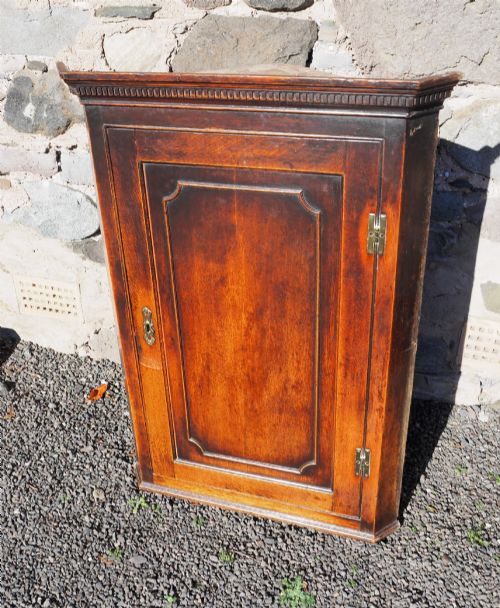
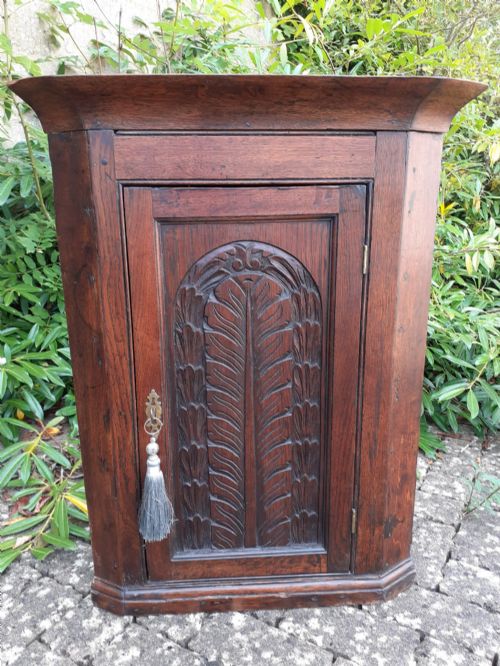
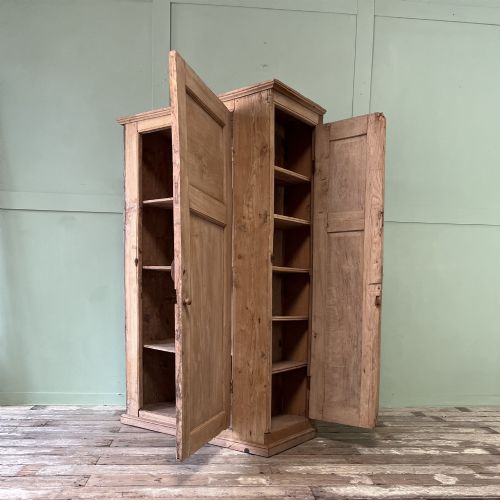
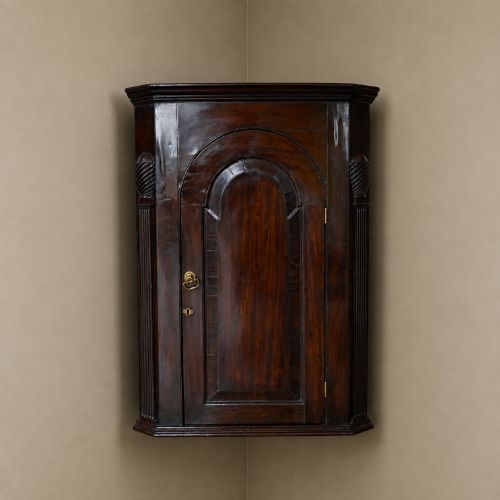
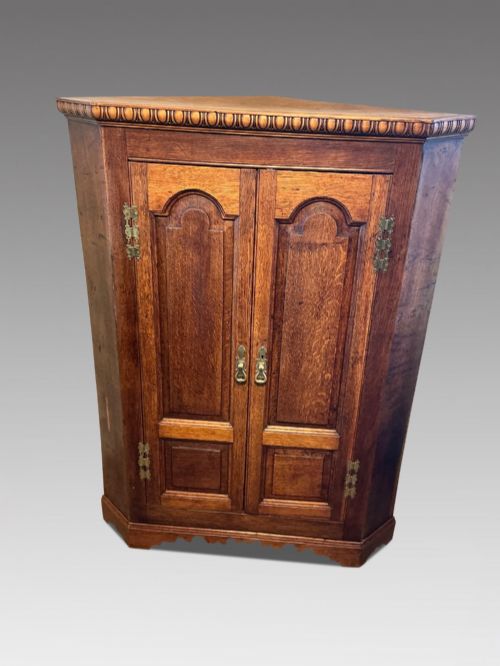
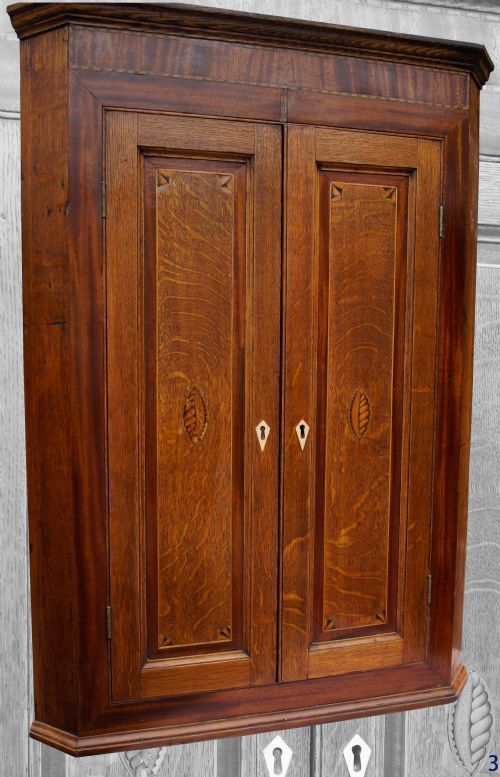
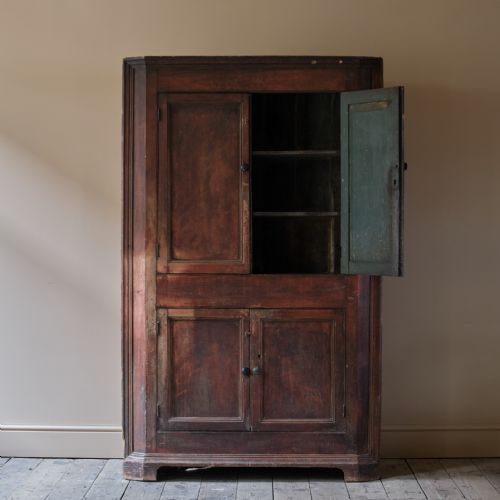

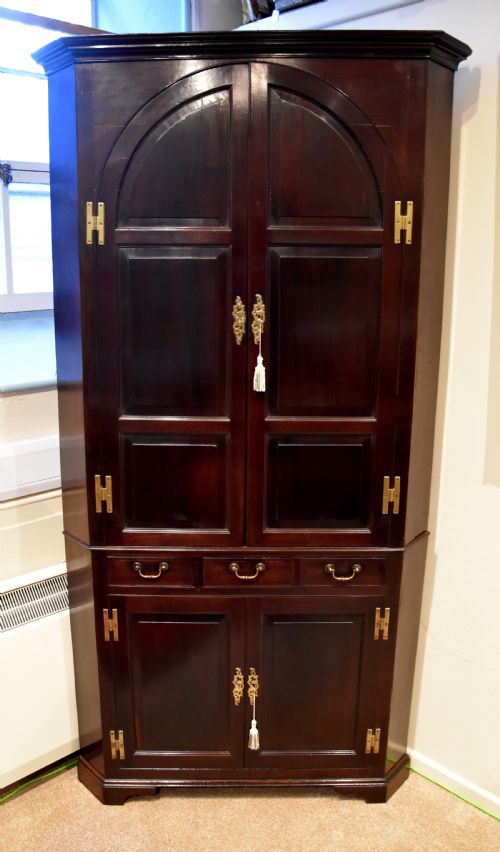
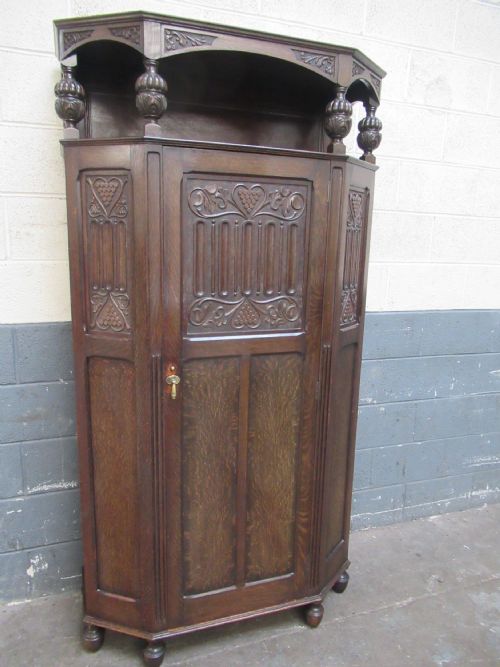


Panelled Corner Cupboard
These panelled corner cupboard pieces maximise awkward room angles by tucking substantial storage into spare corners.
Panelled Corner Cupboard
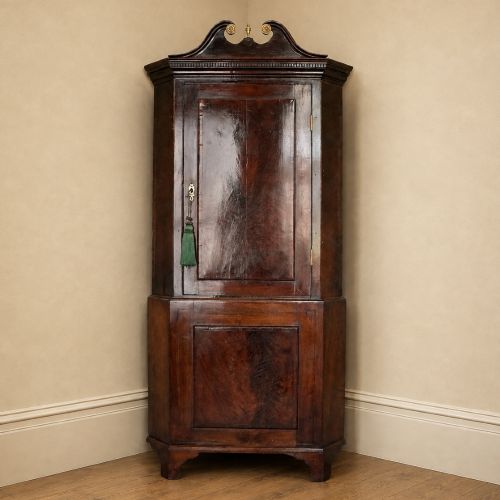
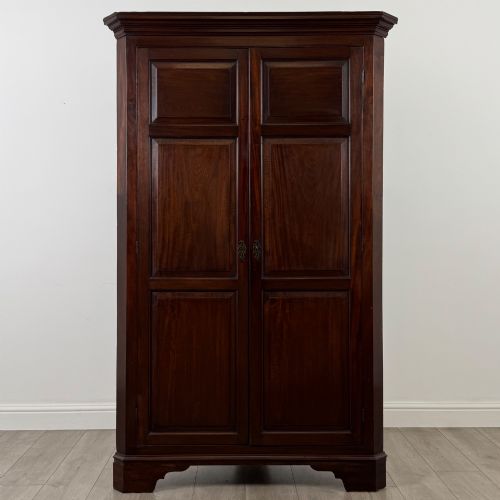
A panelled corner cupboard turns unused room angles into functional storage using triangular footprints designed to fit flush against intersecting walls. The pieces on this page span several centuries, with the earliest examples originating in the eighteenth century.
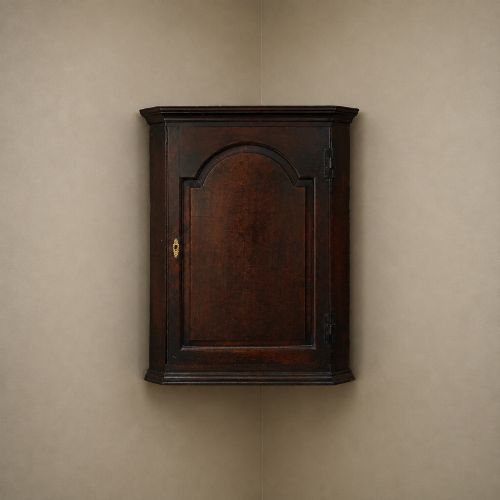
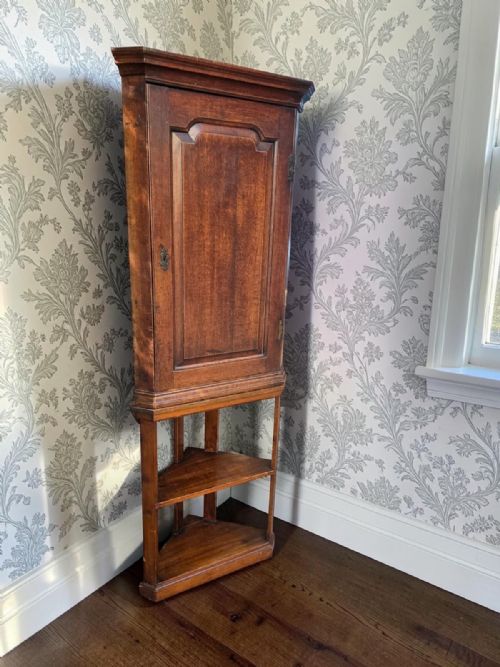
Most items you encounter are constructed from oak or mahogany, appearing either as wall-hanging units or as taller floor-standing cabinets. Regional varieties such as Welsh vernucular pieces frequently surface alongside Georgian and Victorian interpretations.
The architectural presence of these cabinets ranges from small hanging cupboards intended for modest rooms to large two-part floor-standing furniture designed for principal living spaces.
Materials and construction methods
Timber selection relies heavily on native oak and imported mahogany, complemented by pine, elm, and occasionally burr oak for specific decorative sections. Brass hardware such as H-hinges, escutcheons, and working locks provides both structural support and visual contrast.
Joinery techniques focus on frame-and-panel construction to accommodate seasonal wood movement without splitting the timber. Secondary surfaces sometimes feature painted finishes or simulated grain effects applied over pine carcases.
Panelled Corner Cupboard Retail Price Guide 2026
Typical asking prices for panelled corner cupboard among the pieces listed under this phrase on Sellingantiques today, from the lower quarter to the upper quarter. They describe what is for sale here now, not the wider market.
Keep an eye out for simulated oak paintwork, where a pine cupboard decided it wanted to look much posher than it actually was.
Factors that define quality
The refinement of the timber grain and the depth of the cabinet-making establish the grade of a piece. Finer examples display carefully selected mahogany veneers or tightly figured quarter-sawn oak panels.
Proportion and interior arrangement dictate the utility and elegance of the design. Cabinets featuring shaped interior shelving, well-preserved original brassware, and harmonious door proportions represent the upper tier of surviving stock.
The Panelled Corner Cupboard Glossary
- Panelled corner cupboard
- A triangular storage unit with fitted doors designed to occupy the meeting point of two walls. This configuration saves floor space while offering secure internal shelving.
- Hanging cupboard
- A wall-mounted cabinet secured by brackets or fixing points rather than resting on the floor. These units often feature smaller dimensions suited to kitchens or parlours.
- Floor standing
- A cabinet built in one or two sections that reaches the ground. These larger pieces provide extended storage capacity.
- Frame and panel
- A method of wooden construction where a central floating panel sits within a grooved outer frame. This technique prevents warping as atmospheric humidity changes.
- Escutcheon
- A protective metal plate surrounding a keyhole. It frequently uses brass and adds a decorative focal point to the cupboard door.
Panelled Corner Cupboard: Frequently Asked Questions
Where should I place a corner cupboard?
These cabinets suit dining rooms, hallways, or living spaces where dead wall space requires functional furniture. Their triangular shape allows them to anchor an empty room intersection cleanly.
Ensure the adjacent walls provide adequate clearance for the door swing and check whether the unit is designed to hang on the wall or stand on the floor.
How do I date an antique oak cupboard?
Dating relies on examining construction markers such as hand-cut dovetails, tool marks on interior boards, and hinge types. Eighteenth-century pieces typically show different joinery methods compared to Victorian revivals.
Timber patination and the presence of original brass hardware also offer clues to the era of manufacture.
Are these cupboards one piece or two?
They appear in both single-piece formats and two-part configurations where an upper display or storage cabinet rests upon a lower base unit. Two-part pieces generally occur in taller floor-standing models.
Hanging cupboards and smaller wall cabinets are invariably built as a single rigid structure.
What is the difference between hanging and standing models?
Hanging models attach directly to wall studs and float above the floor, making them lighter and more compact. Floor-standing versions anchor themselves on a plinth or feet, offering greater internal volume.
Standing variants often divide into upper and lower sections to simplify transport and placement.