
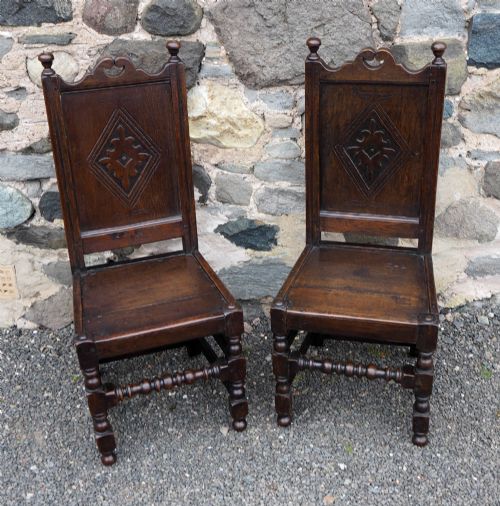


Panel Back Hall Chair
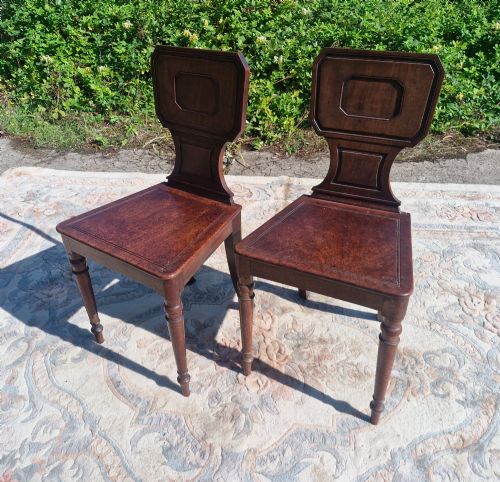
Panel back hall chair pieces offer solid timber construction and rigid seats designed for corridors and entranceways.
Panel Back Hall Chair
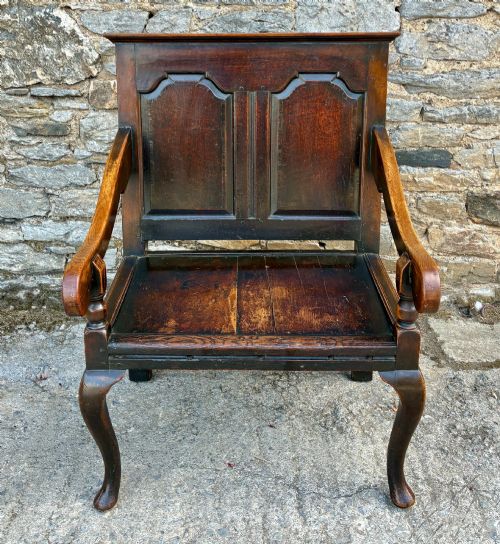
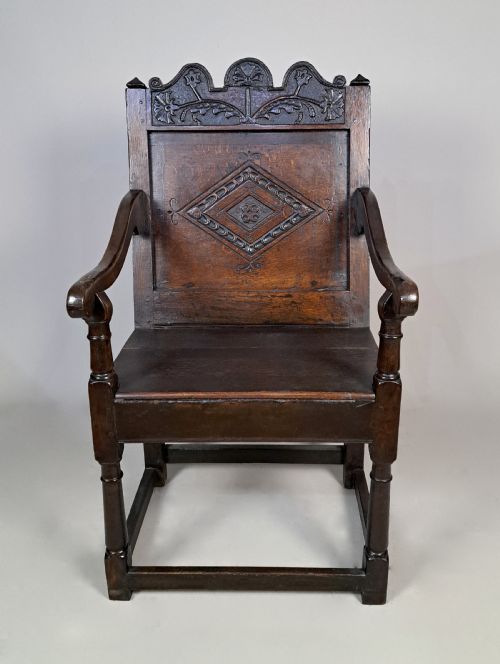
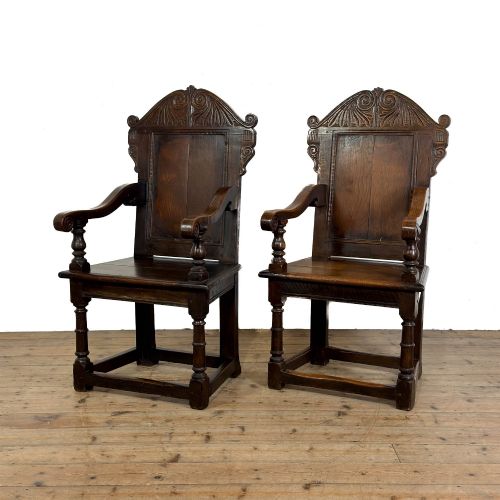
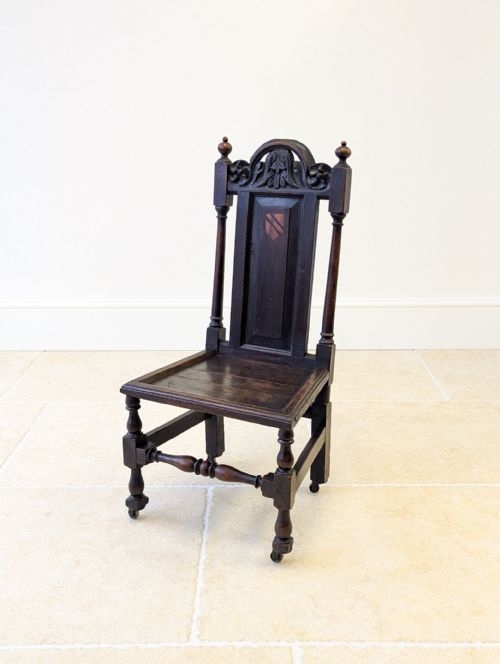
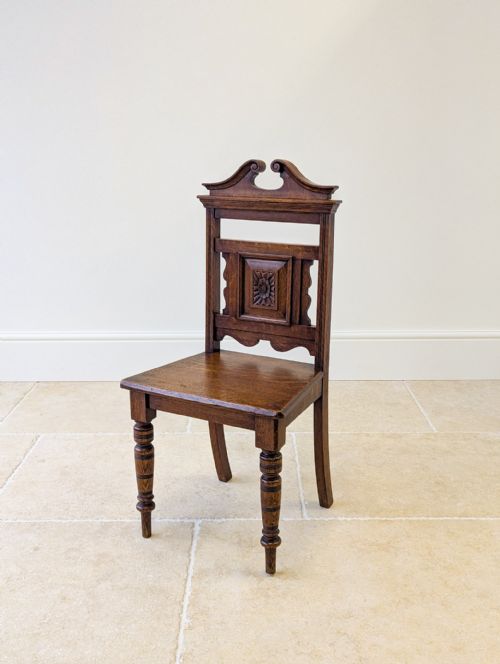
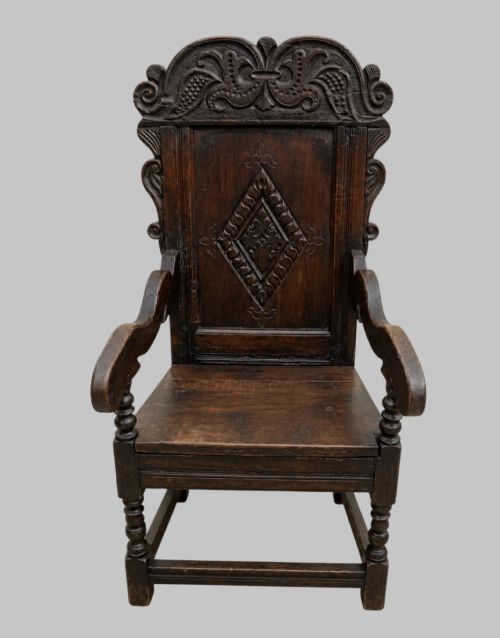
A panel back hall chair provides a rigid, upright seat intended for entryways, corridors and occasional use rather than long hours of lounging. The design draws heavily upon seventeenth century forms, with sturdy timber uprights and solid wooden back panels often decorated with carved ornamentation.
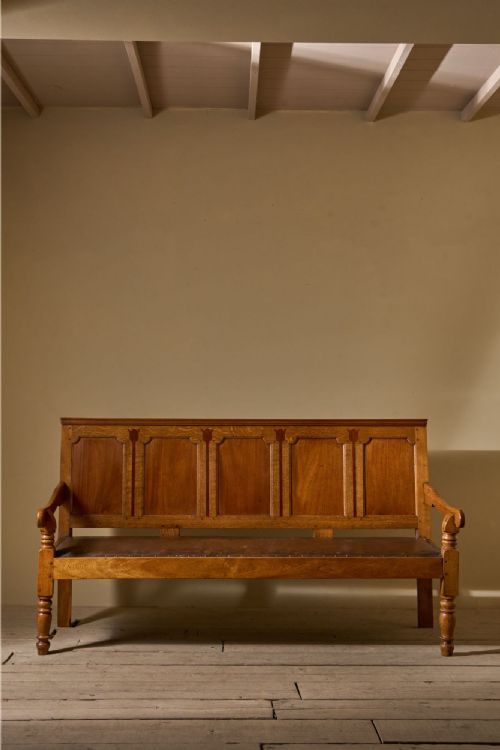
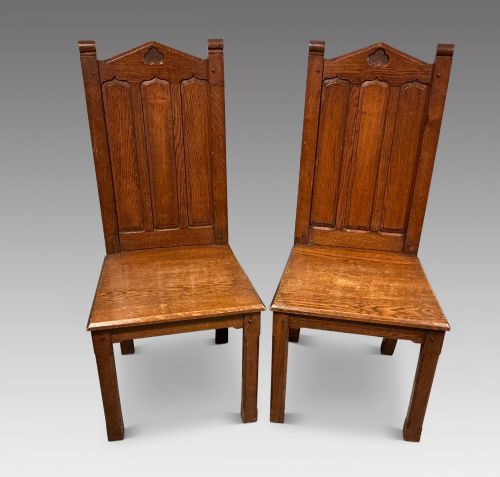
Buyers encounter examples spanning multiple eras, from authentic seventeenth century wainscot and Lancashire chairs to nineteenth century revivals influenced by Jacobean and Gothic styles. Alongside single chairs and matched pairs, related seating forms like oak settles, benches and armchairs appear across the selection.
Construction relies primarily on heavy English timber, predominantly oak, though variations include walnut, fruitwood and pine. These pieces range from restrained, functional corridor seats to elaborately carved armchairs incorporating leather panel detailing and polychrome paint.
Materials and construction methods
Makers utilised solid native hardwoods, with oak dominating the inventory alongside walnut, fruitwood and pine. Timber selection dictated the strength of the upright frame and the stability of the rigid wooden back panel.
Traditional joinery techniques such as mortise and tenon joints secure the structural framework without relying on metal fasteners. Carving, panel moulding and occasional polychrome paint application finished the surfaces of seventeenth century originals and later revival pieces alike.
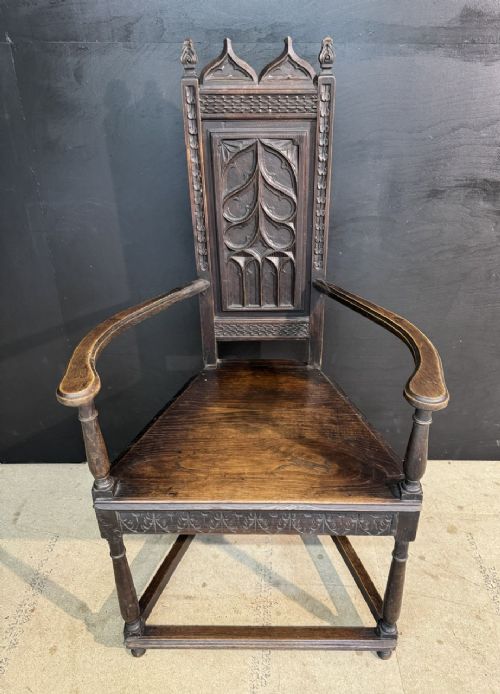
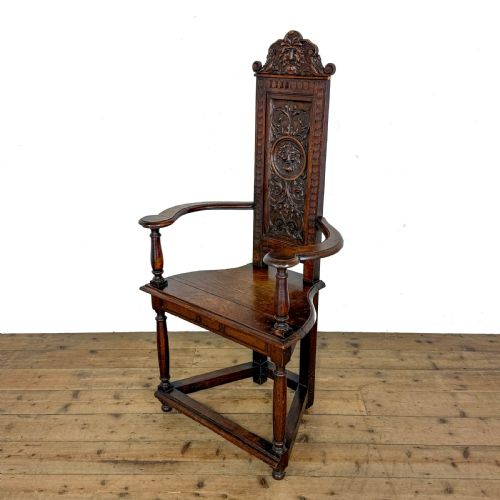
Even sixteenth century gossips needed elbow room, which is precisely why caquetoire chairs were built with trapezoidal seats.
Distinctions in quality and execution
The crispness and depth of hand carving separate utilitarian seating from superior examples. Skilled execution in floral, geometric or figural motifs demonstrates the competence of the workshop, whether from the seventeenth century or during later Victorian revivals.
Timber selection and structural integrity dictate longevity, with tight joints and well-figured grain marking better output. Gradations in quality stem from the proportion of the proportions, the thickness of the solid back panel and the retention of original surface patination.
The Panel Back Hall Chair Glossary
- Wainscot chair
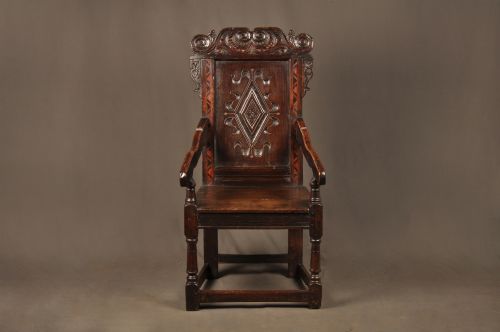
- A heavy wooden armchair characterised by a panelled back and solid seat, originating in the sixteenth and seventeenth centuries. These sturdy seats were traditionally reserved for the head of the household.
- Joint stool
- A joined wooden stool constructed with mortise and tenon joints rather than turned legs driven into a solid seat. They served as versatile seating and occasional tables in early domestic interiors.
- Jacobean revival
- A nineteenth century architectural and decorative style imitating the robust, carved oak forms of the early seventeenth century. Makers utilised these revival motifs to satisfy Victorian demand for historical authenticity.
- Caquetoire
- A light, high-backed armchair from the sixteenth and seventeenth centuries featuring a trapezoidal seat designed to accommodate voluminous contemporary dress. The term derives from the French verb for chatting.
- Settle
- A wooden bench featuring a high solid back to block draughts, often incorporating enclosed storage beneath the seat. They stood near hearths and in large hallways.
Panel Back Hall Chair: Frequently Asked Questions
How do I identify a genuine seventeenth century chair?
Authentic pieces exhibit period joinery methods like pegged mortise and tenon joints alongside natural timber shrinkage and dry, oxidized surface patination developed over centuries.
Revival pieces from the nineteenth century often display machine tooling marks or softer, more uniform wear patterns that distinguish them from early workshop production.
Were these chairs used for daily dining?
Early wainscot and panelled chairs served multiple domestic functions in great halls, including dining, formal reception and placement in corridors.
Later Victorian hall chairs were specifically designated for entranceways where guests removed outerwear and waited before entering main reception rooms.
How do I care for antique oak seating?
Maintain stable indoor humidity levels and protect timber surfaces from direct sunlight and heat sources to prevent wood splitting and shrinkage.
Apply occasional microcrystalline wax to nourish the grain and preserve the historic finish without building up heavy chemical layers.
What is the difference between a wainscot and a hall chair?
A wainscot chair is typically a heavier armchair featuring a panelled back, sturdy arms and an expansive seat rooted in seventeenth century vernacular joinery.
By contrast, a hall chair is often a lighter side chair or armchair produced in the nineteenth century for corridors, frequently featuring Gothic or Jacobean revival carvings.