


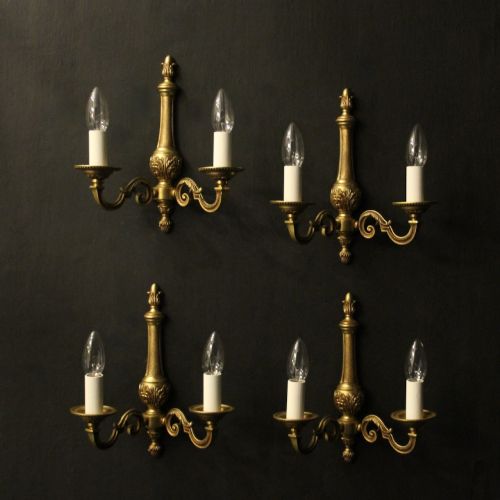
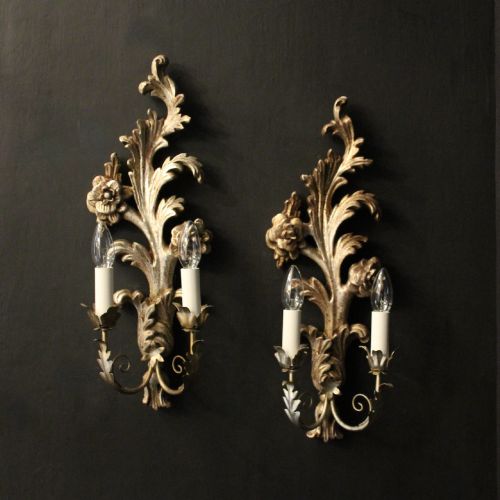
Paired Wall Lights
Paired wall lights bring balanced illumination and architectural symmetry to a room, drawing the eye directly to walls dressed in brass, bronze or carved giltwood.
Paired Wall Lights
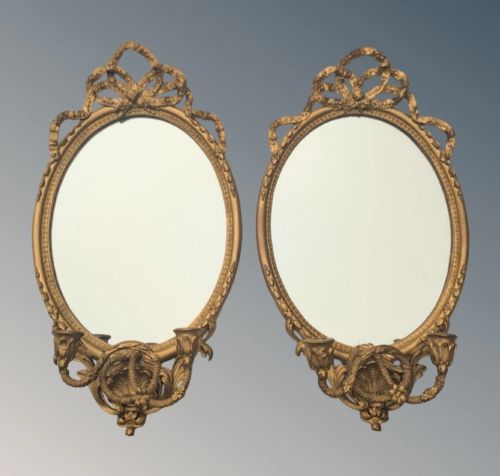
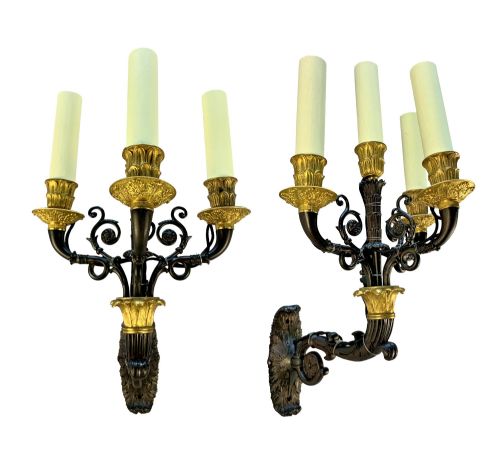
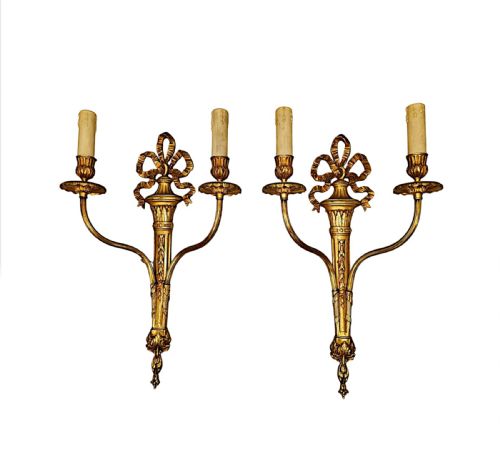
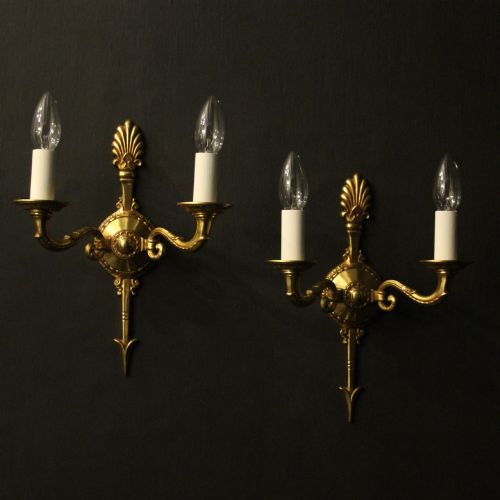
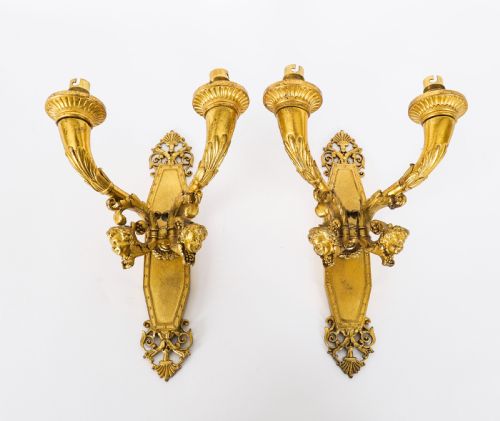
When you search for paired wall lights, you encounter fixtures designed to flank architectural elements, mirrors or fireplaces with uniform symmetry. The selection spans robust nineteenth century French ormolu appliques and English brass pieces to lighter twentieth century Florentine giltwood girandoles.
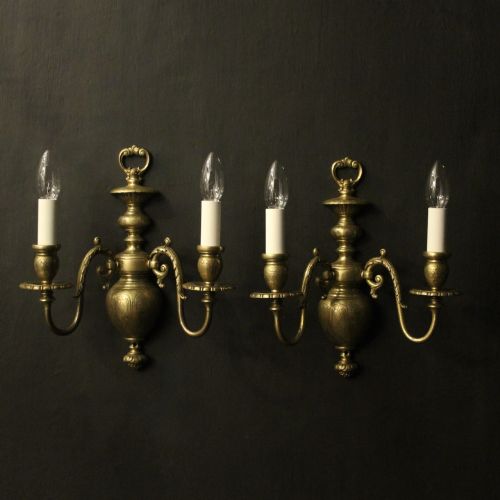
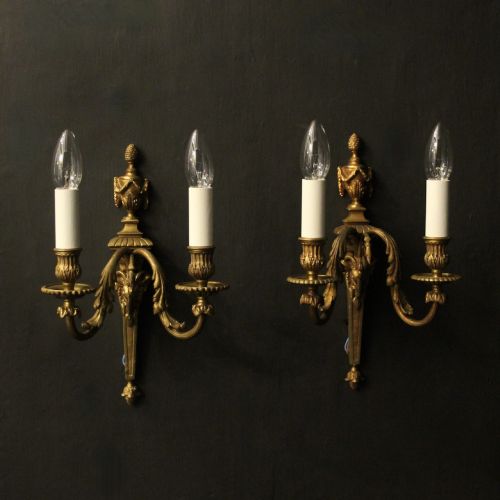
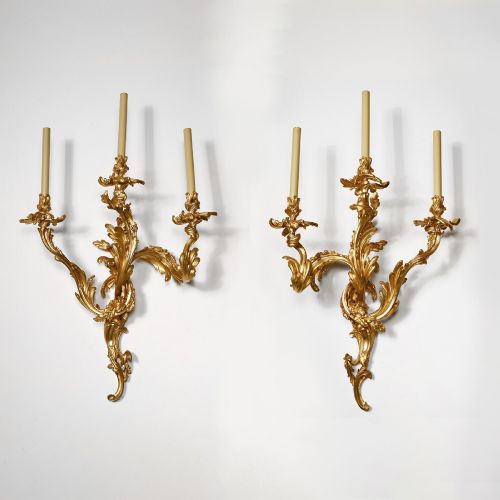
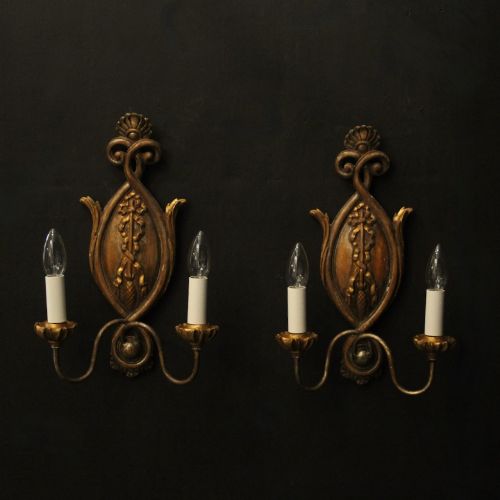
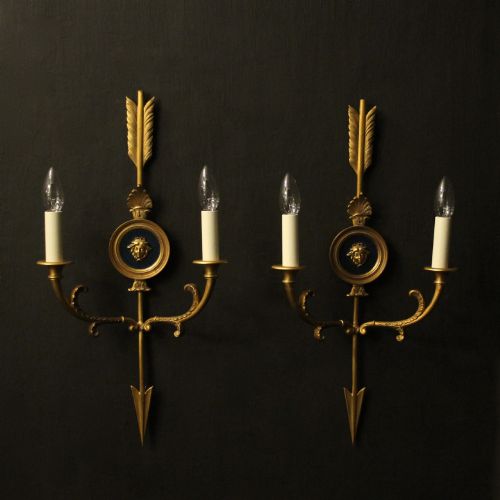
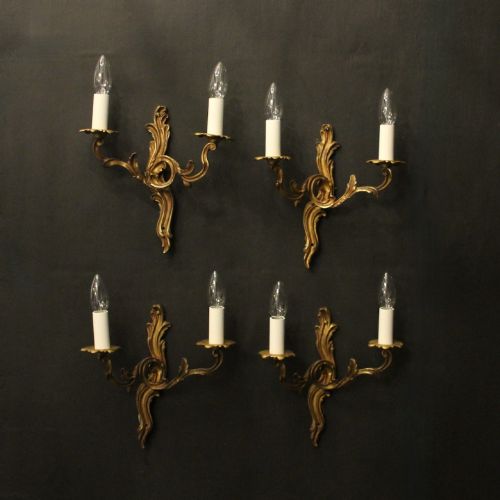
The most common survivors are twin and triple arm designs cast in gilt bronze, brass or carved wood, originating predominantly from French and Italian workshops. Forms range from rigid Neoclassical and Empire arrangements to flowing Rococo scrolls and Arts and Crafts copper lanterns.
Beyond standard wall sconces, the category includes specialised lighting such as convex half lanterns, adjustable brass arms, and girandole mirrors that amplify candle or electric output through reflected glass.
Materials and construction
Foundry work dominates the category, utilising cast bronze, brass and ormolu that often received a fire gilt finish to achieve a lasting golden sheen. Artisans chased these metal castings by hand to sharpen leaf motifs, ribbon ties and classical urn details.
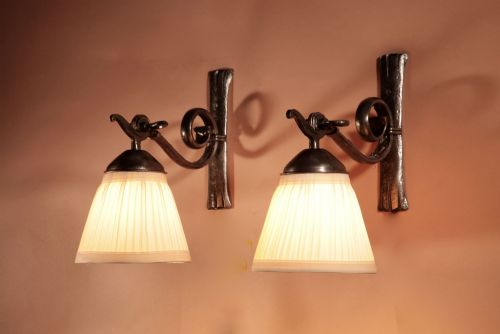
Wood carved fixtures rely on gesso and gold leaf applied over timber bases, typical of Florentine and English George III style production. Wrought iron and copper appear in Arts and Crafts examples, forged directly with visible hammer marks rather than cast in moulds.
Listings feature wall lights spanning the Regency period through the 1930s, constructed in materials from gilt bronze to carved giltwood and copper.
Factors in quality
The crispness of the casting and subsequent hand chasing dictate visual depth, separating sharply defined acanthus leaves and feathered scrolls from soft, blurred reproductions. Superior metalwork retains clear chisel marks on the reverse and substantial weight in the arms.
Gilding method alters both durability and appearance, with genuine mercury or fire gilding on bronze offering a richer, deeper lustre than later electroplating. On wood and gesso pieces, the intactness of the original gold leaf layer and the sharpness of the hand-carved detail govern the overall execution.
W.A.S. Benson·Bruce Talbert·Maison Baguès·Casier
The Paired Wall Lights Glossary
- Ormolu
- Gilded bronze, produced by applying a mercury and gold amalgam to a cast bronze object and heating it to drive off the mercury. This technique creates a durable, luminous golden surface found on many French fixtures.
- Girandole
- A branched wall light, often incorporating a mirror backplate designed to reflect and multiply the light into the room.
- Appliqué
- A French term for a wall-mounted light fitting or sconce that sits flat against the surface. These fixtures often mirror the decorative vocabulary of large chandeliers.
- Tole peinte
- Painted sheet metal, frequently shaped into lanterns or floral motifs and highlighted with parcel gilt accents. This material brings colour and pattern directly to the wall surface.
Paired Wall Lights: Frequently Asked Questions
How do I wire antique wall lights?
Most paired wall lights from the nineteenth and early twentieth centuries require professional rewiring to meet modern safety standards. Electric flex is usually routed through existing channels or backplates to preserve the external metalwork.
Qualified electricians can adapt older brass and bronze arms to accept standard modern lamp holders without altering visible exterior components.
Where should wall lights be placed?
These fixtures work best when positioned symmetrically to frame mirrors, fireplaces, doorways or large pieces of furniture. Height placement generally sits around eye level to prevent direct glare from exposed bulbs.
Spacing depends on the scale of the room and the width of the object flanked by the fixtures.
How do I clean gilded bronze?
Dusting with a soft, dry brush removes surface particles without disturbing delicate fire gilt or patinated surfaces. Liquid cleaners and abrasive polishes strip away historical finishes and must be avoided entirely.
Gentle care preserves the underlying metal colour and the integrity of hand-chased details.
Are these lights strictly paired?
Many listings offer matching sets of two, three or four fixtures originating from the same interior scheme. Sets of four allow for uniform lighting across larger walls or multiple linked reception rooms.
Matching pairs ensure balanced visual weight and identical casting details across a room.