
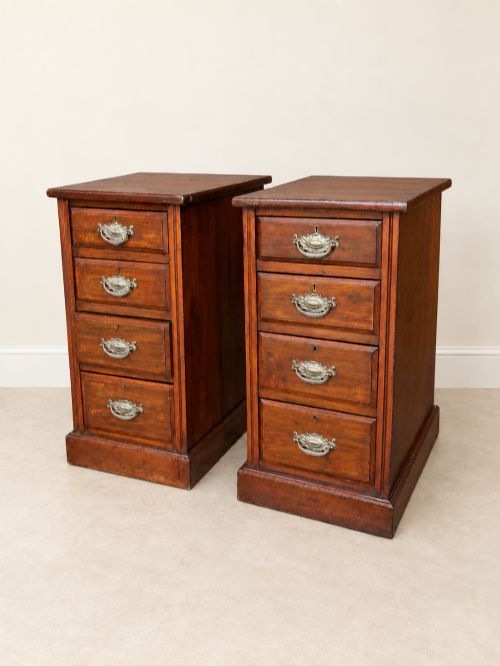
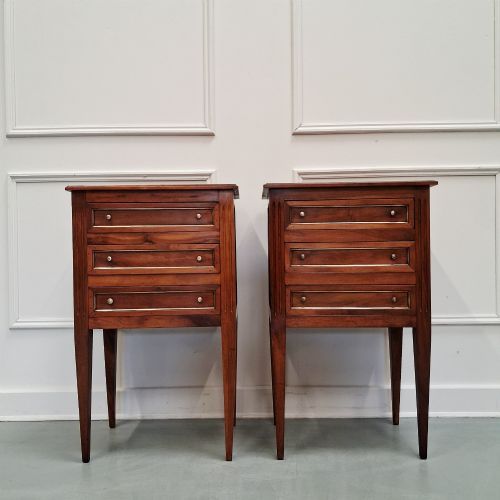
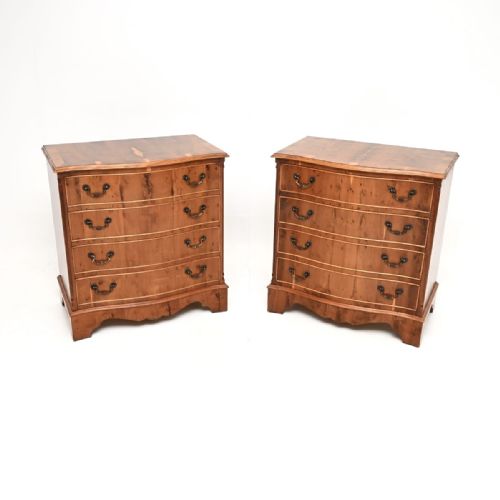
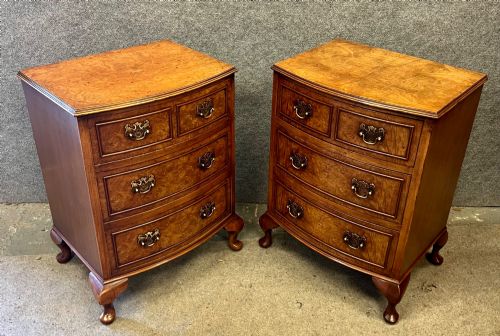

Paired Bedside Chests
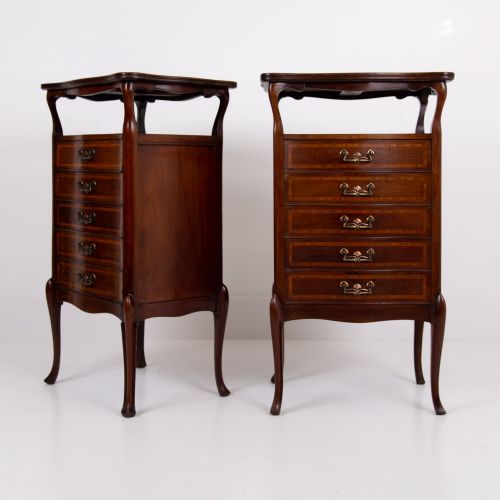
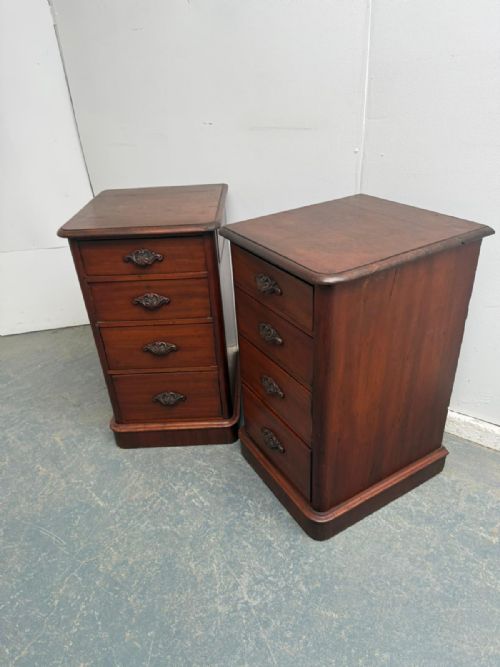
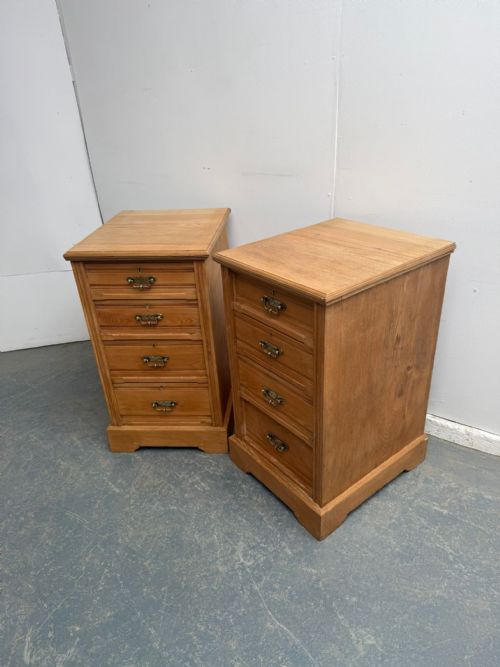
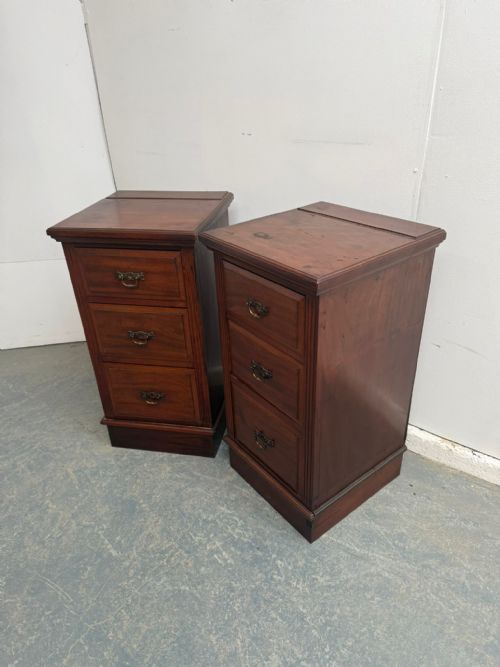
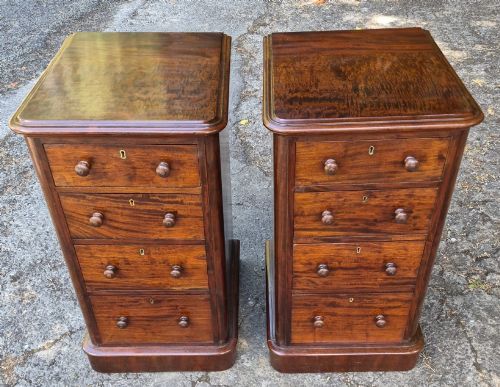
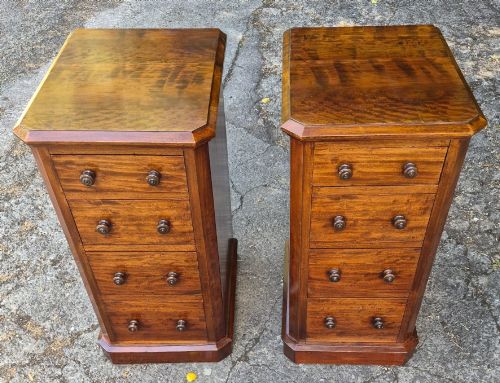
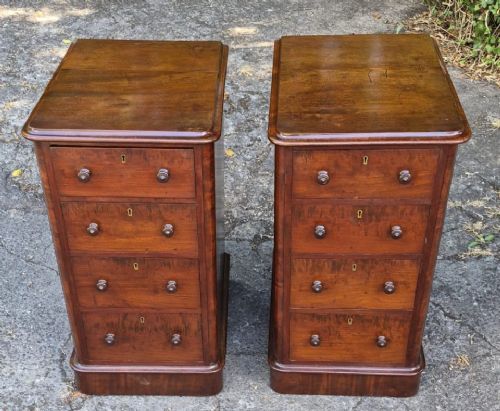
Paired bedside chests offer matched storage beside the bed, combining practical surface space with fitted drawers crafted in mahogany, walnut, and exotic timbers.
Paired Bedside Chests
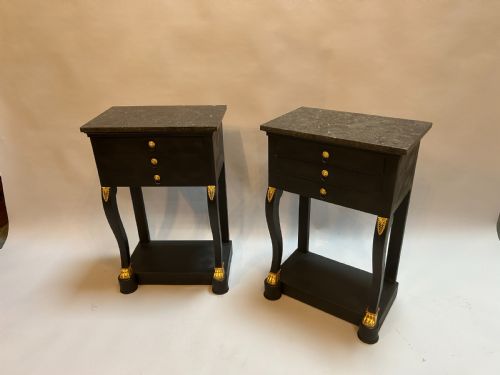
Paired bedside chests encompass matched sets of small storage furniture designed to sit alongside a bed, appearing across Victorian, Edwardian, and Art Deco periods. These pieces take the form of miniature commodes, drawer units, and small cupboards, often standing at convenient heights for nighttime lamps and books.
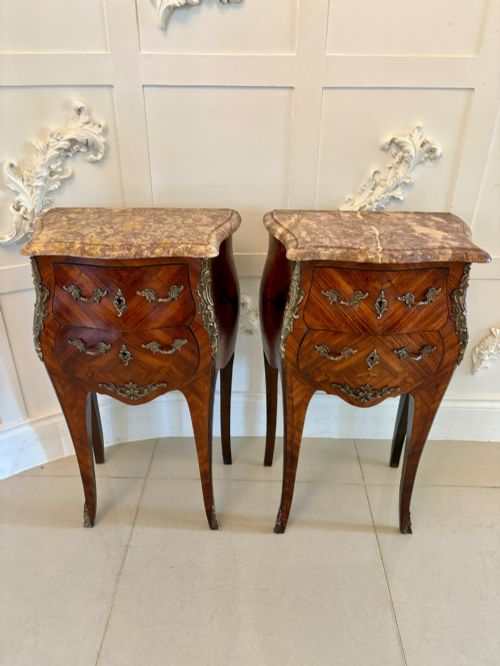
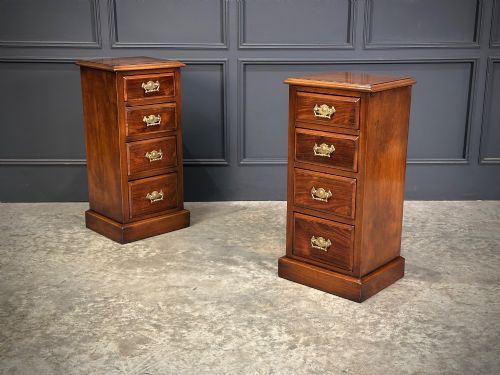
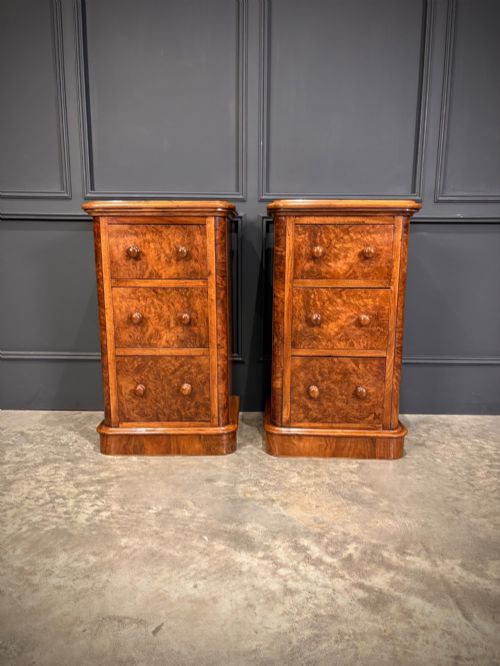
The selection on this page relies heavily on Victorian mahogany examples and 1920s French walnut or kingwood models. Buyers frequently encounter three-drawer and four-drawer configurations alongside cabinet styles with doors masking internal storage.
Origins stretch from English workshops to French cabinet makers, yielding divergent aesthetic traditions within the same functional category. English iterations favour clean timber grains and Georgian proportions, whereas continental pieces often introduce curved bombe shaping and intricate marquetry.
Materials and Construction
Carpenters constructed these bedside units using dense hardwoods like mahogany and walnut as structural carcases, frequently applying burr walnut, kingwood, satinwood, or rosewood veneers to visible surfaces. Drawer linings typically employ secondary timbers like oak or pine, joined with traditional dovetailing to ensure durability under daily use.
Decorative detailing relies on marquetry inlay, brass mounts, and carved mouldings rather than applied plastics, with many French and revival pieces incorporating shaped marble tops. Wax finishes protect the timber surfaces while maintaining a soft lustre that develops over decades of handling.
Several pairs include hidden compartments designed for secret midnight snacks.
Craftsmanship and Proportion
Quality reveals itself in the precision of the timber matching across both items in a pair, ensuring grain patterns mirror each other harmoniously. Superior pieces maintain crisp carving, tight veneer joints, and smooth drawer action without excessive timber shrinkage or warping.
Proportion dictates the elegance of smaller scaled bedside items, separating workshop pieces with balanced cornices and plinths from heavier, clumsy adaptations. The integration of original hardware, such as brass drop handles and escutcheons, preserves the integrity of the design.
Warings Liverpool·E. Kahn
The Paired Bedside Chests Glossary
- Bombe
- A swelling, outward-curved commode profile characteristic of continental cabinet work. This bulging shape requires advanced timber-bending techniques and skilled veneer application.
- Marquetry
- Decorative patterns formed by fitting together contrasting pieces of wood veneer onto a carcase. Craftsmen use thin sheets of dyed and natural timbers to create floral or geometric motifs.
- Commode
- A low piece of furniture containing drawers or doors, adapted in various periods to serve as bedside storage. The term often denotes French influence and decorative mounts.
- Serpentine
- A shaped furniture front featuring a concave centre flanked by convex ends. This undulating contour adds visual movement and demands exacting carpentry.
Paired Bedside Chests: Frequently Asked Questions
How do I match mismatched chests?
Matching disparate bedside tables requires finding pieces with similar heights, timber tones, and period characteristics to maintain visual balance.
Positioning them symmetrically on either side of the bed helps anchor the arrangement even if the drawer counts differ slightly.
Are marble tops practical?
Marble surfaces provide a durable, heat-resistant platform for drinking glasses and lamps while adding a decorative continental flourish.
Care involves wiping spills promptly to prevent staining on more porous types of stone.
Can I use lamp tables instead?
Lamp tables function effectively as bedside units if they incorporate sufficient surface area and lower shelving or drawers for nighttime storage.
Height remains the critical measurement to check against your mattress level.
How do I clean antique timber?
Maintaining antique wooden surfaces involves dusting with a soft cloth and occasionally applying quality beeswax to nourish the grain.
Avoid modern silicone sprays that build up and attract dust over time.