
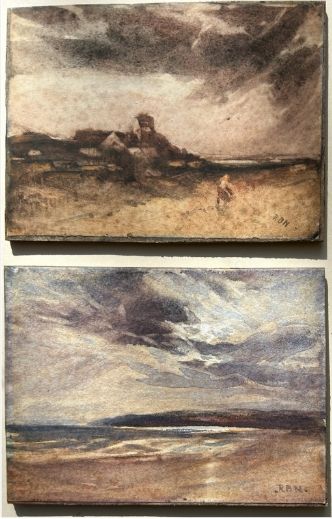
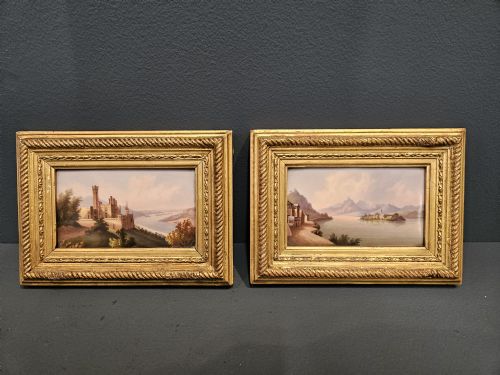
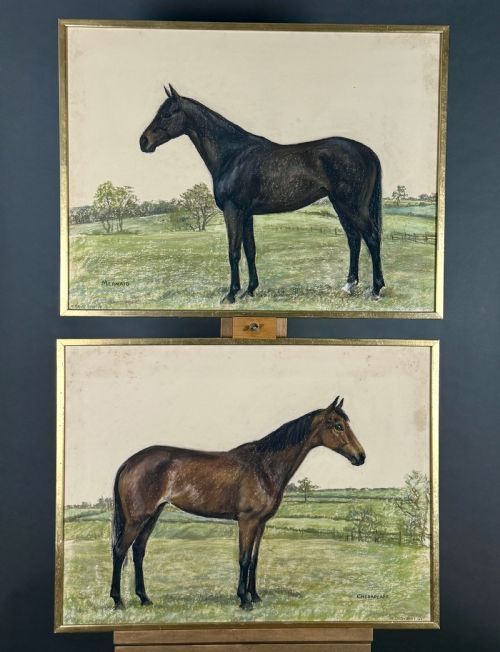
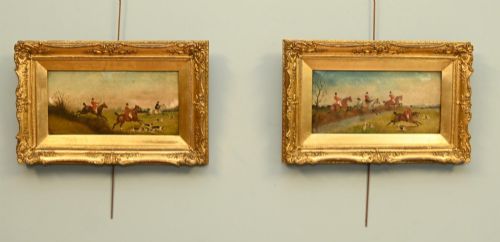

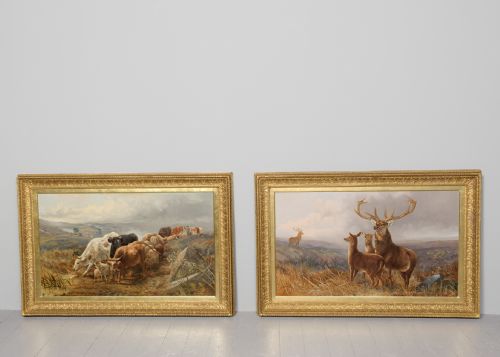
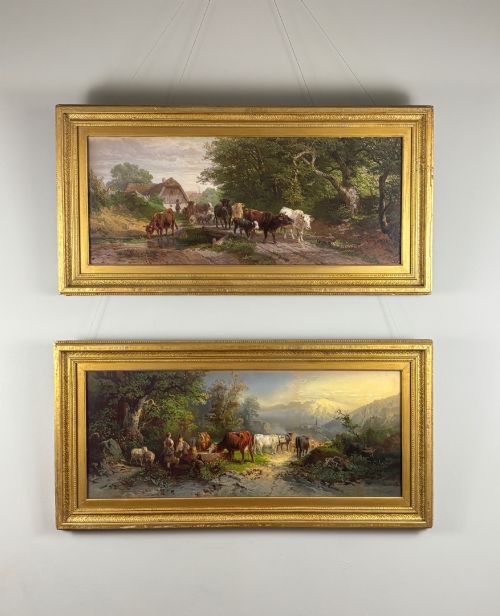
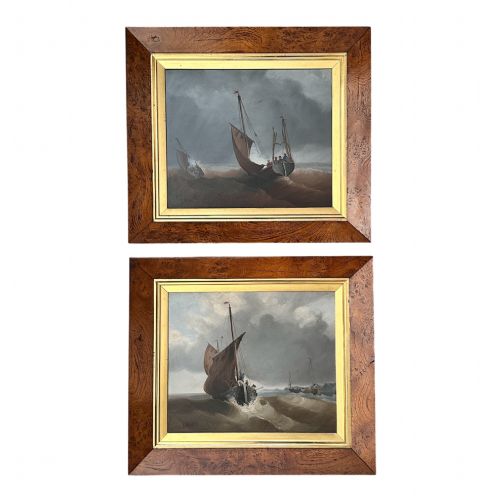
Paired Landscape Art
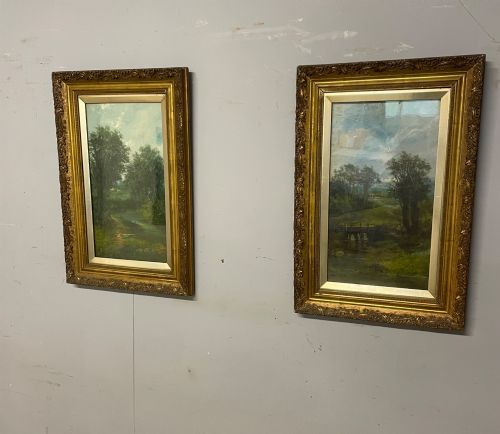
Paired antique landscape art brings symmetry and balance to a room, offering matching views usually created in oil or watercolour during the eighteenth and nineteenth centuries.
Paired Landscape Art
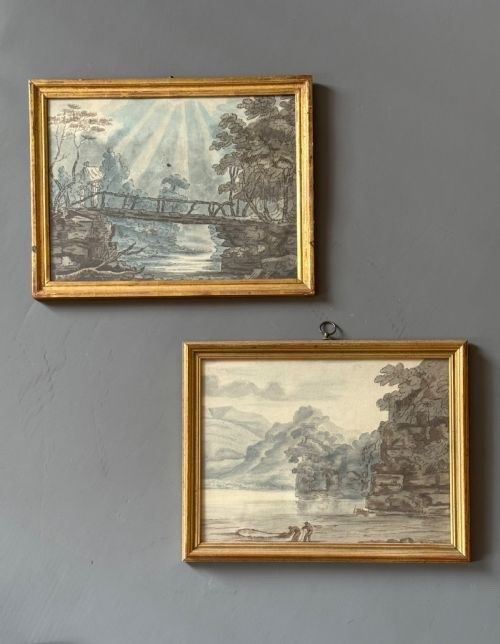
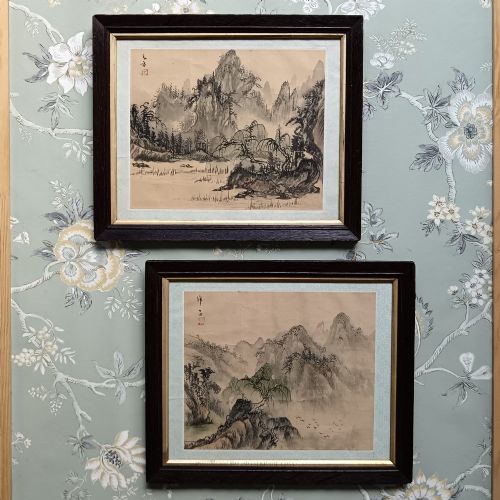
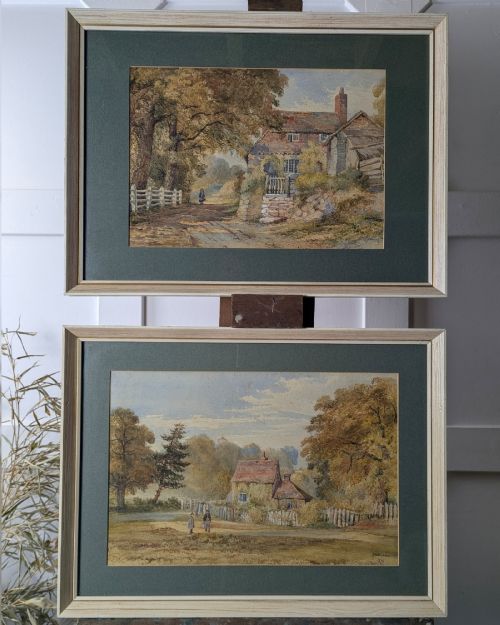
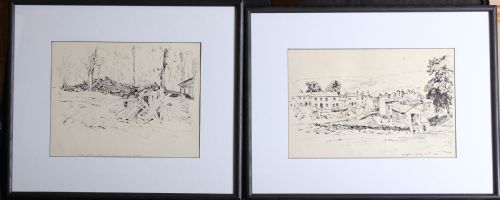
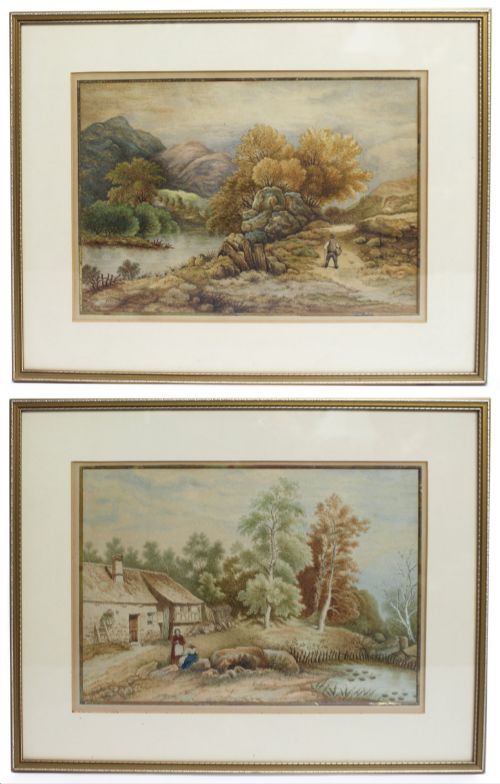
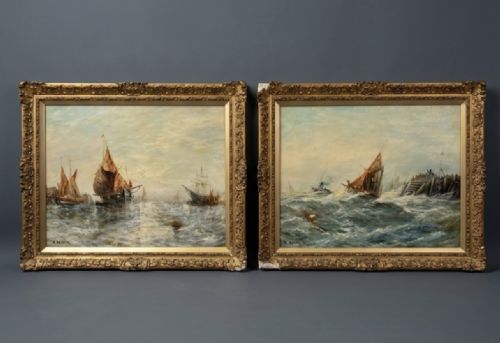
Paired antique landscape art consists of matching companion pieces designed to hang together, offering balanced visual weight on a wall. When you search for paired antique landscape art, you will encounter matching oils on canvas or wood panels, alongside delicate watercolours and pen and ink drawings from the eighteenth, nineteenth, and early twentieth centuries.
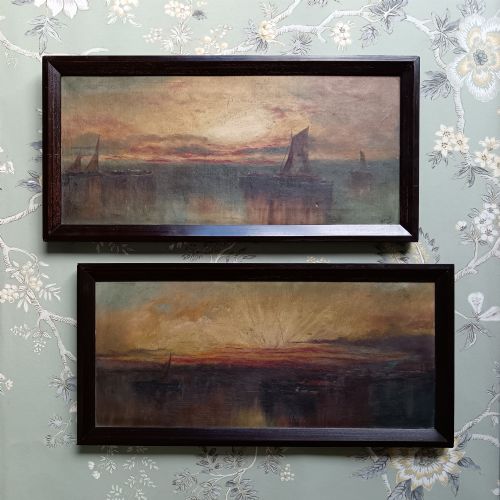
These matched works frequently depict rural scenery, coastal views, and pastoral settings intended to complement each other in palette and subject matter. The pairings often capture pendant themes such as sunrise and sunset, or contrasting seasonal moods within the same geographic locale.
On this page, the selection leans heavily towards nineteenth-century British and European works framed in period wood or gilt mouldings. Buyers frequently find framed watercolours and oil paintings bearing signatures from regional artists of the Victorian and Edwardian eras.
Materials and technique
Artists painted these companion pieces using oil on canvas, wood panels, or board, applying rich pigments that retained their depth over centuries. Alternatively, watercolourists worked on paper, capturing light and atmosphere with fluid washes that demanded precise control.
Frames play an integral part in the construction of these works, typically fashioned from carved wood and finished with gilt leaf or dark patination. These original housings protected the paper and canvas while providing the formal symmetry expected of pendant artworks.
Listings feature works spanning the eighteenth, nineteenth, and early twentieth centuries, executed in oil, watercolour, and pastel on paper, wood, and canvas.
Assessing quality and execution
The distinction between ordinary decorative pictures and superior works lies in the confidence of the brushwork and the subtlety of the tonal balance. Master painters achieved a natural sense of light and depth that draws the eye into the distance, whereas lesser works rely on formulaic repetition and flat colour.
The preservation of the original surface and the matching character of the frames dictate the overall integrity of the pair. Works that retain their untouched pigments and original period framing without heavy restoration offer a more authentic representation of the artist's original intent.
Robert Cleminson·John Moore of Ipswich·Philip Henry Rideout·Franz van Severdonck·Robert Buchan Nisbet
The Paired Landscape Art Glossary
- Pendant
- A matching companion piece designed to hang alongside another work as a balanced pair. These pieces share similar dimensions, subjects, and framing.
- Giltwood
- Wood carved and coated with a thin layer of gold leaf or gilt powder. This finish was widely applied to nineteenth-century picture frames to enhance the artwork.
- Tondo
- A circular painting or relief sculpture. This unusual format presents landscape compositions within a curved boundary rather than a traditional rectangle.
- Verdure
- A type of tapestry featuring lush green landscape foliage, trees, and plants. These heavy wall textiles often depicted stylised woods and forests.
- Wash
- A thin, semi-transparent layer of diluted watercolour pigment applied to paper. It creates smooth skies and background atmospheric effects.
Paired Landscape Art: Frequently Asked Questions
How should I hang a matched pair?
Hang them at eye level with a consistent gap between the frames to maintain visual balance on the wall. Placing them side by side allows the viewer to read the narrative or compositional flow from one canvas to the next.
Ensure the lighting is even and avoids direct, harsh sunlight to protect fragile watercolours and oil pigments from fading over time.
Were these pieces always framed together?
Most companion works were framed as a set by the artist or original commissioning patron to ensure stylistic harmony. Matching frames indicate that the pieces have likely remained together since their creation.
Discrepancies in framing styles can sometimes occur if one piece was damaged and reframed later in its history.
How do I care for antique watercolours?
Keep watercolour paintings away from direct sunlight and high humidity to prevent paper discolouration and foxing spots. Acid-free mounting during any future conservation work will protect the paper from degrading.
Glazing with UV-filtering glass provides an extra layer of defence against environmental light damage.
What subjects are most common?
Rural pastoral scenes, coastal marine views, and mountainous topography dominate nineteenth-century landscape art. Artists frequently explored changing weather conditions, such as stormy skies or tranquil sunsets.
Agricultural scenes featuring farm animals, horses, and figures working the land also appear frequently among these paired compositions.