

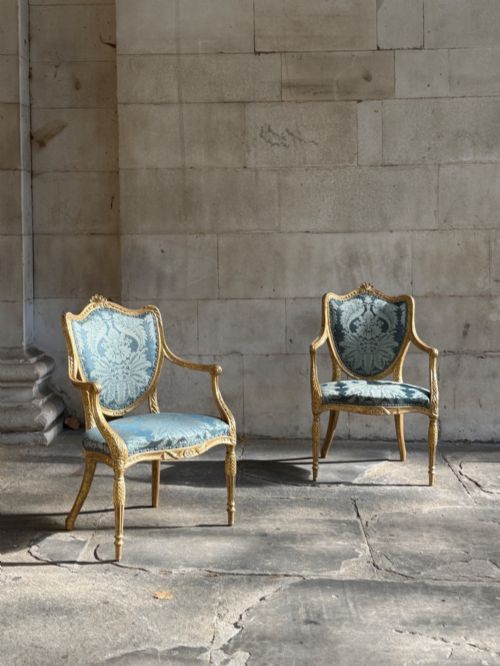
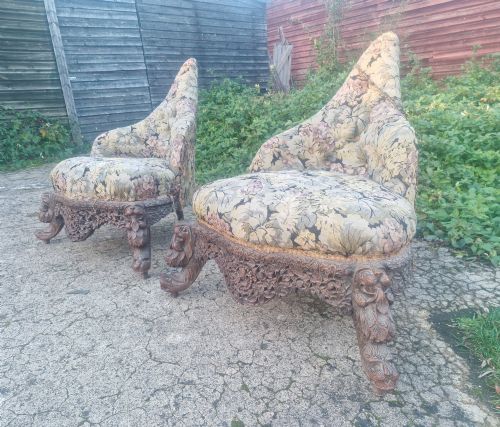
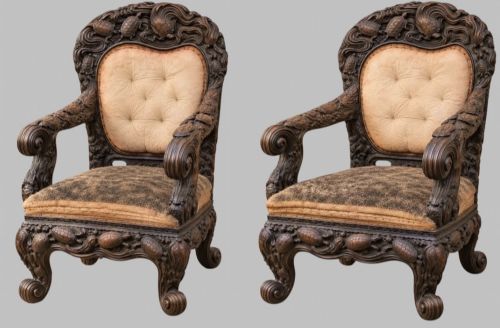
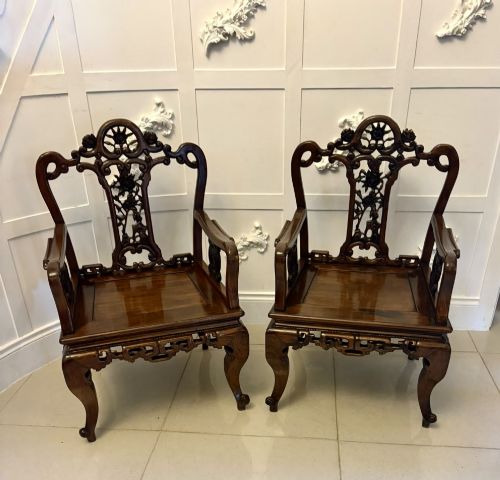
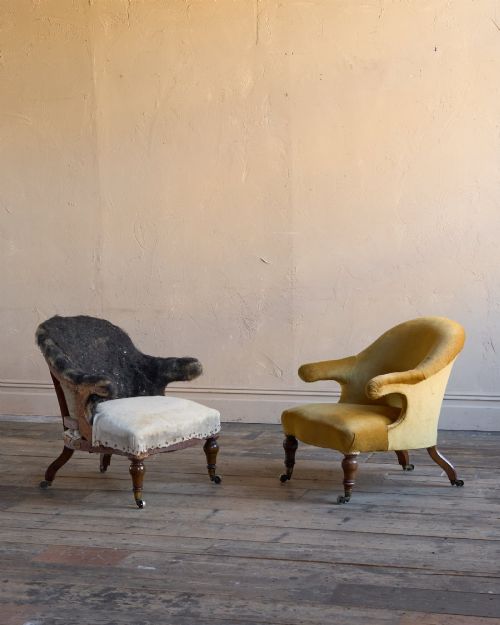
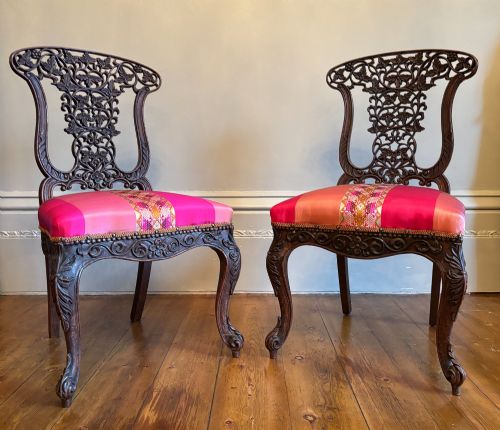
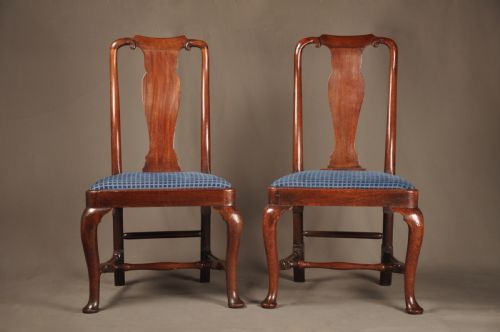
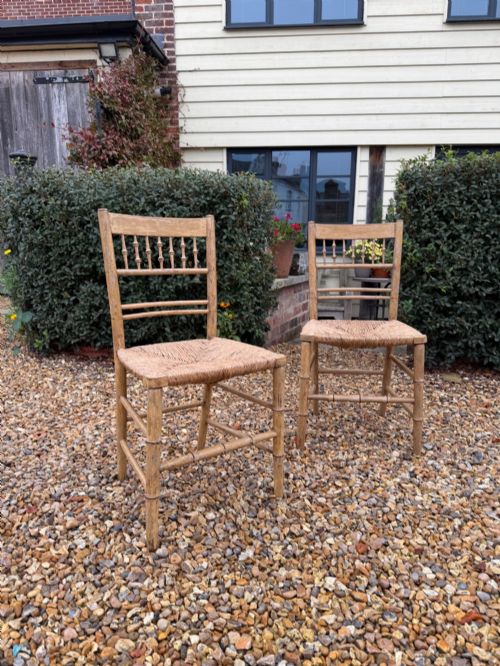
Paired Accent Chairs
Paired accent chairs bring balanced seating to a room, offering matching forms from periods spanning the Georgian era to the mid-twentieth century.
Paired Accent Chairs
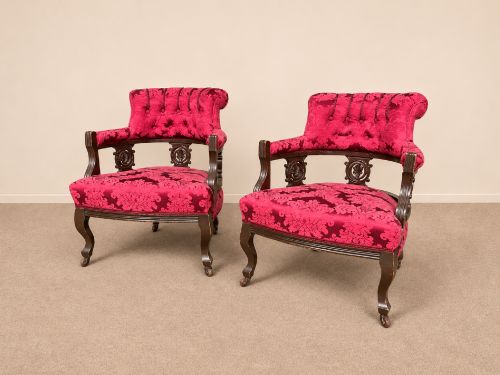
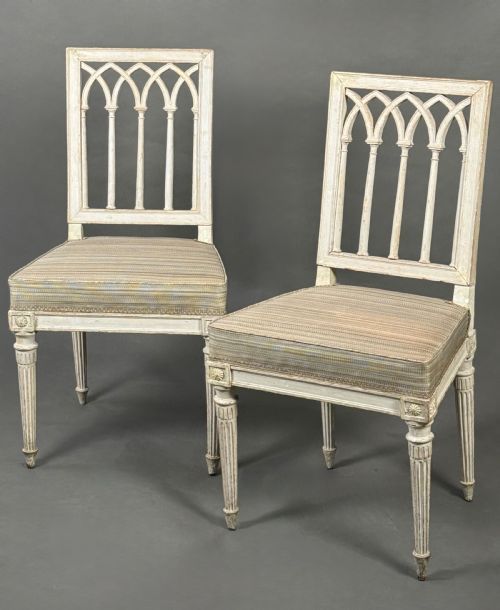
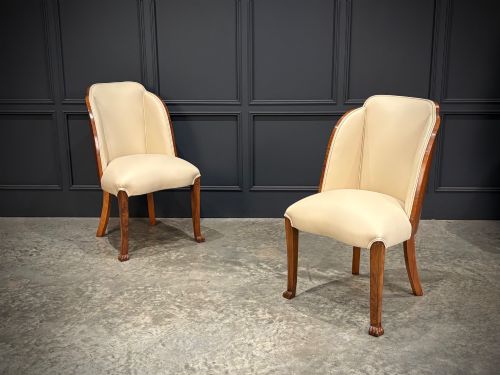
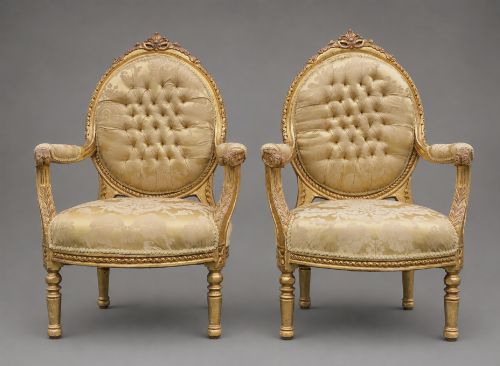
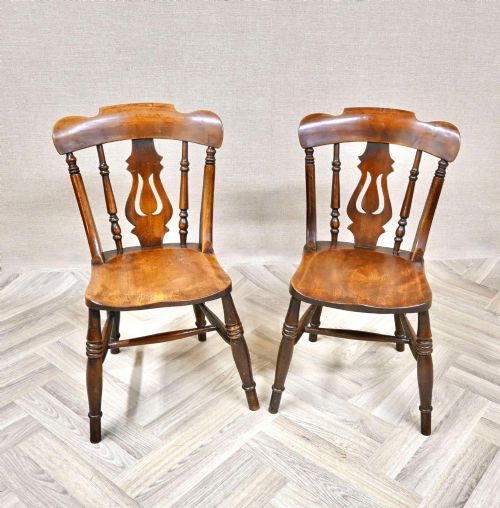
These paired accent chairs encompass various seating forms designed to match, including armchairs, side chairs, hall chairs, tub chairs, and bedroom chairs. A buyer searching for paired accent chairs will frequently encounter nineteenth-century Victorian walnut and mahogany pieces alongside French styles such as Napoleon III and Louis XVI.
The selection includes diverse regional and stylistic expressions, from English Georgian Windsor carvers and shield back hall chairs to Anglo Indian padauk chairs, Chinese Chippendale painted armchairs, and Art Deco walnut designs. These seats function effectively in pairs to anchor corners, fireplaces, or hallway spaces with symmetry.
Materials and construction methods
Makers utilised solid timbers such as mahogany, walnut, oak, satin birch, rosewood, yew, and elm, often shaping them through carving, turning, and joinery. Frames occasionally incorporate brass, giltwood, paint, or parcel-gilt finishes to decorative effect.
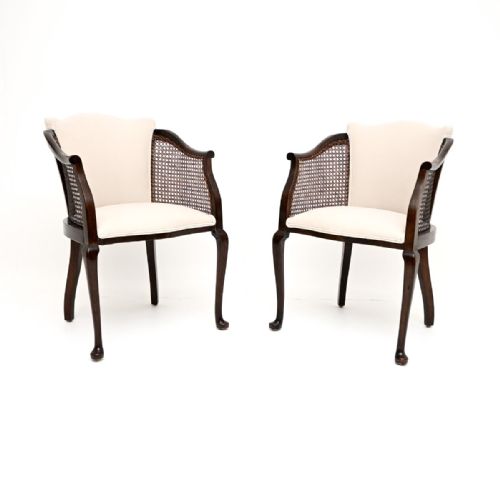
Upholstered versions feature textile coverings including leather, chintz, and fabric, sometimes utilising button tufting or bergere cane panels. Construction methods reflect the prevailing cabinet-making standards of their respective eighteenth, nineteenth, and twentieth-century periods.
Paired Accent Chairs Retail Price Guide 2026
Typical asking prices for paired accent chairs among the pieces listed under this phrase on Sellingantiques today, from the lower quarter to the upper quarter. They describe what is for sale here now, not the wider market.
Object forms span armchairs, side chairs, hall chairs, tub chairs, bedroom chairs, and library chairs.
Distinctions in craftsmanship
The refinement of carved detail and the choice of timber define the upper tier of these seats, distinguishing standard production from exceptional examples. Crisp execution of motifs, such as Chippendale fretwork or Victorian foliate carving, indicates superior workshop execution.
The integrity of the matching pair remains paramount, ensuring that timber grain, proportions, and wear correspond evenly across both pieces. Original surface patination and untouched structural condition further elevate the standing of individual chairs.
Maurice Adams·Guillows
The Paired Accent Chairs Glossary
- Bergere
- An enclosed upholstered armchair with a wooden frame, frequently featuring cane work to the sides and back. This French form gained popularity during the eighteenth century and reappeared in later revival periods.
- Shield back
- A chair back shaped in the outline of a heraldic shield, commonly associated with eighteenth-century dining and hall seating. The style relies on open woodwork tracery for its decorative impact.
- Scabello
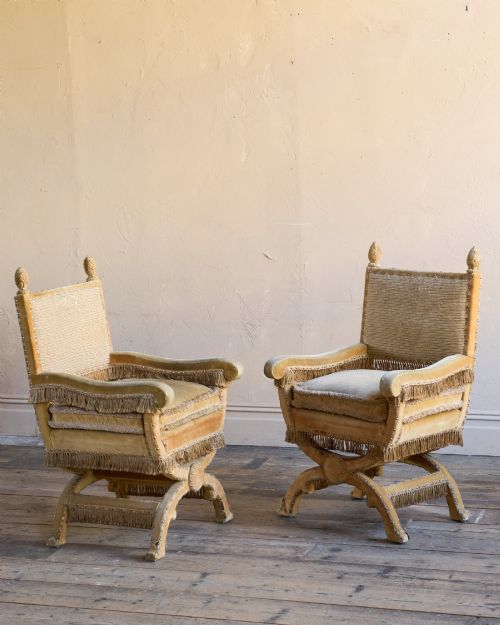
- A Renaissance-style chair form featuring solid trestle supports and a flat seat, occasionally produced in oak during the Georgian era. These rigid seats served formal hall functions rather than lounging.
- Spoon back
- An upholstered chair back curved in a vertical concave profile resembling the bowl of a spoon, typical of mid-nineteenth-century seating. This contour aimed to support the human spine comfortably.
- Parcel-gilt
- Partially gilded woodwork where gold leaf highlights specific carved details against a painted or polished timber ground. This technique adds visual contrast to frames from the Georgian and later decorative periods.
Paired Accent Chairs: Frequently Asked Questions
How do I style paired accent chairs?
Place them opposite a sofa or flank a fireplace to create a balanced seating arrangement in a living room. Matching chairs also work effectively in a bedroom corner or framing a hallway console table.
Maintain symmetry by keeping surrounding decor restrained so the matching frames remain the primary focus. Their shared design brings visual order to larger spaces.
What periods do these chairs cover?
The selection spans from the eighteenth-century Georgian era through Victorian production to twentieth-century Art Deco and mid-century designs. Each period brings distinct timber choices and carving styles.
Nineteenth-century Victorian and Napoleon III pieces appear frequently, alongside earlier Georgian Windsor chairs and later 1930s club chairs. This broad timeline allows for mixing eras within a room.
How do I distinguish chair styles?
Examine the backrest shape, leg configuration, and carving motifs to identify the stylistic influence. Chippendale designs show fretwork and ribbon backs, while Rococo Revival pieces display organic curves and floral carving.
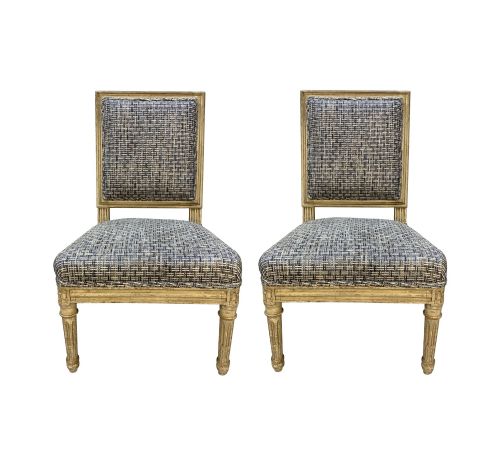
French styles like Louis XVI feature straight fluted legs and neoclassical geometry, whereas Art Deco emphasises streamlined geometric forms. Comparing these structural details clarifies the design lineage.
Were these chairs originally made as pairs?
Many were constructed as matching sets for formal drawing rooms or halls, while others form later matched pairs assembled by dealers based on timber and style. Original pairs share identical timber grain and wear patterns.
Matched pairs offer similar visual balance for interior schemes even if their workshop origins varied slightly. Checking the structural joinery helps confirm their period consistency.