




Pair Wooden Forms
Pair wooden forms comprise matched sets of benches, figures, tables, candlesticks and boxes shaped into functional or decorative objects.
Pair Wooden Forms
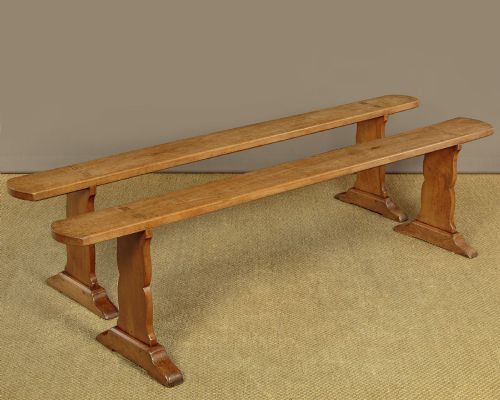
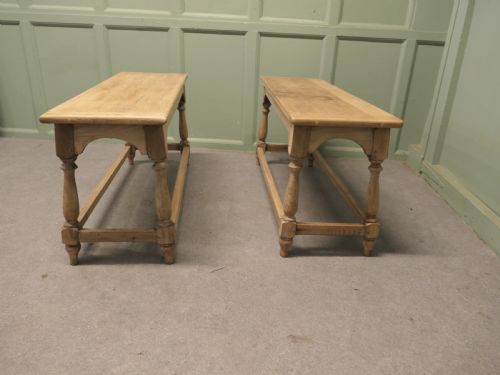
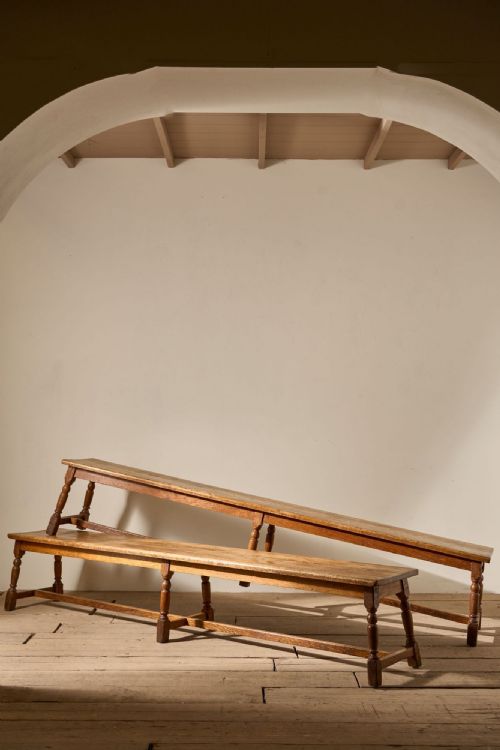
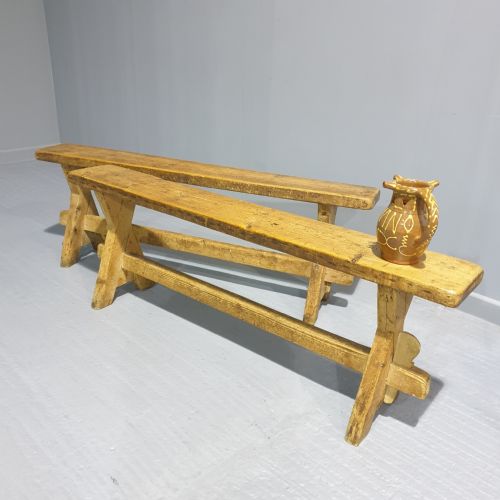
Benches dominate the forms available, ranging from French cherrywood and fruitwood dining pairs to long pine school benches and bleached oak joint benches. These seating pieces reflect rustic farmhouse, rustic country, French provincial, English country and Scandinavian country styles.
Beyond seating, the selection includes decorative sculptures and side tables from the Black Forest tradition, folk art wood candlesticks, and carved treen snuff boxes. Each matching set demonstrates specific historical forms shaped by regional cabinet makers and carvers.
How they were made
Makers utilised solid timbers such as pine, oak, walnut, cherrywood, fruitwood, bleached oak and elm to construct these matching pairs. Carpenters selected these domestic and fruit woods for their grain patterns and structural durability in functional items.
Detailed hand carving defines the decorative items, particularly in Black Forest animal figures and side tables, folk art candlesticks and treen snuff boxes. Joinery methods suit the object type, from joint construction in benches to turned and carved components in smaller decorative pieces.
Poachers carrying game and ladies wearing open-toed shoes both serve as unexpected inspiration for nineteenth century carved wooden objects.
What varies in quality
Depth and precision of hand carving separate utilitarian items from exceptional decorative pieces, especially within Black Forest sculptures and folk art objects. The crispness of detail in carved animal forms and figures indicates the maker's skill level.
Selection of timber and the preservation of original surfaces govern the integrity of benches and smaller wooden objects. Consistency of grain and matching timber selection across both pieces in a pair determine the visual harmony of the set.
The Pair Wooden Forms Glossary
- Treen
- Small handmade wooden objects for domestic use. This category covers carved snuff boxes and small decorative items.
- Joint bench
- A piece of seating constructed with mortise and tenon joints pegged together securely. These items demonstrate traditional sixteenth and seventeenth century joinery styles revived in later periods.
- Fruitwood
- Timber sourced from fruit-bearing trees such as cherry or pear. Cabinet makers valued these dense woods for fine turning and carving.
- Black Forest
- A style of wood carving originating from the mountain region in Germany. This tradition is known for realistic animal sculptures and furniture elements.
- Bleached oak
- Timber treated to lighten its natural tone. This finish creates a pale, uniform surface popular in decorative furniture.
Pair Wooden Forms: Frequently Asked Questions
Are all these pairs benches?
Benches form the majority of the available items, spanning French, English and Scandinavian country styles in pine, oak, fruitwood and elm.
However, the category also includes carved Black Forest figures, side tables, folk art candlesticks and treen snuff boxes.
What woods do makers use?
Pine, oak, walnut, cherrywood, fruitwood, bleached oak and elm appear across the listings.
Carpenters selected these timbers based on the function of the object, using sturdy woods for benches and finer grain woods for carved items.
How do I date these items?
Dating relies on period styles, construction methods and timber preparation recorded from the nineteenth century through the early twentieth century.
Victorian and Edwardian eras brought specific regional vernacular designs in both seating and carved decorative objects.
Where were these pieces made?
Origins span France, England, Scandinavia and the Black Forest region of Germany.
Regional workshop traditions shaped the distinct styles, from French provincial dining benches to Swiss and German animal carvings.