

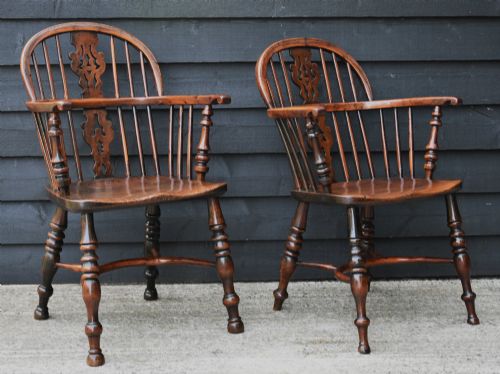
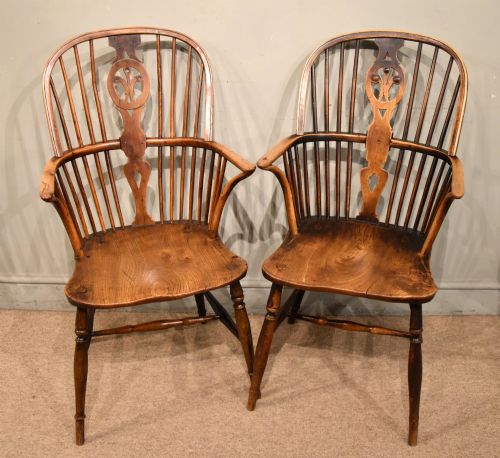
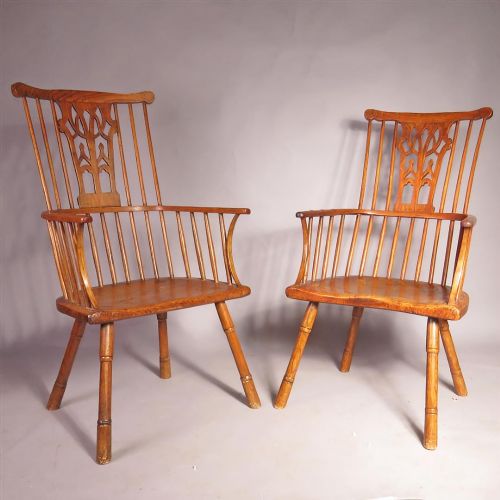
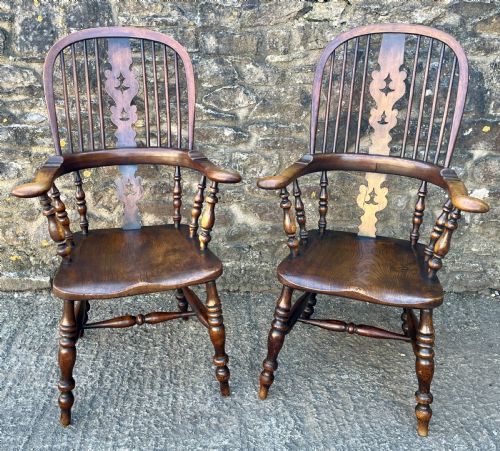
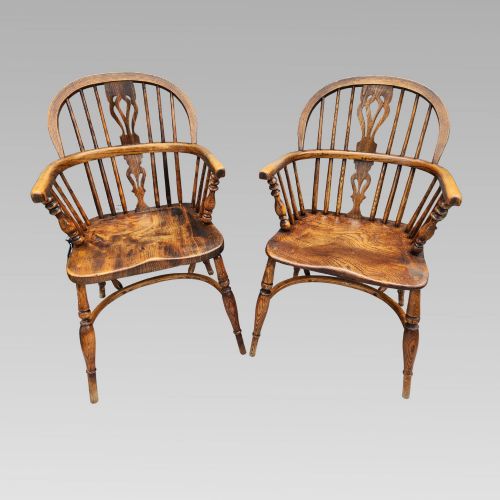


Pair Windsor Elbow Chairs
Pair windsor elbow chairs are traditional vernacular seating, bringing organic warmth and sturdy construction to any room.
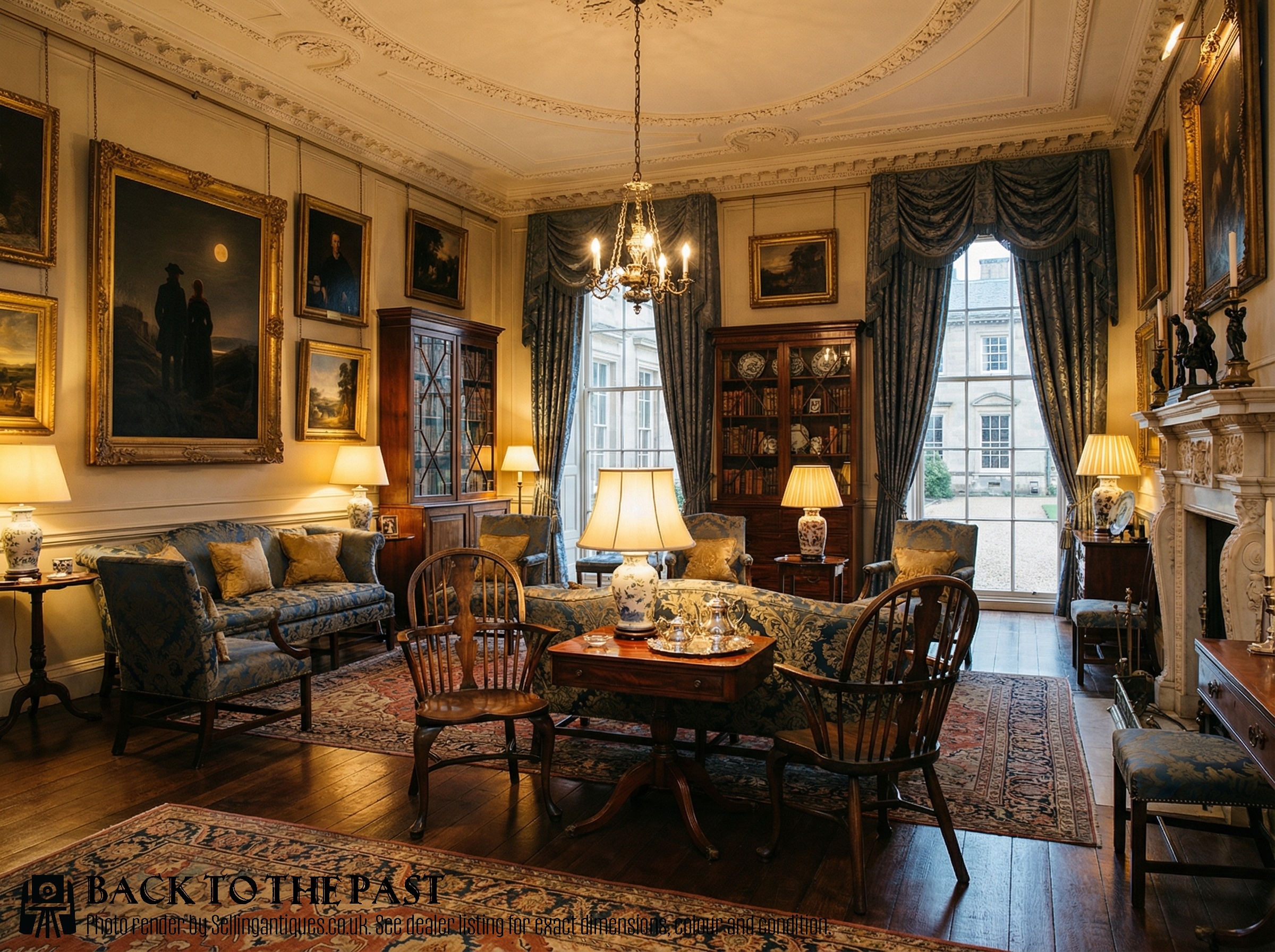
Pair Windsor Elbow Chairs
When you search for pair windsor elbow chairs, you encounter seating developed across British rural workshops, most frequently surviving in elm, ash, and yew from the eighteenth and nineteenth centuries. These timber framed seats combine substantial plank or saddle seats with spindles or comb backs, designed for domestic comfort in farmhouses and cottages.
The versions most commonly met on this page date from the nineteenth century, though earlier Georgian examples and later Edwardian or 1920s interpretations also appear. They span styles from regional English country variations to specific Thames Valley forms, uniting robust vernacular design with enduring utility.
Construction and materials
Cabinet makers and bodgers built pair windsor elbow chairs by turning legs and spindles on pole lathes from straight grained woods such as ash and beech, while carving solid seats from thick slabs of elm. They secured the components using wedged tenon joints, driving the legs and back uprights directly into bored holes in the seat base.
Makers occasionally combined contrasting timbers within a single frame, pairing rich yew wood for the bowed backrests with paler elm seats. Finished surfaces relied on natural beeswax applications that deepened the grain over decades of handling.
Pair Windsor Elbow Chairs Retail Price Guide 2026
Typical asking prices for pair windsor elbow chairs among the pieces listed under this phrase on Sellingantiques today, from the lower quarter to the upper quarter. They describe what is for sale here now, not the wider market.
Makers sometimes concealed knot holes in elm seats with fitted wooden butterflies.
Assessing quality and character
The distinction between ordinary and exceptional pair windsor elbow chairs lies in the figure of the timber and the refinement of the turned members. Burr yew or deeply figured elm displays striking natural patterning that elevates a standard country chair into a sophisticated example of vernacular artistry.
Proportion and stance dictate the visual weight of the seating, with well balanced comb backs and sweeping arm bows offering superior elegance. Uniformity within a matched set requires careful pairing of grain direction and natural wear patterns across both items.
The Pair Windsor Elbow Chairs Glossary
- Comb back
- A Windsor chair design featuring a low back topped by a horizontal crest rail with vertical spindles rising through it. This style provides solid vertical support for the sitter.
- Elm
- A durable hardwood with an interlocking grain that resists splitting, commonly selected for solid chair seats. Its natural toughness made it ideal for carved saddle shapes.
- Yew wood
- A dense timber prized for its rich reddish brown tone and distinct figuring, frequently utilised in high status Windsor chair backs. It bends well under steam and ages with a deep patina.
- Vernacular
- Architecture and furniture rooted in local traditions and practical utility rather than formal academic design. These objects reflect regional resource availability and native craftsmanship.
- Spindle back
- A chair back constructed from multiple slender turned vertical wooden rods connecting the seat to the top rail. This method distributes weight efficiently while keeping the frame light.
Pair Windsor Elbow Chairs: Frequently Asked Questions
What defines a windsor chair?
A windsor chair is built by inserting individual legs and back spindles directly into a solid carved wooden seat rather than using a joined frame.
This method creates a resilient, monolithic structure where every component locks the entire assembly together.
How do you date an antique windsor?
Dating relies on timber species, tool marks, and the evolution of the back construction, from eighteenth century comb backs to Victorian broad arm variants.
Early examples often display distinct adze marks on the underside of the elm seat and hand turned undercarriages.
Are these chairs comfortable for daily use?
The sculpted saddle seats and supportive curved arm bows distribute weight evenly, offering surprising ergonomic comfort.
Their sturdy timber construction makes them exceptionally stable for everyday seating around a dining table or desk.
Why are matching pairs scarce?
Country chairs were produced in small regional workshops rather than large industrial factories, making identical surviving pairs unusual.
Most historic seating was made individually or supplemented over time, so finding a matched pair indicates careful assemblage.