

Pair Vintage Leather Armchairs
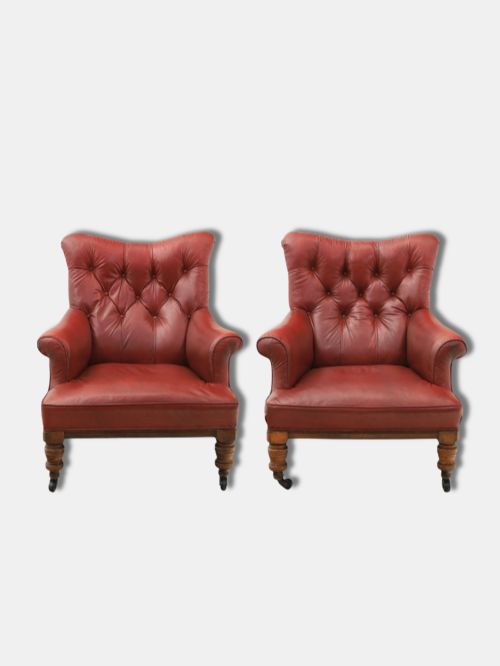
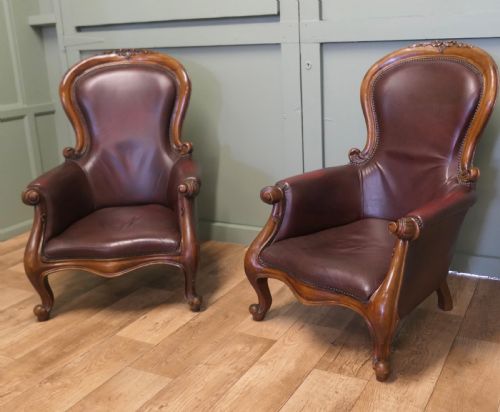
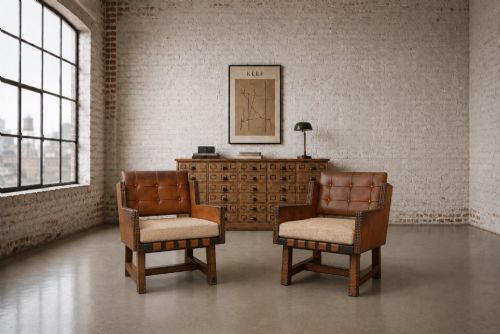
Pair vintage leather armchairs deliver substantial seating combining sturdy hardwood frames with patinated hides across periods from the nineteenth century to Art Deco.
Pair Vintage Leather Armchairs
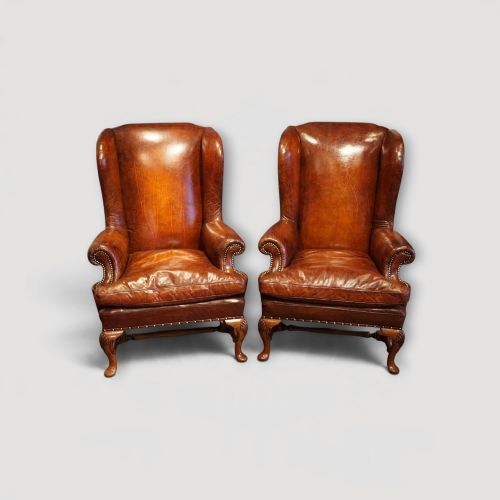
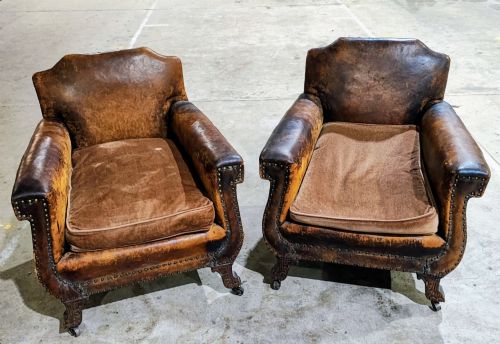
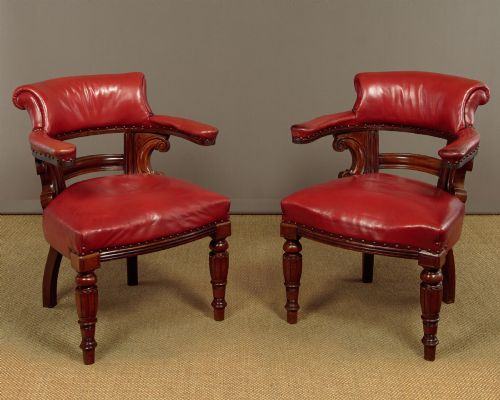
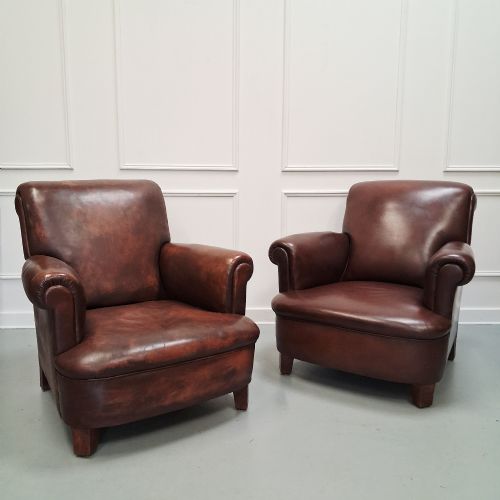
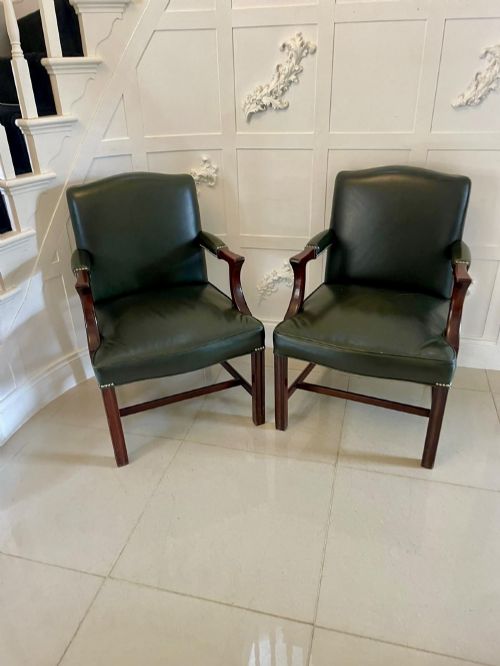
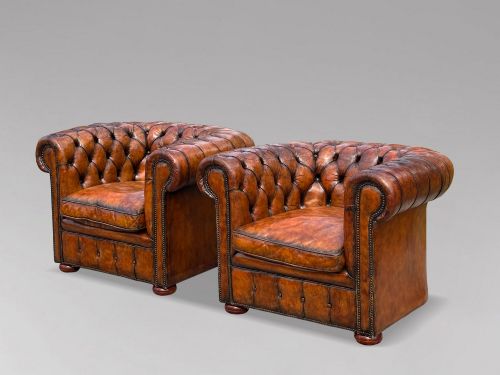
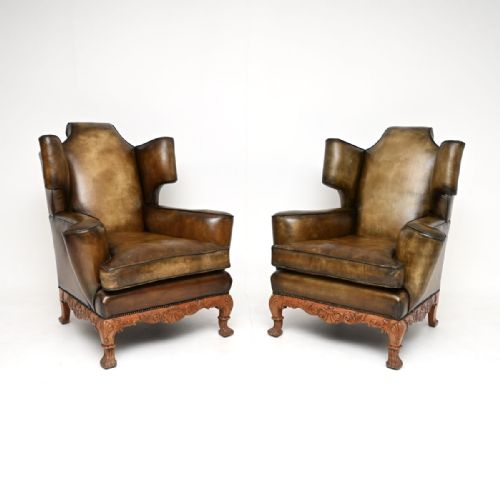
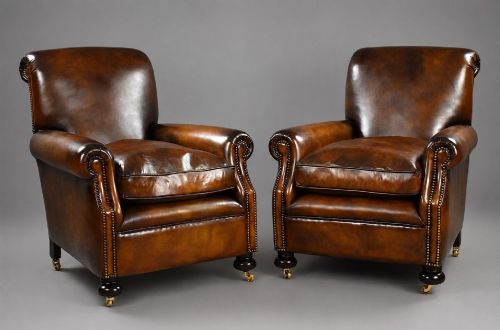
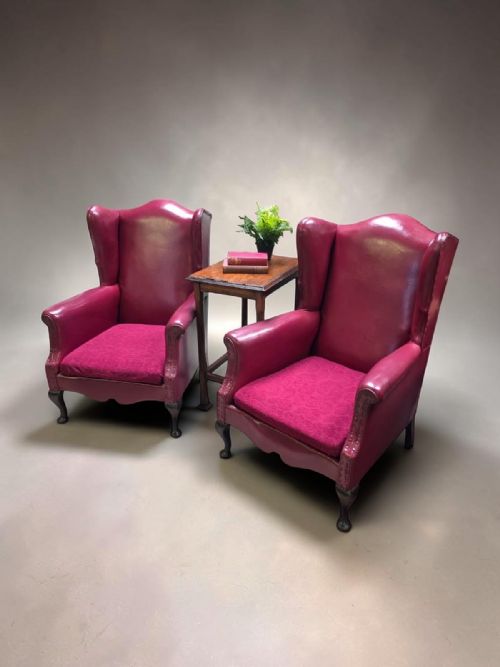
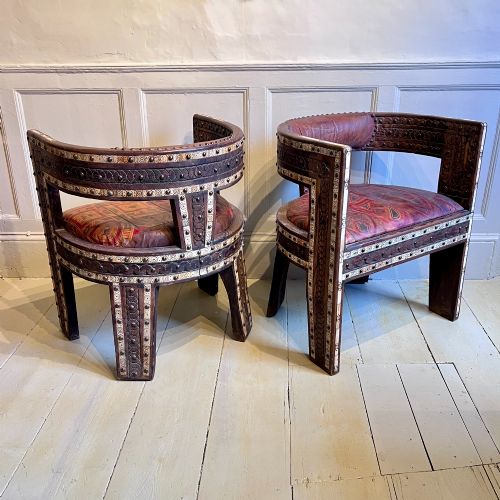
These selections comprise matched sets of two seats designed for comfort and utility, spanning eras from the Victorian years through Edwardian designs to the Art Deco decades. Buyers investigating pair vintage leather armchairs encounter forms ranging from low club chairs and deep Chesterfield models to wingbacks and library desk chairs.
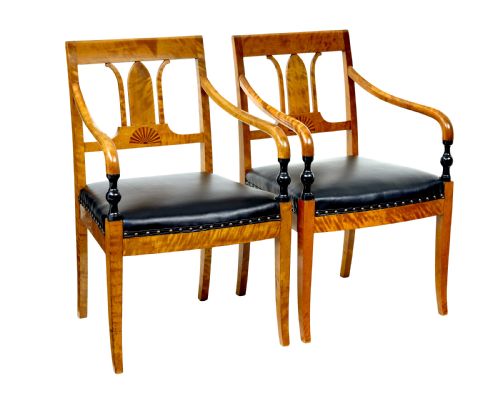
Origins stretch across English, French, and Scandinavian workshops, utilising timbers such as mahogany, walnut, birch, and rosewood beneath supple leather upholstery. The configurations vary from button-backed lounging seats to upright carvers and occasional chairs suitable for studies and drawing rooms.
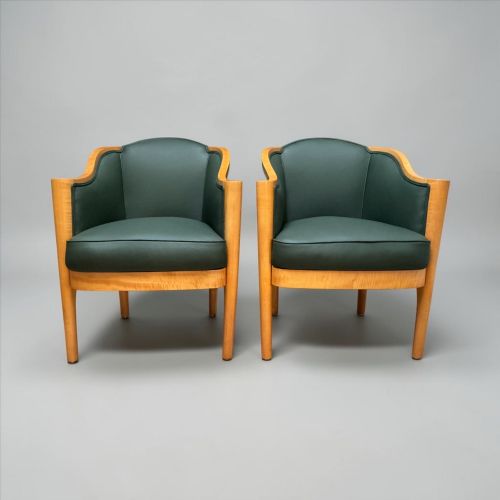
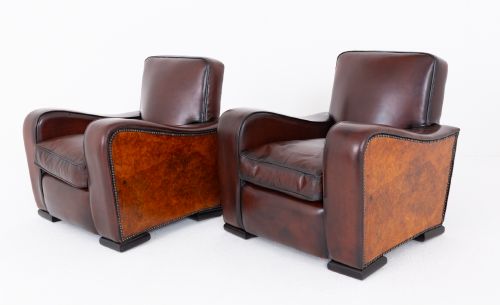
The most frequent examples discovered here date from the 1920s and 1930s, displaying characteristic club chair proportions or streamlined Art Deco geometries. Alongside these twentieth-century pieces, earlier nineteenth-century variants appear with mahogany frames, rosewood structures, and traditional studwork.
How they were made
Construction relies upon robust internal frames fashioned from hardwoods like mahogany, walnut, oak, and birch, providing structural integrity for daily use. Joinery techniques connect these timber skeletons to support deep cushioning and sprung bases.
Upholstery involves fitting cattle hide over padding, secured with metal brass studs in traditional examples or tailored neatly along geometric lines in Art Deco iterations. Secondary timbers such as satin birch and rosewood frequently form the exposed wooden arms and legs visible on French and Scandinavian designs.
Pair Vintage Leather Armchairs Retail Price Guide 2026
Typical asking prices for pair vintage leather armchairs among the pieces listed under this phrase on Sellingantiques today, from the lower quarter to the upper quarter. They describe what is for sale here now, not the wider market.
What varies in quality
Distinction across the range lies in the depth of the timber grain, the suppleness of the hide, and the integrity of the original framing. Superior examples demonstrate harmonious proportions where the woodwork and the leather upholstery age uniformly together.
Fine tailoring shows in the precision of button-backing, the placement of brass studwork, and the retention of rich surface patination on the leather. Lesser instances exhibit uneven wear or replacement elements that disrupt the visual balance between the two matched seats.
Hille
The Pair Vintage Leather Armchairs Glossary
- Club chair
- A deep, comfortable armchair designed for lounging, typically upholstered in thick leather with low backs and wide arms. These seats originated in French clubs during the early twentieth century.
- Chesterfield
- A traditional British seating style characterised by deep button tufting and rolled arms that match the height of the back. Versions often feature studded leather detailing along the front margins.
- Wingback
- An armchair featuring protective side panels attached to the backrest to shield the sitter from drafts. Early iterations date to the eighteenth century but remain popular in later revival styles.
- Bergère
- An enclosed armchair with wooden framing and cane or upholstered side panels. These forms frequently employ polished mahogany or walnut structures.
- Rexine
- A brand of artificial leather cloth utilised as an upholstery substitute during the early twentieth century. It replicates the appearance of genuine hide on specific utilitarian models.
Pair Vintage Leather Armchairs: Frequently Asked Questions
How do I identify Art Deco pair vintage leather armchairs?
Art Deco examples display streamlined silhouettes, symmetrical geometric forms, and exposed timbers such as satin birch or walnut. Their design emphasises clean lines rather than the ornate carving found on earlier Victorian pieces.
These chairs often date from the 1930s and prioritize compact, rounded comfort suited to modern apartment living of that era.
Where were most vintage leather club chairs made?
Many surviving examples originate from English and French workshops active during the 1920s and 1930s. French pieces frequently exhibit distinct club proportions, while English variations often incorporate Chesterfield styling.
Scandinavian makers also contributed notable designs during the same period, utilising birch framing alongside dark leather upholstery.
What is the difference between wingback and club armchairs?
Wingback chairs include high backs fitted with protective side panels designed originally to block cold drafts. Club armchairs feature lower, deeper profiles intended purely for relaxed seating.
Both variants utilise leather upholstery, but their overall silhouettes serve different interior placement requirements.
How should I care for vintage leather upholstery?
Maintain the material by avoiding direct sunlight and keeping the hide conditioned with specialist leather balms to prevent drying. Regular dusting preserves the surface sheen without damaging the historical patination.
Ensure the underlying wooden frames remain in stable environments with consistent humidity levels.