


Pair Victorian Pottery Dogs
These pair victorian pottery dogs are classic ceramic figurines crafted to sit on mantelpieces, bringing domestic animal subjects into nineteenth-century interiors.
Pair Victorian Pottery Dogs
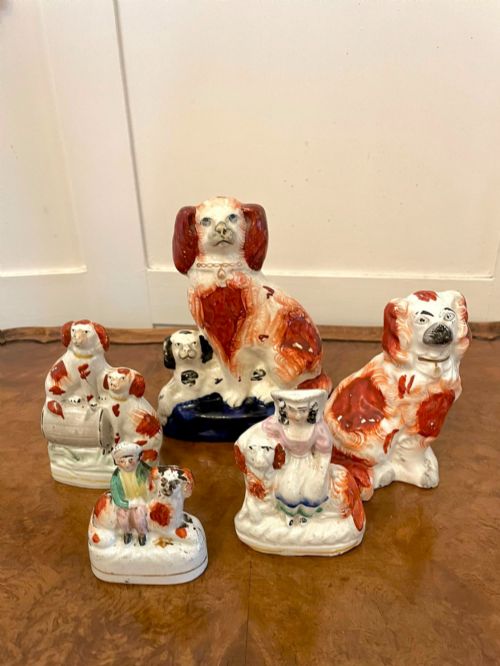
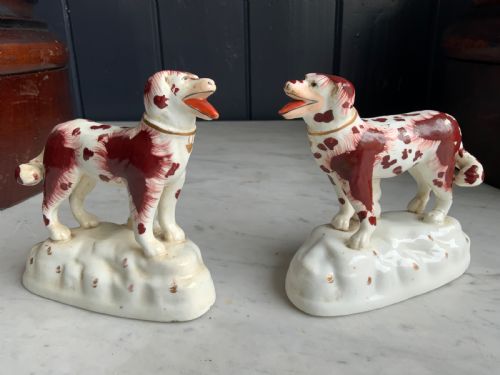
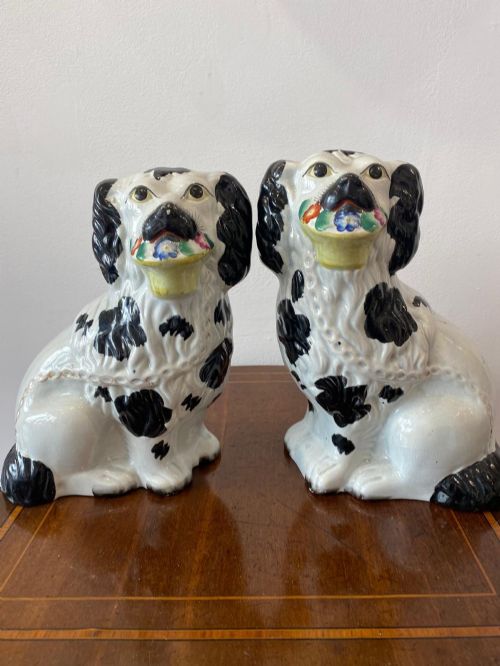
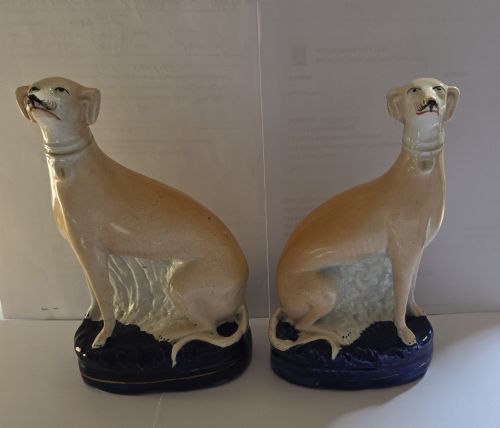
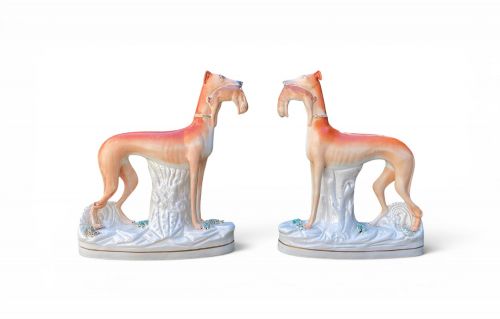
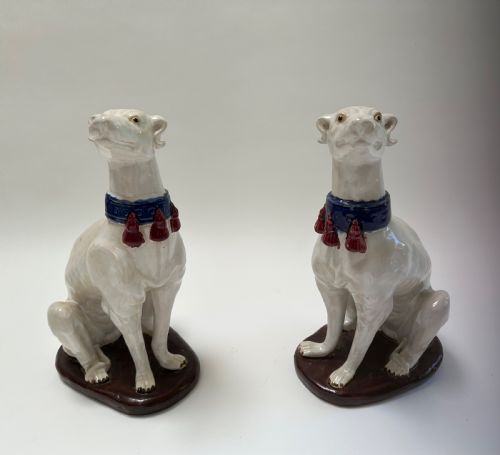
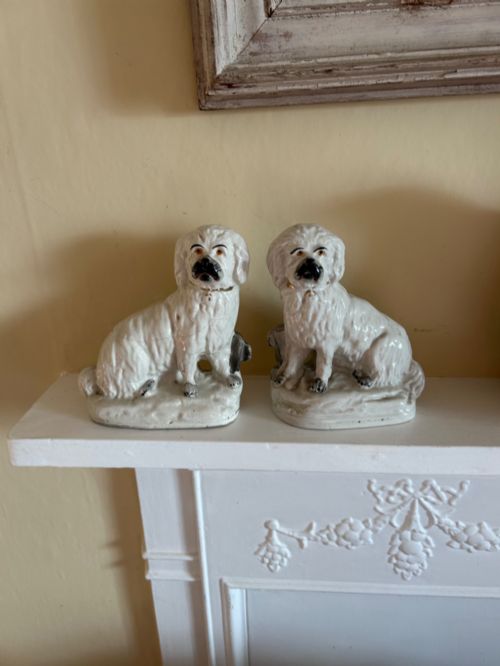
When searching for pair victorian pottery dogs, collectors encounter earthenware and ceramic figures created across the nineteenth century, most notably Victorian Staffordshire spaniels, poodles, greyhounds, and whippets.
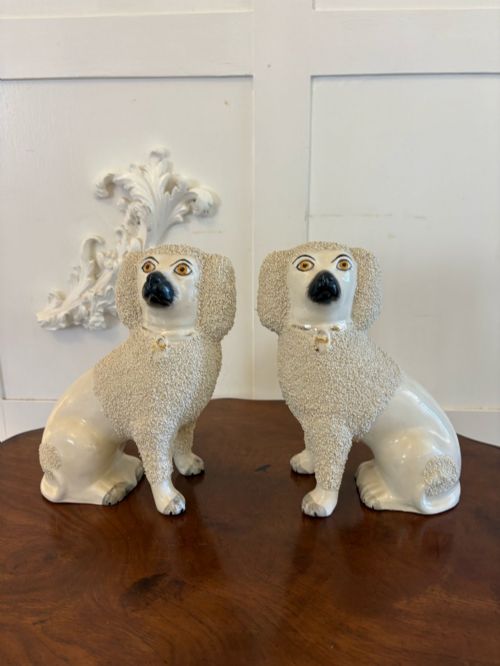
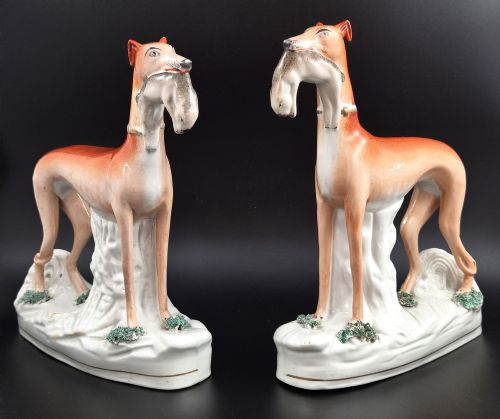
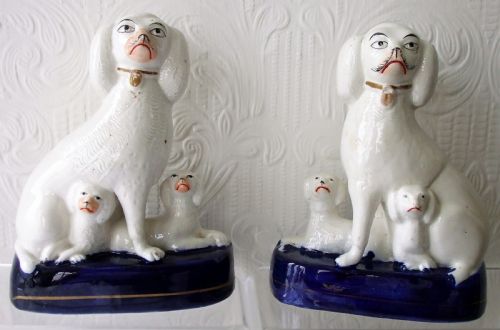
The versions met most frequently on this page are seated or standing pairs, often styled as comforter spaniels, hunting dogs with hares, or poodles with textured coats.
Makers produced these decorative objects in various scales, from miniature poodles to large fireside models, alongside functional desk accessories like inkwells and quill holders.
How they were made
Potters shaped these earthenware figures using slip-casting or pressing techniques, applying lead glazes and enamel colours before firing.
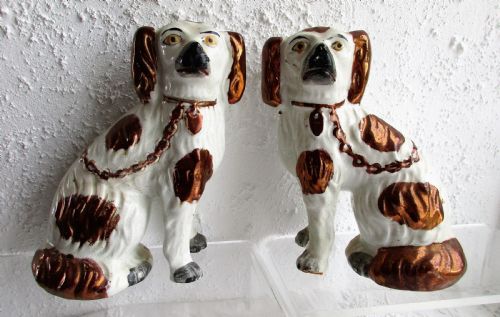
Surface decoration frequently incorporated gold leaf, gilt accents, and copper lustre, alongside specialised treatments such as applied confetti clay to render textured poodle hair and gravelware bases.
Listings feature earthenware and ceramic figures spanning the nineteenth century, including Regency, Victorian, and early twentieth-century periods.
What varies in quality
Execution of hand-painted enamels and the careful application of gilt collars or gold leaf create visual depth that separates standard production items from finer studio output.
Thomas Parr
The Pair Victorian Pottery Dogs Glossary
- Comforter spaniels
- Staffordshire ceramic spaniels traditionally placed on hearths or mantelpieces during the Victorian era. They usually face left and right to form a mirrored pair.
- Confetti pottery
- Earthenware figures decorated with small pieces of fired clay applied to the surface to imitate curly poodle fur. This technique requires careful individual attachment before glazing.
- Gravelware
- A textured finish applied to the base of pottery figures using sand or crushed pottery. It provides a rustic ground for the animal to sit upon.
- Quill holder
- A desk accessory moulded with channels or rests to hold writing quills. These items combine practical function with figural pottery design.
Pair Victorian Pottery Dogs: Frequently Asked Questions
What are Victorian pottery dogs?
These pieces are ceramic figures modelled as dogs, primarily produced in Staffordshire during the nineteenth century. They served as decorative chimney ornaments and fireside companions in homes of the period.
Potters created numerous breeds, including spaniels, greyhounds, poodles, and pugs. Most examples were designed as left and right-facing pairs to sit at either end of a mantelpiece.
How were Staffordshire dogs displayed?
Victorian households traditionally placed these pottery pairs on mantelpieces, often flanking a clock or central ornament. Larger models were positioned directly on the hearth beside the fireplace.
The convention of placing spaniels on mantels gave rise to the term fireside dogs. They were intended to add respectability and comfort to the domestic parlour.
What breeds do these figures represent?
Spaniels are the most common breed encountered, particularly the white and red or black and white comforter spaniels. Greyhounds and whippets also appear frequently, sometimes modelled alongside hares or serving as inkwells.
Collectors also find poodles featuring textured confetti coats, along with dalmatians, pugs, and Maltese terriers. Each breed reflects the popularity of specific domestic and sporting animals during the Victorian era.
How can I tell older Staffordshire dogs apart?
Earlier pieces from the mid-nineteenth century often feature separate front legs, hollow bases with vent holes, and hand-painted facial details. Model definition and crispness of the mould tend to soften in later reproductions.
Glaze characteristics also assist with dating, as genuine nineteenth-century earthenware exhibits specific crazing patterns and softer enamel colours. Weight, paste composition, and the style of gilded collars provide further clues to period origins.