

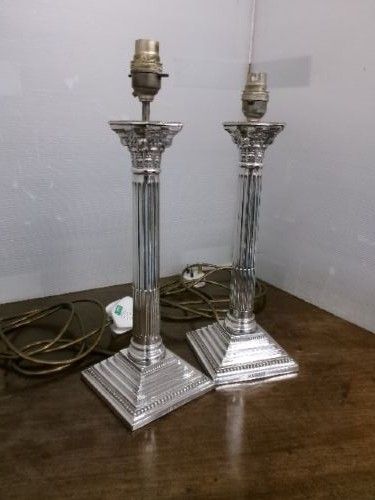
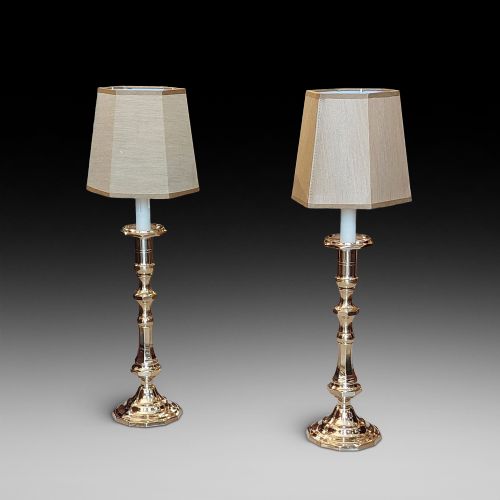
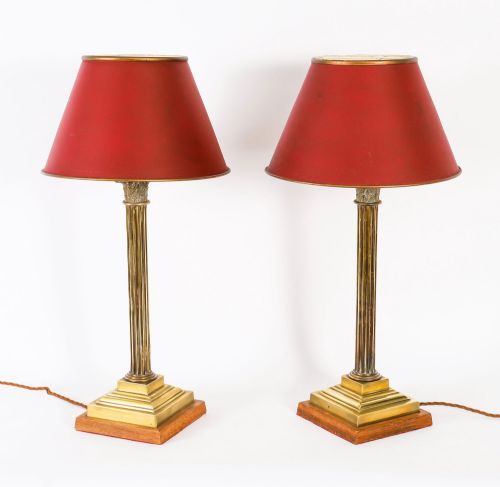
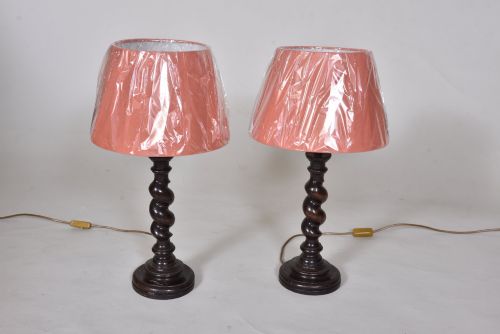
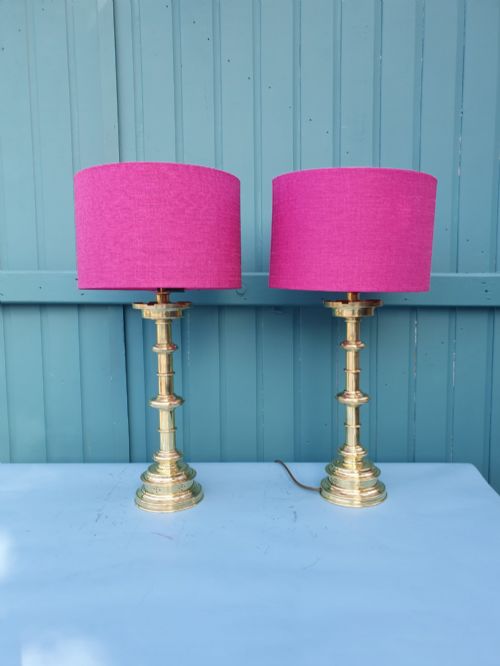
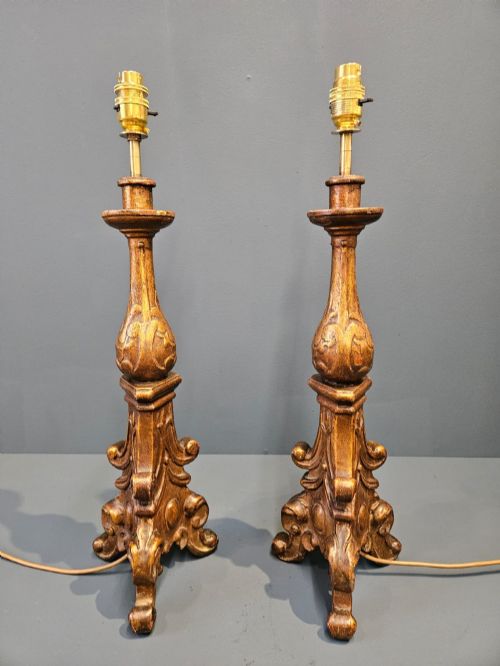

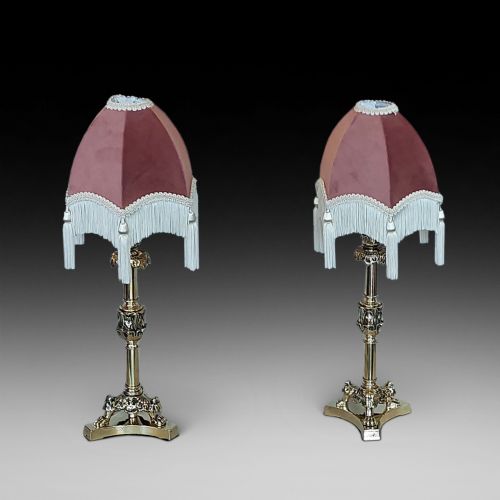


Pair Victorian Desk Lamps
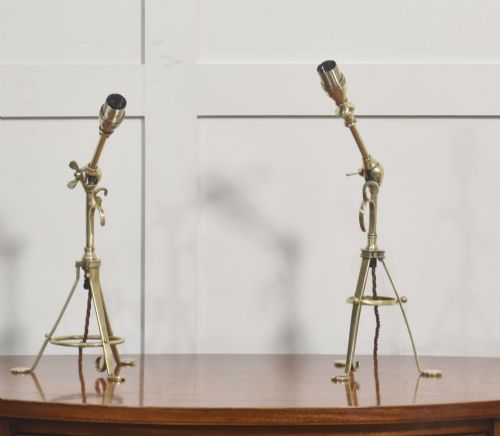
When you search for pair victorian desk lamps, you uncover heavy brass, converted candlesticks, and adjustable library lights designed to illuminate writing surfaces.
Pair Victorian Desk Lamps
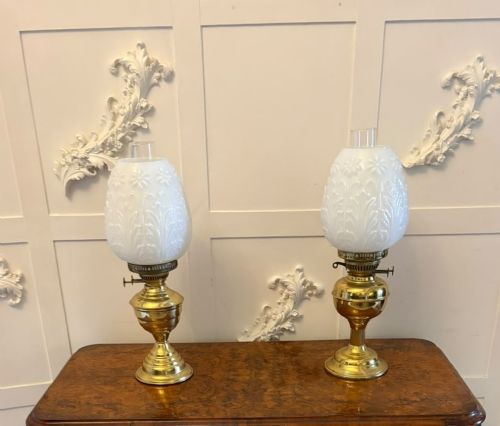
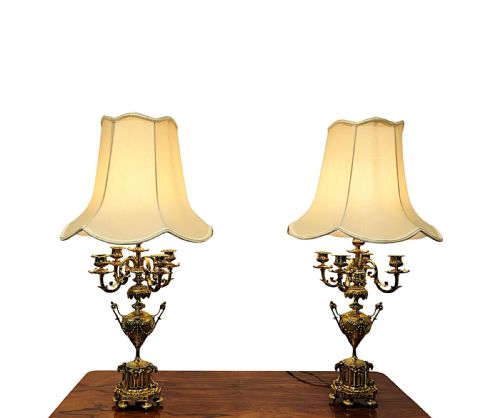
When searching for pair victorian desk lamps, collectors encounter matched lighting fixtures drawn primarily from nineteenth-century domestic and study interiors. These dual pieces commonly originate as converted altar candlesticks, oil lamps, or specialised desk and table lighting from the Victorian era.
The selection on this page relies heavily on solid brass construction, alongside silver plate, bronze, and turned timber. Many examples reflect classical or revivalist tastes, utilising architectural columns or urn shapes to anchor a workspace.
How they were made
Makers shaped these fixtures using solid brass, cast bronze, and silver plate, often turning metal on a lathe or casting decorative elements in fine detail. Many pieces began life as oil lamps or candlesticks before undergoing later conversion to electricity.
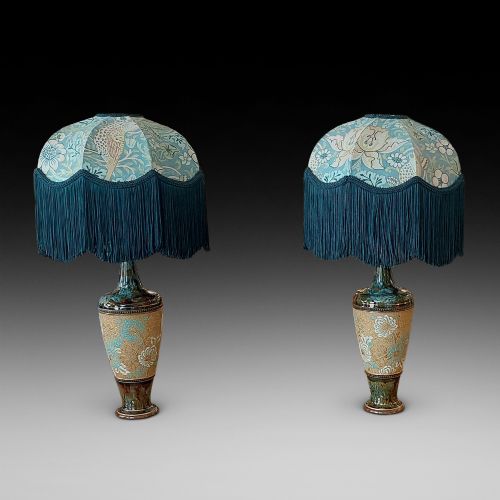
Shades and wiring integrate fabric, silk, and opaline glass to soften the illumination. Structural integrity relies on heavy metal casting and secure threaded joints to support the weight of the metal bodies.
Pair Victorian Desk Lamps Retail Price Guide 2026
Typical asking prices for pair victorian desk lamps among the pieces listed under this phrase on Sellingantiques today, from the lower quarter to the upper quarter. They describe what is for sale here now, not the wider market.
Keep an eye out for decorative brass candlelamps cleverly modelled as cavalry dress sword basket-guards.
What varies in quality
The weight of the metal casting and the crispness of decorative chasing distinguish standard production from superior examples. Heavy gauge brass and finely detailed Corinthian capitals indicate careful workshop execution.
Completeness of original matching components, such as burners, shades, and weighted bases, elevates the integrity of a matched set. Conversion work executed cleanly preserves the original silhouette of the antique base.
W.A.S. Benson·Wild & Wessel·William McGeoch & Co·Brocot
The Pair Victorian Desk Lamps Glossary
- Corinthian column
- An architectural column form featuring ornate acanthus leaves on the capital, frequently used for tall table lamps.
- Candlestick lamp
- A lighting base created by adapting an existing candlestick for electrical wiring.
- Opaline glass
- A milky, translucent glass often utilised for lamp shades to diffuse light evenly across a desk.
- Gilt bronze
- Bronze metal coated in a thin layer of gold or gold-coloured wash, also known as ormolu.
- Repoussé
- A metalworking technique where the design is hammered into relief from the reverse side.
Pair Victorian Desk Lamps: Frequently Asked Questions
Were these originally electric lamps?
Most nineteenth-century examples started life as oil lamps, candlesticks, or gas fixtures before being adapted for modern wiring.
This conversion process allows period metalwork to function safely on a contemporary desk while retaining its original character.
How do I identify a Victorian desk lamp?
Look for heavy brass construction, classical revival motifs such as Corinthian columns, and traditional proportions suited for writing furniture.
Dates generally span the nineteenth century, often supported by registration marks or the specific weight of the cast metal components.
Are matching pairs difficult to find?
Original matched pairs occur less frequently than single desk lamps because many fixtures became separated over decades of use.
Finding a true pair ensures uniform patina, matching height, and identical casting details for a balanced workspace setup.
What shades belong on these lamps?
Period lighting often pairs with opaline glass, etched ruby glass, or gathered fabric and silk shades that complement the metal base.
Shade choice alters the quality of the illumination, directing light downward onto the writing surface.