


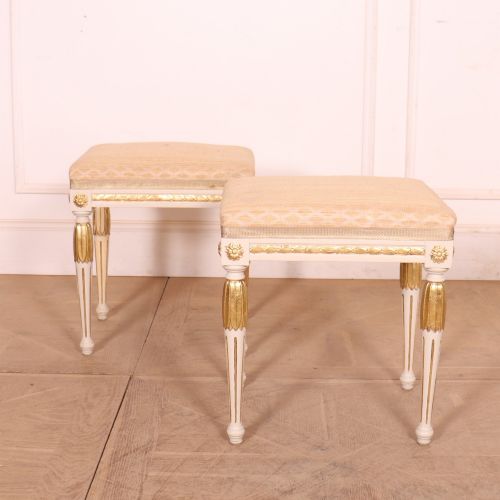

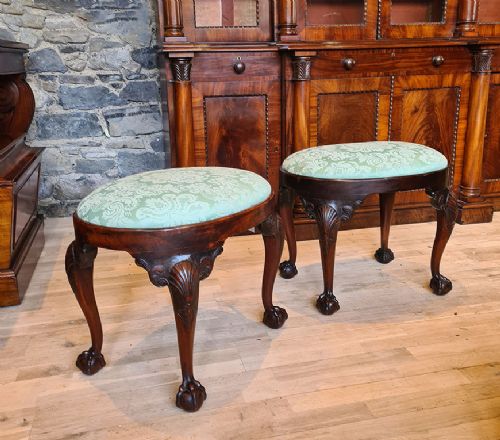


Pair Upholstered Benches
Pair upholstered benches are matching seating forms designed to anchor a room, appearing here in styles from Georgian to Edwardian.
Pair Upholstered Benches
Pair upholstered benches encompass matched sets of seating designed for domestic interiors, spanning forms such as window seats, long stools, settees, and hall benches. When searching for pair upholstered benches, buyers encounter pieces originating from English, French, Irish, Italian, and Swedish workshops across the eighteenth, nineteenth, and early twentieth centuries.
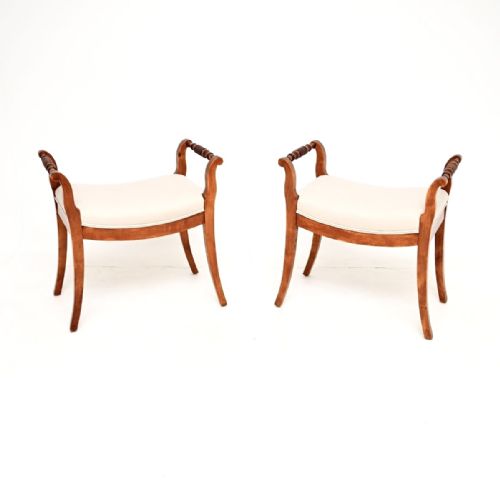
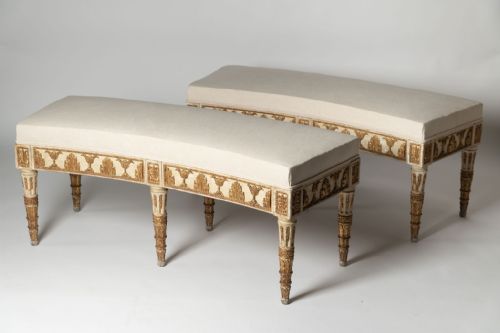
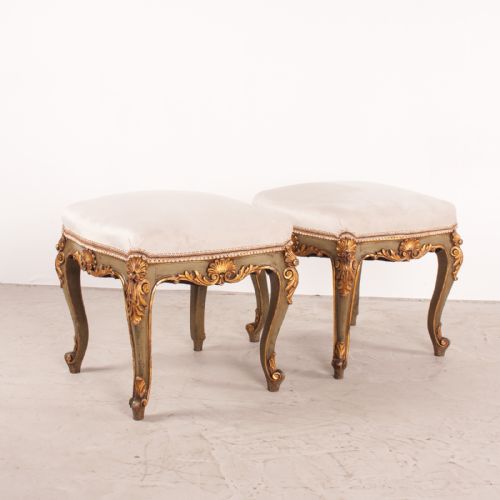
The selection ranges from compact footstools and window seats intended for alcoves to large mahogany long benches and settees built for reception rooms. Variations include walnut window seats, satin birch Biedermeier stools, and painted continental seating.
Nineteenth-century examples dominate the offerings, alongside eighteenth-century Georgian and Irish pieces and Edwardian productions. These seating forms served diverse functional roles in period homes, from dressing room seats to gallery furniture.
How they were made
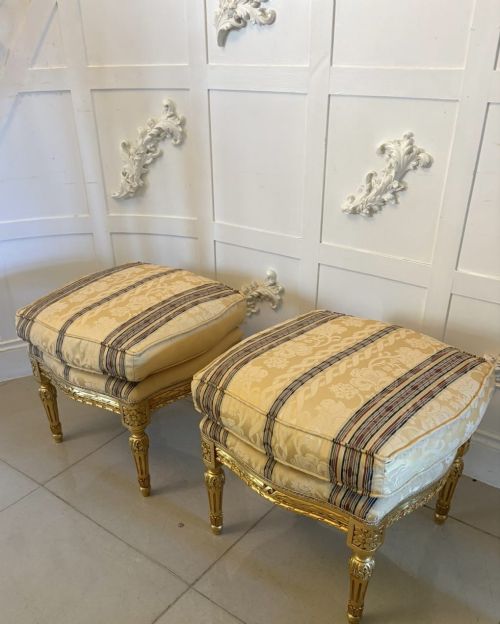
Frames rely on native and imported timbers, notably mahogany, walnut, rosewood, satin birch, and painted or gilded wood. Cabinetmakers shaped these woods into fluted legs, carved structures, and inlaid surfaces.
Upholstery techniques incorporate fabric, leather, velvet, and brass studding to secure the textile coverings over padded foundations. Buttoned leather and textile upholstery finishes reflect the specific aesthetic demands of periods such as the Regency and Victorian eras.
Pair Upholstered Benches Retail Price Guide 2026
Typical asking prices for pair upholstered benches among the pieces listed under this phrase on Sellingantiques today, from the lower quarter to the upper quarter. They describe what is for sale here now, not the wider market.
The listings feature mahogany, walnut, rosewood, satin birch, fabric, leather, velvet, brass, and gold leaf.
What varies in quality
Quality rests upon the crispness of timber carving, the integrity of the frame construction, and the preservation of original materials such as gilt, paint, and inlay. Superior examples display refined proportions and hand-carved detailing on elements like fluted legs and structural frames.
The sophistication of the design dictates the distinction between standard workshop output and high-status pieces. Variations appear in the selection of cabinet timbers, the precision of joinery, and the historical adherence to regional styles including Gustavian, French revival, and Italian neoclassical.
James Shoolbred·Angerstein
The Pair Upholstered Benches Glossary
- Window seat
- An upholstered bench specifically proportioned to fit the depth of a domestic window recess. These pieces often feature armrests and extended lengths.
- Biedermeier
- A central European style spanning the nineteenth century characterised by clean lines and domestic comfort. Satin birch and walnut are typical timbers utilised in this aesthetic.
- Gustavian
- The Swedish interpretation of neoclassical design, defined by light painted finishes and restrained classical ornamentation. These stools and benches frequently feature carved wooden frames.
- Prie-dieu
- A devotional chair or low bench designed for private prayer, featuring a padded kneeling board and an upper shelf. The evidence includes rosewood examples from the nineteenth century.
- Long bench
- An elongated seating form designed to accommodate multiple sitters, sometimes supported on fluted legs. Examples appear in mahogany and leather configurations.
Pair Upholstered Benches: Frequently Asked Questions
Where did these benches sit?
These seating forms occupied specific architectural spaces within period houses, including window recesses, hallways, and reception rooms.
Shorter stools and window seats were positioned to utilise natural light, while longer benches and settees served gallery spaces and large rooms.
How do I date a bench?
Dating relies on identifying timber choices, decorative motifs, and construction methods characteristic of specific decades.
Stylistic markers such as Regency fluting, Edwardian art nouveau lines, or eighteenth-century Georgian proportions provide chronological context.
Are all benches matching pairs?
The listings comprise matched pairs created together as unified commissions for domestic interiors.
Such sets maintained symmetrical balance in formal room schemes, particularly in window placements and fireside arrangements.
What woods were used?
Cabinetmakers utilised dense hardwoods such as mahogany, walnut, and rosewood for structural durability and rich grain appearance.
Alternative builds employed satin birch, painted softwoods, and gilded frames to achieve specific decorative schemes.