



Pair Tall Display Cabinets
Pair tall display cabinets bring symmetry and height to a room, offering glazed protection for books and collections.
Pair Tall Display Cabinets
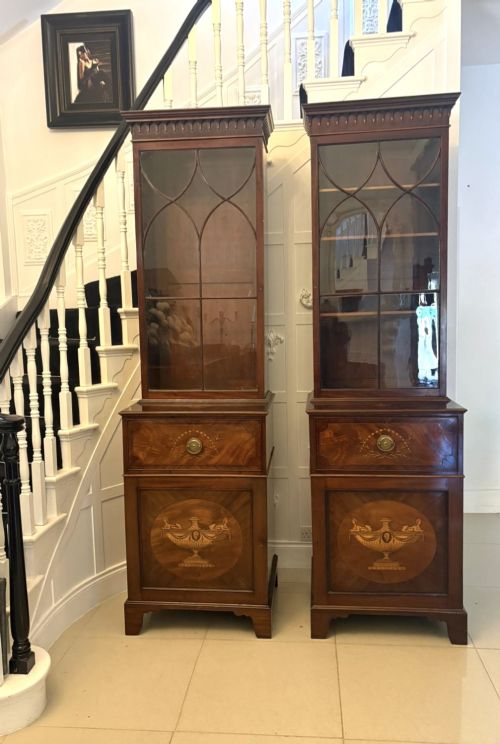
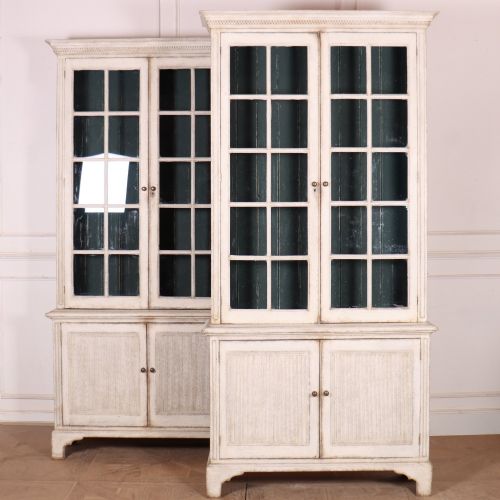
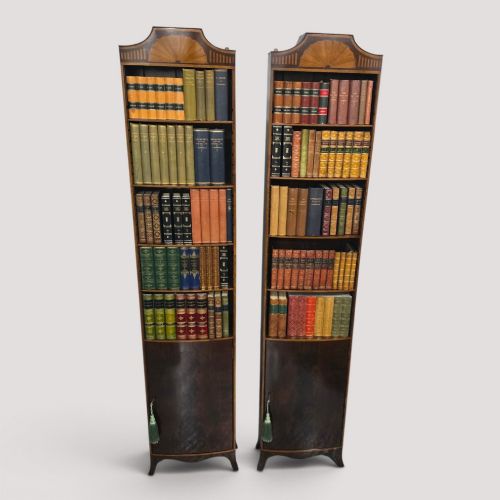
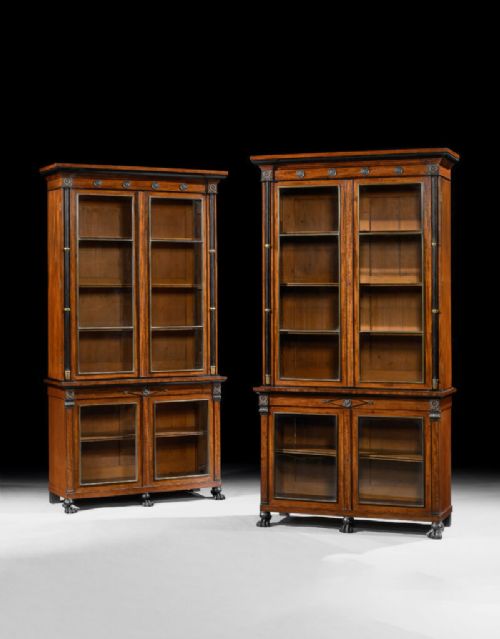
When you search for pair tall display cabinets, you encounter symmetrical groups of vertical storage furniture designed to showcase and protect contents behind glass. These pieces span periods from the nineteenth century into the twentieth century, appearing in forms such as glazed bookcases, corner cabinets, and show cases.
The versions most frequently met on this page include mahogany bookcases and cabinets from the Victorian and Edwardian eras, alongside pieces influenced by earlier Regency and Georgian styles. Makers and workshops constructed these tall pairs using timbers like solid mahogany and fruitwood, often incorporating glass panels for visibility.
How they were made
Cabinet makers utilised solid mahogany and fruitwood as the primary structural timbers, sometimes adding satinwood inlay or gold leaf for decorative contrast. Surfaces were finished to highlight the natural grain of the wood.
Glazing techniques formed a central part of construction, with astral glazed doors and fitted glass panels allowing interior visibility. Brass hardware and fittings completed the assembly of these tall structures.
Pair Tall Display Cabinets Retail Price Guide 2026
Typical asking prices for pair tall display cabinets among the pieces listed under this phrase on Sellingantiques today, from the lower quarter to the upper quarter. They describe what is for sale here now, not the wider market.
Some nineteenth-century makers evidently expected readers to own extremely thin books.
What varies in quality
The standard of timber selection and inlay work separates finer examples from simpler items. Artisans who invested time in detailed satinwood inlay or precise wood selection produced pieces with greater visual depth.
The execution of the glazing and the proportion of the vertical frame dictate the architectural success of the pair. Cabinets with balanced proportions and clean glass fitting demonstrate higher workshop skill.
Marsh & Tatham·Howard & Sons
The Pair Tall Display Cabinets Glossary
- Astral glazing
- Glass divided into small panes by narrow wooden bars, frequently seen on tall library bookcases. This technique provided structural support for larger glass areas.
- Satinwood inlay
- Contrasting light timber inserted into the primary wood surface to create decorative patterns. It appears across Edwardian and Sheraton Revival pieces.
- Gothic Revival
- A nineteenth-century style drawing on medieval architectural motifs, including pointed arches and heavy ornamentation. Pieces from this movement often feature dramatic vertical lines.
- Bow top
- A curved upper section profile found on certain twentieth-century cabinets. This shape softens the strict rectangular silhouette of tall furniture.
- Show case
- A glazed cabinet specifically designed for the exhibition of objects rather than the storage of books. These units emphasise maximum glass visibility.
Pair Tall Display Cabinets: Frequently Asked Questions
How do I place a tall pair in a room?
Symmetrical pairs of tall cabinets require sufficient wall space and ceiling height to anchor the room visually. Positioning them on either side of a fireplace or architectural feature creates balanced focal points.
Ensure the depth of the cabinets allows for comfortable movement around surrounding furniture. Their vertical lines draw the eye upward, making them effective in rooms with generous proportions.
What periods do these cabinets come from?
The pieces span the nineteenth and twentieth centuries, including Victorian, Edwardian, and Regency eras. Styles range from Gothic Revival to Swedish Gustavian and Sheraton Revival designs.
Each period brought distinct decorative elements, such as intricate inlay or simpler glazed frames, reflecting the prevailing tastes of cabinet makers at the time.
How were glazed cabinets used originally?
Libraries and drawing rooms utilised these tall units to house valuable book collections and display decorative objects. The glass doors protected delicate bindings and porcelain from dust and handling.
Libraries often employed large astral glazed bookcases for extensive volumes, while drawing rooms featured refined display cabinets for curiosities.
How do I identify mahogany furniture?
Mahogany displays a rich reddish-brown hue that deepens with age, accompanied by a distinct grain pattern. Craftsmen favored this dense hardwood for its strength and stability in tall construction.
Examining the interior and backboards reveals the quality of the timber used throughout the piece, beyond the primary visible surfaces.