



Pair Staffordshire Ceramic Dogs
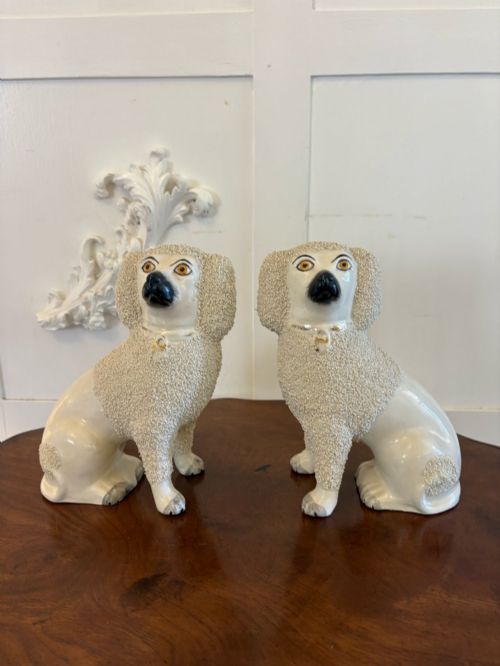
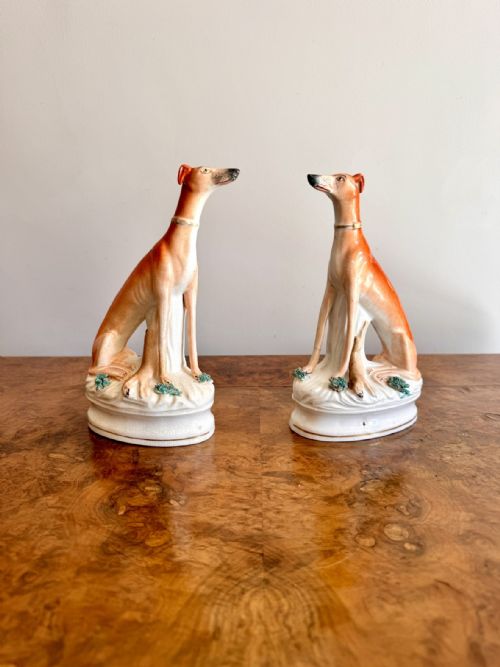
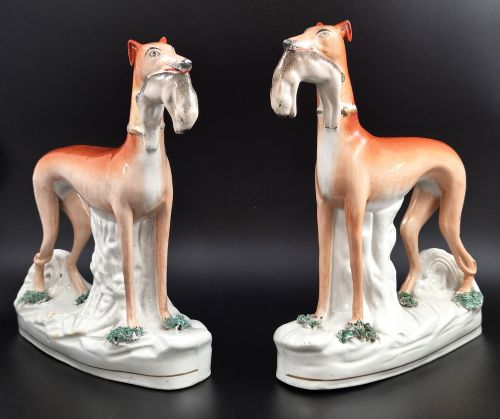
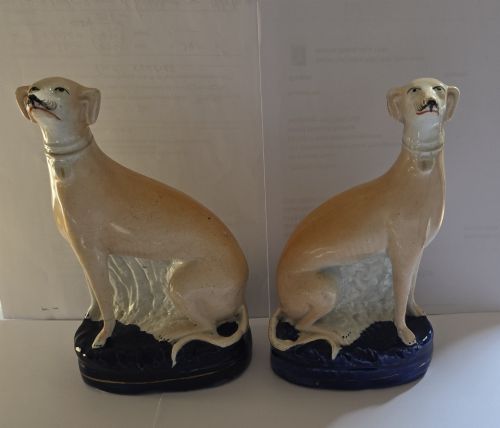
Pair staffordshire ceramic dogs bring Victorian character to a mantelpiece, fashioned as spaniels, poodles, and greyhounds in matched sets.
Pair Staffordshire Ceramic Dogs
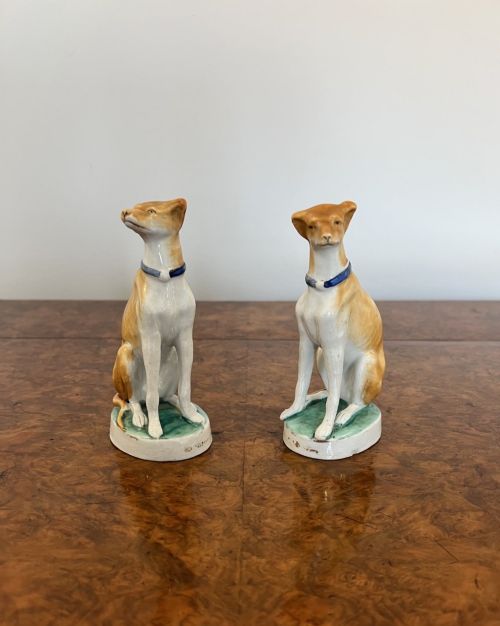
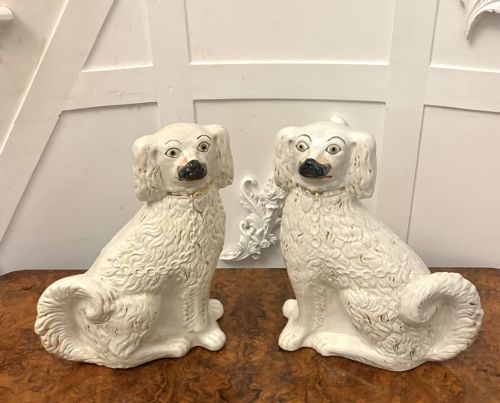
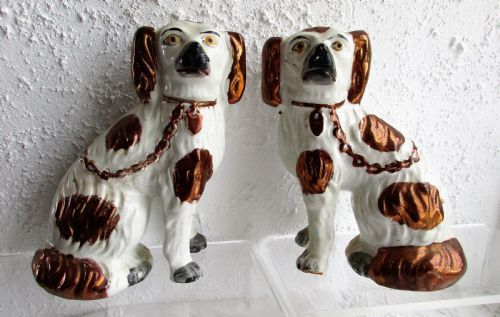
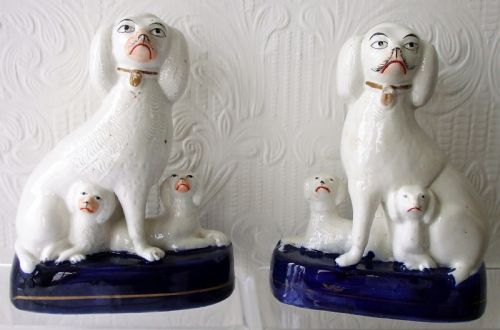
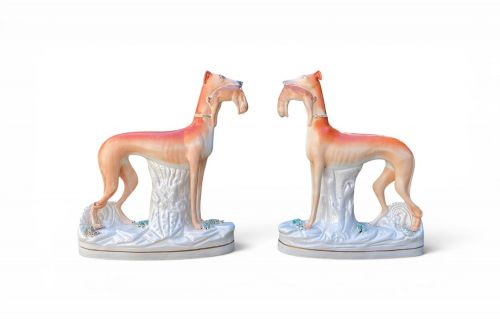
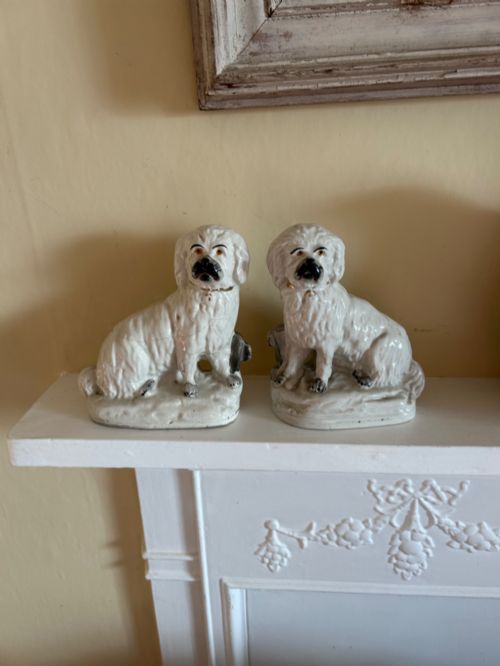
When searching for pair staffordshire ceramic dogs, collectors encounter earthenware figures produced across the nineteenth century, including the Victorian era, Regency period, and up to nineteen hundred. These decorative objects take the form of spaniels, poodles, greyhounds, whippets, maltese terriers, and dalmatians.
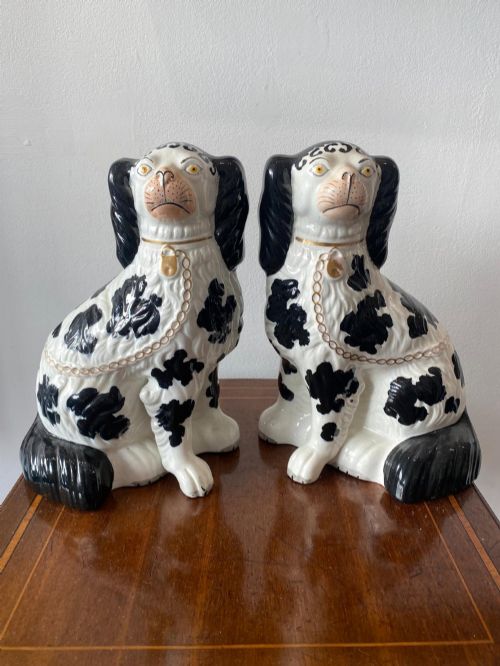
The most common examples on this page are Victorian Staffordshire spaniels and greyhounds, often modelled as seated pairs. Alongside standard mantel figures, the inventory includes specialised forms such as quill holders and inkwells.
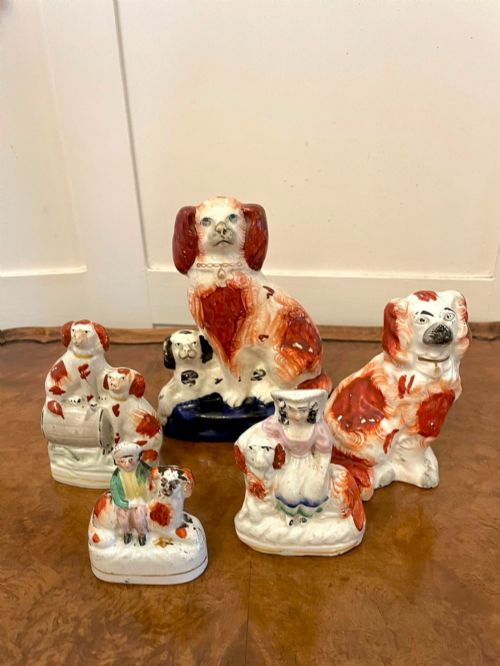
Origins range from English traditional country pottery to larger works associated with makers like Thomas Parr. Pieces span different sizes, from miniature figures to large decorative models.
Materials and construction
Surface treatments vary from simple white and gilt finishes to copper lustre coatings and distinct red and white or black and white enamel painting. Some poodles incorporate textured clay elements to render fur.
Pair Staffordshire Ceramic Dogs Retail Price Guide 2026
Typical asking prices for pair staffordshire ceramic dogs among the pieces listed under this phrase on Sellingantiques today, from the lower quarter to the upper quarter. They describe what is for sale here now, not the wider market.
Listings feature earthenware ceramic figures spanning the Regency period through to late Victorian times, including specialised forms like inkwells and quill holders.
Distinctions in quality
Quality rests in the modelling of the form and the crispness of the painted enamel details. Superior pairs display greater anatomical definition in the animals, particularly in facial expressions and paw placement.
The application of gilt and the depth of the glaze contribute to the visual presence of the figures. Original matched sets with even wear across both dogs command greater interest than mismatched or heavily restored examples.
Thomas Parr
The Pair Staffordshire Ceramic Dogs Glossary
- Earthenware
- Porous pottery fired at lower temperatures, commonly used for nineteenth century Staffordshire figures. It requires a glaze to become impermeable to liquids.
- Lead glaze
- A glossy coating containing lead oxide applied to pottery before firing. It gives Staffordshire figures their characteristic shiny finish.
- Enamel
- Opaque glass-like paint applied to fired ceramic surfaces. It provides the red, black, and multi-coloured details on dog figures.
- Comforter spaniels
- The traditional name given to Staffordshire spaniel pairs placed on mantelpieces. They often represent King Charles spaniels popular in the Victorian period.
Pair Staffordshire Ceramic Dogs: Frequently Asked Questions
What are pair staffordshire ceramic dogs?
These are decorative earthenware pottery figures modelled as dogs, most commonly spaniels, greyhounds, and poodles, produced in matching sets during the nineteenth century.
They served as mantel ornaments in Victorian homes, often displayed facing inward toward each other on either side of a fireplace.
How do I date staffordshire dog figures?
Dating relies on stylistic clues, potting techniques, and the type of glaze or enamel used. Victorian pieces often feature white and gilt or copper lustre finishes.
Marked pieces are uncommon, so comparisons with documented examples from periods like eighteen fifty to eighteen eighty help narrow the timeframe.
Where were staffordshire dogs made?
They were produced in the Staffordshire potteries region of England by various traditional potteries and individual makers.
While the majority originated in English regional potteries, similar ceramic dog figures were also produced on the Continent towards the end of the nineteenth century.
How were different dog breeds represented?
Potters captured popular breeds of the era, ranging from seated spaniels and poodles to hunting dogs like greyhounds and whippets.
Some specialised figures incorporated functional elements, operating as inkwells, quill holders, or featuring pups alongside the main dog.
How do I care for antique ceramic dogs?
Keep them out of direct sunlight to protect the enamel colours and gilt highlights from fading over time.
Dust them gently with a soft, dry cloth and avoid using liquid cleaners or harsh chemicals on the glazed earthenware surface.