





Pair Silver Centerpiece Bowls
These pair silver centerpiece bowls bring striking symmetry and presence to a table, offering matched grandeur for formal dining and display.
Pair Silver Centerpiece Bowls
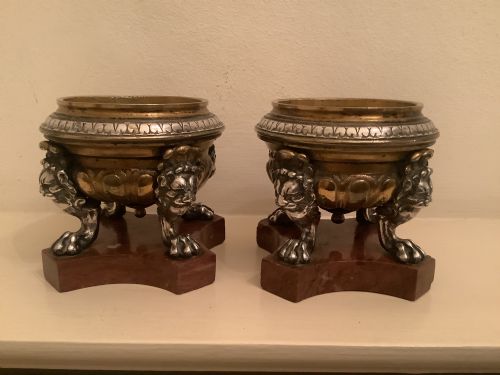
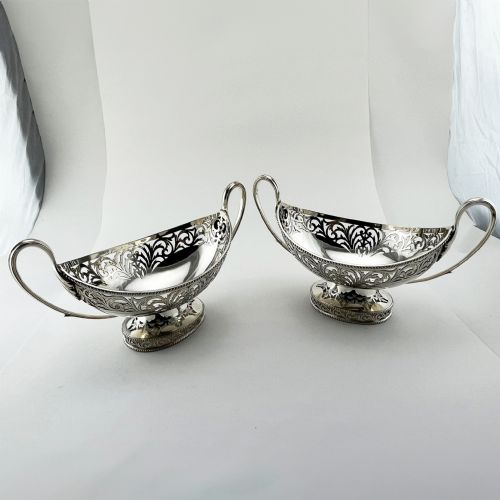
A search for pair silver centerpiece bowls reveals matched vessels designed for dual placement, often standing on pedestals or taking the form of open baskets, sweet stands, and tazzas. The selection spans the eighteenth, nineteenth, and twentieth centuries, encompassing Georgian origins, Victorian ornamentation, and clean Art Deco lines.
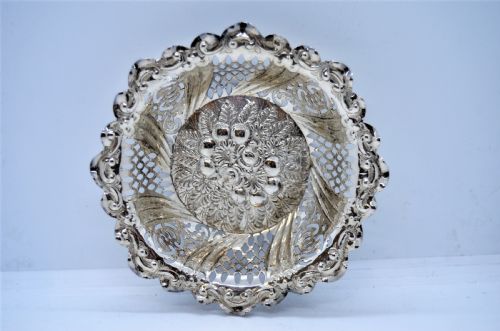
The objects take diverse functional shapes including pedestal dishes, bonbon bowls, serving dishes, and glass-lined dessert dishes, alongside elaborate nautical-themed centrepieces. Buyers frequently encounter nineteenth-century silver plate and solid silver iterations, decorated with pierced work, reeded handles, or gilt interiors.
Stylistic influences range from French Empire and Rococo Revival to Edwardian elegance, offering both restrained classical proportion and exuberant Victorian display. These matched pairs provide balanced visual weight, whether arranged centrally on a dining table or displayed on sideboard surfaces.
Materials and construction methods
Makers utilised solid sterling silver, silver plate, and base metals combined with cut glass and crystal inserts, often finishing surfaces in rich vermeil or gilding internal bowls. Pierced decorative baskets demonstrate intricate piercing and openwork techniques executed by skilled silversmiths.
Structural elements frequently incorporate reeded handles, cast pedestal feet, and heavy metal mounts to support weighty glass liners and crystal cut bodies. The manufacturing methods span traditional hand-raising and casting during the Georgian and Victorian eras through to precise twentieth-century production.
Pair Silver Centerpiece Bowls Retail Price Guide 2026
Typical asking prices for pair silver centerpiece bowls among the pieces listed under this phrase on Sellingantiques today, from the lower quarter to the upper quarter. They describe what is for sale here now, not the wider market.
Listings feature periods from the 18th century through the Art Deco 1930s, utilising sterling silver, silver plate, cut glass, and vermeil.
Evaluating craftsmanship and condition
Quality rests upon the crispness of casting detail, the weight and gauge of the metal, and the harmony of the matched pair. Pieces featuring deeply chased ornamentation, well-defined piercing, and intact original cut-glass liners represent higher standards of execution.
The integrity of applied finishes, such as the survival of gilt interiors or uniform silver plating without base metal telegraphing, distinguishes superior examples. Maker marks and clear hallmarks further anchor the provenance and substantiate the standard of silver used.
Thomas Bradbury·Viners·William Comyns
The Pair Silver Centerpiece Bowls Glossary
- Centerpiece
- A large decorative vessel placed in the middle of a table for display or service. These items anchor the visual scheme of a formal dining room.
- Pedestal dish
- A vessel raised upon a central foot or stem. This form elevates the contents above the table surface for greater visibility.
- Vermeil
- Sterling silver plated with a thin layer of gold. This finish provides a warm, rich tone to the interior of bowls and dishes.
- Tazza
- A low-profile ornamental cup or shallow bowl set upon a pedestal. It frequently serves fruit, sweets, or decorative items.
- Pierced
- Metalwork perforated with decorative cut-out patterns. This technique lightens the visual weight of silver baskets and dishes.
Pair Silver Centerpiece Bowls: Frequently Asked Questions
How were pair silver centerpiece bowls used?
These matched vessels functioned as formal table decor, holding fruit, sweetmeats, or flowers to balance the arrangement of a dining room. Their paired nature allowed for symmetrical placement on either side of a larger central ornament or along a long banquet table.
Beyond dining use, they served as decorative centerpieces on sideboards and serving tables. The inclusion of glass liners in certain dessert dishes enabled them to hold moist foods without tarnishing the metal.
What periods do these bowls come from?
The available selection spans several centuries, starting from the eighteenth-century Georgian era through to the nineteenth-century Victorian period. Pieces also emerge from Edwardian times and the Art Deco era of the 1930s.
Victorian examples frequently display elaborate Rococo Revival or nautical motifs, whereas twentieth-century pieces often favor geometric lines. Hallmarks and stylistic markers help distinguish between these historical periods.
How do I care for silver and glass bowls?
Maintenance involves gentle cleaning with appropriate silver polish to preserve the metal surface without wearing down thin plating. Glass liners should be washed separately in warm soapy water and dried thoroughly before replacement.
Storage in a dry environment helps prevent premature tarnishing. Handling pieces by their solid sections rather than delicate pierced work protects their structural integrity over time.