

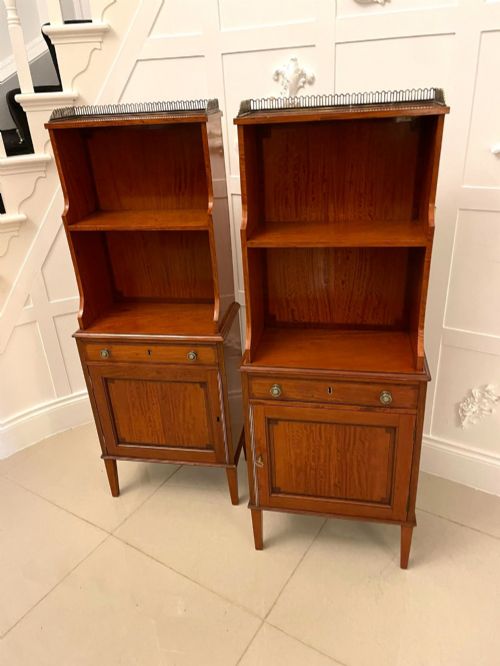
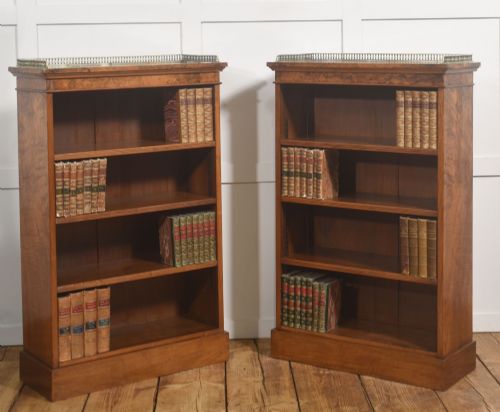


Pair Regency Bookshelves
These pair regency bookshelves offer matching proportions and timber figures that transform a study with period elegance.
Pair Regency Bookshelves
When you search for pair regency bookshelves, you encounter matched sets of open shelving units designed for domestic libraries and studies. The selection brings together genuine nineteenth-century pieces alongside later revivals, offering symmetrical display options for collections of volumes.
Makers utilised rich timbers such as mahogany, rosewood, and satinwood to construct these matching compartments. The configurations range from straightforward open shelves to tiered waterfall designs and breakfront formats fitted with brass or ormolu mounts.
How they were made
Cabinet makers built these pieces using dense hardwoods like mahogany, rosewood, and teak, often applying satinwood crossbanding to the surfaces. Selected examples feature burr walnut veneers or elaborate waterfall tiers that cascade downward in graduated proportions.
Metalwork played a key role in the decoration, incorporating brass details and ormolu mounts alongside timber construction. Artisans shaped these materials into open shelf frameworks that relied on traditional joinery to support heavy volumes.
Pair Regency Bookshelves Retail Price Guide 2026
Typical asking prices for pair regency bookshelves among the pieces listed under this phrase on Sellingantiques today, from the lower quarter to the upper quarter. They describe what is for sale here now, not the wider market.
Materials documented across the inventory include mahogany, rosewood, satinwood, burr walnut, teak, and brass ormolu mounts.
What varies in quality
The choice of primary timber and veneer sharply divides standard production from exceptional work. Richly figured rosewood, satinwood, and burr walnut elevate the visual impact compared to plain mahogany or teak.
The presence of refined decorative elements such as ormolu mounts, brass details, and crossbanding distinguishes the superior examples. Original period construction carries greater architectural conviction than subsequent revival interpretations.
Gillows
The Pair Regency Bookshelves Glossary
- Waterfall bookcase
- A set of open shelves that steps back progressively from bottom to top, creating a cascading profile. This form gained popularity during the nineteenth century for displaying smaller volumes.
- Crossbanding
- A decorative border of veneer laid with the grain running perpendicular to the surrounding surface. It frames the primary timber panels on shelves and tabletops.
- Ormolu
- Gilt bronze ornamentation applied to furniture mounts and details. The technique involves a mercury gilding process on bronze.
- Breakfront
- A piece of furniture where the central section projects forward from the flanking wings. This architectural layout creates varied depth across the facade.
- Open bookcase
- A shelving unit without doors, providing unrestricted access to the interior. Such pieces were standard in libraries and private studies.
Pair Regency Bookshelves: Frequently Asked Questions
What are pair regency bookshelves?
These items consist of matching sets of open shelving units designed for storing and displaying books symmetrically.
They appear in formats ranging from traditional nineteenth-century open shelves to tiered waterfall designs.
How were pair regency bookshelves used?
Owners placed these matching units in libraries, drawing rooms, and studies to hold frequently referenced volumes.
The open configuration allowed immediate access to literature while presenting balanced decorative lines.
How do I live with pair regency bookshelves?
Position these matching pieces against study walls or flanking a fireplace to establish formal symmetry in a room.
Keep them away from direct sunlight and excessive humidity to protect the polished mahogany, rosewood, or satinwood surfaces.
How do I tell periods apart?
Nineteenth-century originals display traditional construction methods, mature timber patina, and period joinery details.
Revival pieces from later decades often utilise similar stylistic motifs but show different surface characteristics and lighter secondary woods.