


Pair Porcelain Candleholders
Pair porcelain candleholders bring warmth and hand-painted detail to a mantelpiece, offering matched symmetry from European kilns.
Pair Porcelain Candleholders
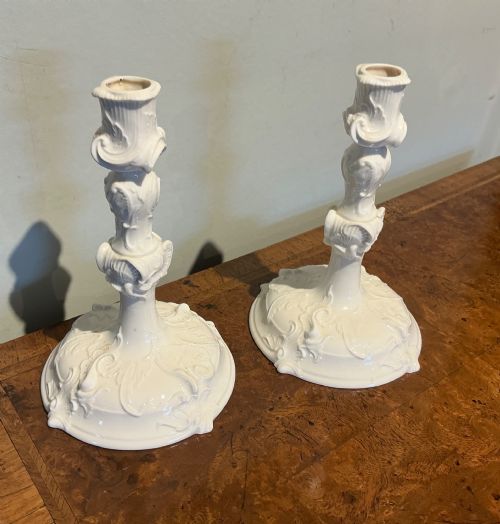
Pair porcelain candleholders take several forms on this page, appearing primarily as candlesticks and candelabra designed for domestic illumination. These twin items originate from notable European factories and date across the eighteenth, nineteenth, and early twentieth centuries.
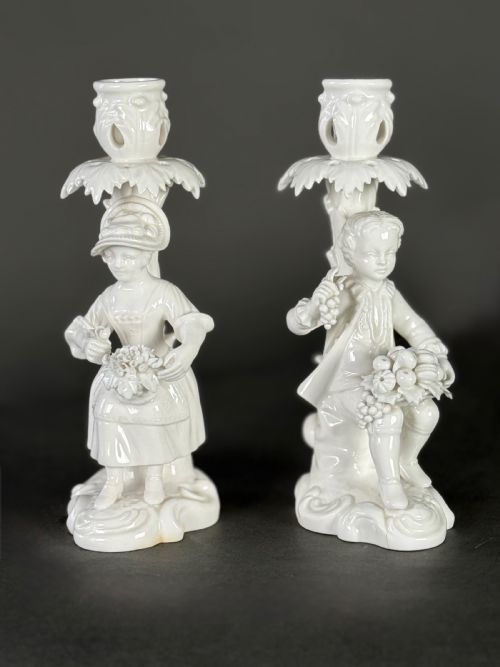
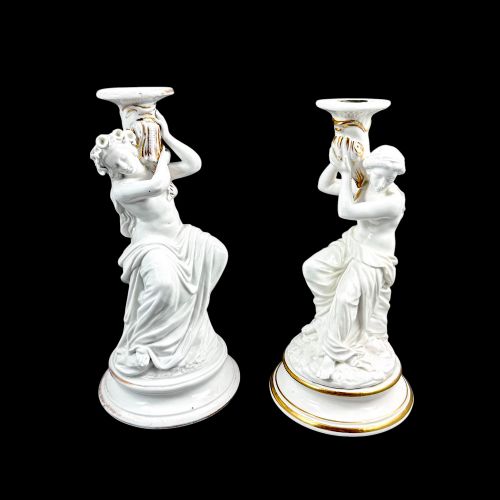
Buyers encounter figurative designs featuring children, putti, and gardeners alongside classical forms influenced by the Rococo Revival and Victorian styles. Many examples combine glazed porcelain with gilt bronze, ormolu, or enamel details.
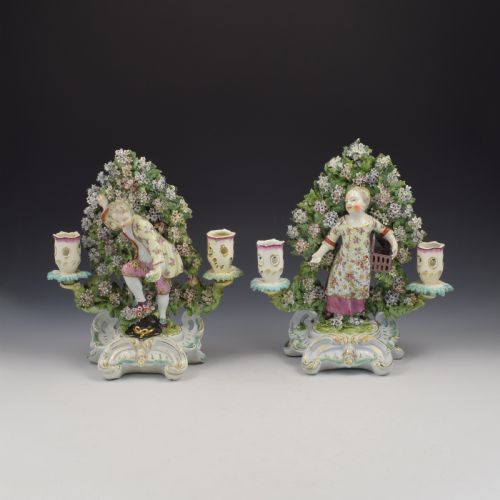
Derby, Meissen, and Sitzendorf output represents a large portion of the figures and candlesticks available here. Pieces range from plain blanc de chine to elaborate bocage compositions covered in applied floral work.
Materials and manufacture
Potters shaped hard-paste porcelain and soft-paste bodies before applying mineral glazes and hand-painted enamel colours. Artisans then fired these items in kilns to fuse the pigments to the ceramic surface.
Metal mounts such as ormolu and gilt bronze often frame the ceramic sections, secured with pins or screws. Gold leaf and hand gilding highlight raised mouldings and figurine details.
Modellers built complex figural groups and floral bocage elements by hand, attaching delicate petals and leaves prior to the final glaze firing.
Listings span several European ceramics centres, including German factories like Meissen and Sitzendorf alongside English houses such as Derby and Minton.
Judging quality and execution
The precision of the hand-painting dictates visual success, separating swiftly brushed wares from finely detailed facial expressions and naturalistic feather or foliage shading. Crisp moulding ensures that fingers, floral petals, and rococo scrolls remain sharp rather than softened by worn plaster moulds.
The integration between porcelain bodies and metal mounts reveals the maker's ambition, where cast ormolu fits the ceramic contours snugly without excessive solder or misaligned joints. Completeness of applied bocage leaves and delicate extremities separates intact survivors from heavily restored examples.
Nymphenburg·Derby·Minton·Meissen·Sitzendorf·Samson·Royal Worcester Hadley·Royal Bayreuth
The Pair Porcelain Candleholders Glossary
- Bocage
- An intricate background of applied porcelain leaves and flowers that surrounds figurative ceramic pieces. This technique creates a dense garden effect behind figures.
- Blanc de chine
- A pure white porcelain glaze originating in China and later imitated by European factories. It allows sculptural forms to rely on shadow and line rather than enamel colour.
- Ormolu
- Gilt brass or bronze mounts applied to furniture, clocks, and porcelain objects. The gold finish is achieved through mercury amalgamation or electroplating.
- Go-to-bed
- A small chamber candlestick designed for use when retiring to a bedroom. These miniature holders often feature integrated match containers or handle loops.
- Rococo Revival
- A nineteenth-century design movement mimicking the asymmetrical scrolls, C-curves, and natural motifs of the eighteenth-century French style. It dominates many of the figural bases seen here.
Pair Porcelain Candleholders: Frequently Asked Questions
How were pair porcelain candleholders used?
These dual objects stood on mantelpieces, dining tables, and sideboards to provide balanced illumination during evening hours. Wealthy households placed them in reception rooms where the reflected candlelight caught the gilt metal mounts and painted glazes.
Smaller variants, such as go-to-bed candlesticks, served intimate lighting needs in private chambers. Their matched symmetry suited the formal interior decoration schemes of the Georgian and Victorian periods.
How can I tell the period of these pieces?
Factory marks stamped or painted under the glazed base provide the clearest indication of origin and date. Stylistic clues, such as the asymmetry of Rococo Revival scrolls or the purity of Victorian neoclassical lines, also help narrow down the decade of production.
The weight of the paste, the composition of the metal mounts, and the vibrancy of the enamel palette offer further confirmation of nineteenth or early twentieth-century manufacture.
Are these candleholders suitable for daily use?
Most buyers choose to display these fragile ceramic pieces as decorative objects rather than lighting them regularly. Modern taper candles may not fit antique sockets securely without modification.
Heat from burning flames can also risk damaging nineteenth-century enamels and dried adhesives on fragile figural elements. Gentle illumination for special occasions remains preferable to continuous use.