
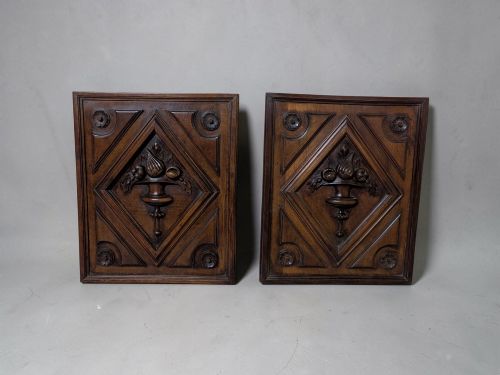
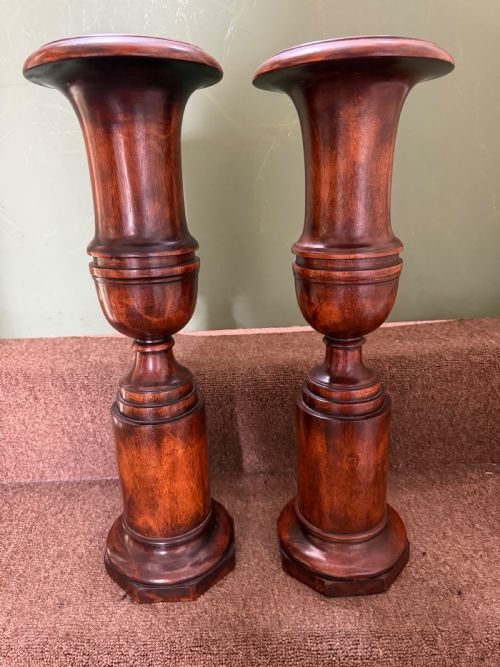

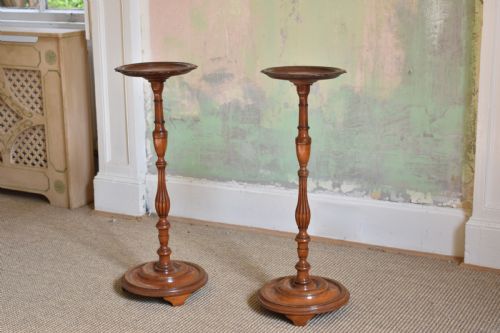
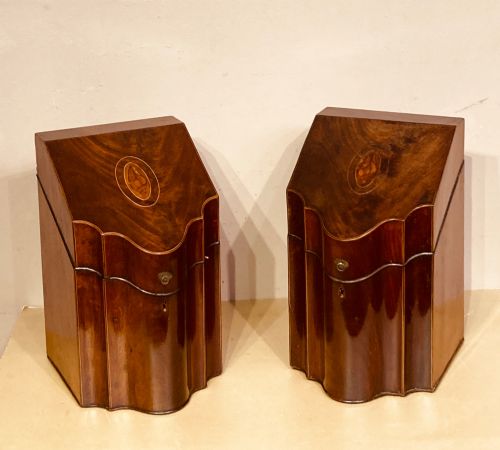

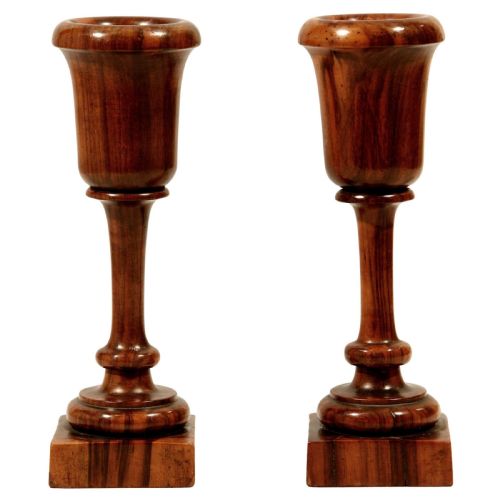


Pair of Wooden Urns
A pair of wooden urns brings classical symmetry to a room, appearing in forms from 18th-century knife boxes to 19th-century decorative vases.
Pair of Wooden Urns
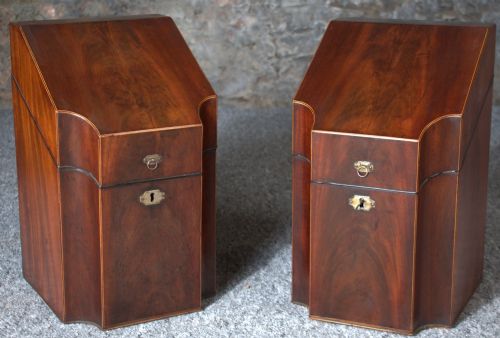
When you search for a pair of wooden urns, you encounter objects shaped by centuries of cabinet-making and decorative design. The selections span Georgian cutlery boxes, Victorian urn stands, and carved wooden vases from the 18th and 19th centuries.
Mahogany, satinwood, and various hardwoods dominate the construction of these items. Many pieces incorporate brass fittings, marble tops, or intricate inlay work reflecting neoclassical and Sheraton revival tastes.
How they were made
Woodturning formed the body of many turned vases and spill stems using dense timbers like lignum vitae and walnut. Cabinet-makers constructed knife boxes and urn stands using solid mahogany, oak, and yew wood.
Inlaid decoration utilised contrasting timbers such as satinwood and boxwood to create geometric and classical motifs. Carved details and giltwood finishes appeared on later Victorian and neoclassical pieces.
Certain carved wooden pedestals conceal secret compartments for storing valuables beneath their classical facades.
What varies in quality
The refinement of the timber selection dictates the distinction between standard examples and finer items. Finely figured mahogany, dense lignum vitae, and carefully matched satinwood veneers elevate the visual weight of the piece.
Precision in turning and the execution of delicate inlay work separate master craftsmanship from basic production. Crisp carving on neoclassical motifs and sound structural joinery indicate superior workshop origins.
The Pair of Wooden Urns Glossary
- Urn stand
- A small table or pedestal specifically designed to support a decorative urn, vase, or kettle.
- Knife box
- A tapered wooden container with a sloping lid, historically used for storing cutlery on a dining sideboard.
- Treen
- Small handmade wooden household objects produced before the mass era, valued for their tactile qualities and visible grain.
- Inlay
- A technique where pieces of contrasting wood or other materials are inserted into depressions in the base wood to form a pattern.
- Neoclassical
- A style drawing inspiration from the classical art and architecture of ancient Greece and Rome, prevalent during the Georgian period.
Pair of Wooden Urns: Frequently Asked Questions
What were wooden urns used for?
Wooden urns served primarily as decorative ornaments on sideboards, mantels, or dedicated stands. Some iterations functioned practically as knife boxes or cutlery urns in grand dining rooms.
Over time, the form evolved to encompass spill vases and architectural display pieces. Their presence added symmetry and classical proportion to domestic interiors.
How do I identify Georgian pieces?
Georgian items display characteristic timbers such as dense mahogany and figured satinwood. Construction methods rely on traditional hand-cut dovetails and precise internal joinery.
Stylistic cues include neoclassical urn motifs, stringing inlay, and proportions aligned with 18th-century design manuals.
Where should I place them?
Pairs of urns or their corresponding stands suit symmetrical placement on sideboards, console tables, or flanking a fireplace. Pedestal forms operate effectively as standalone supports for plants or decorative vases.
Matching the period timber to existing room furniture maintains visual harmony without requiring exact chronological uniformity.