
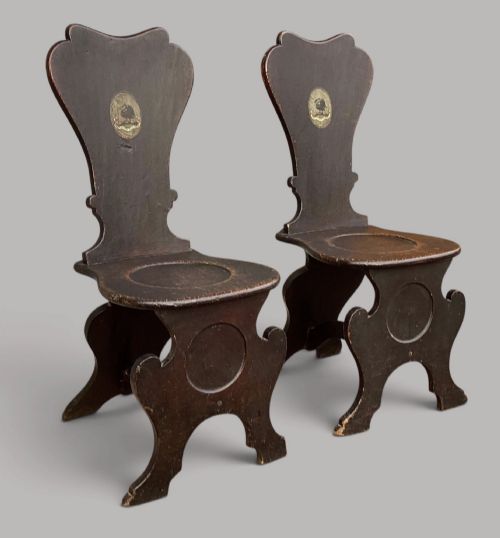
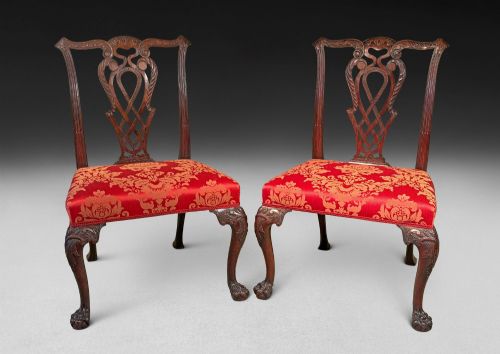
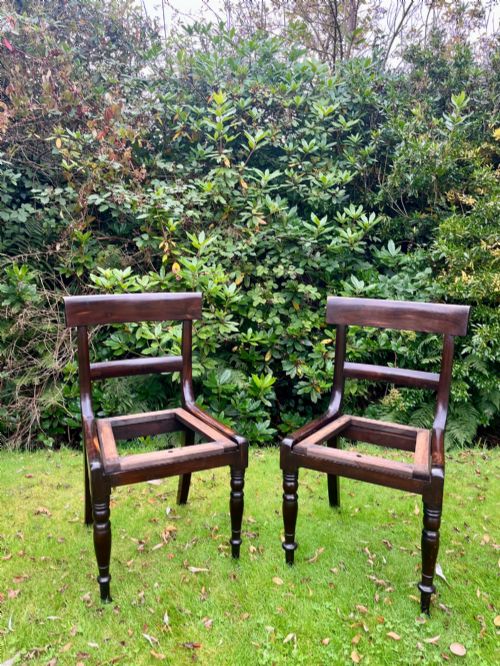
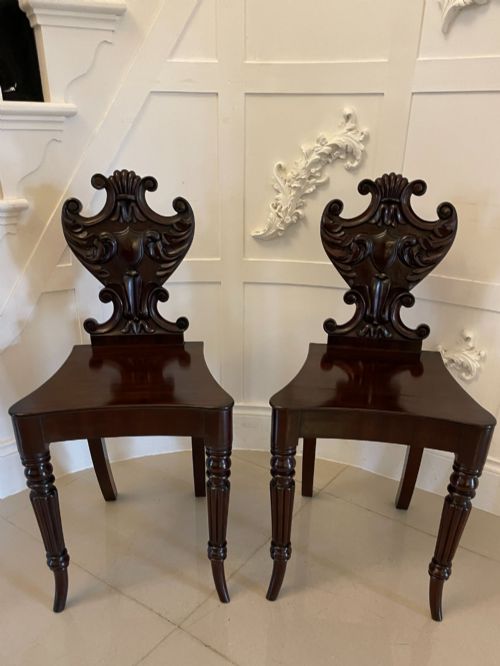
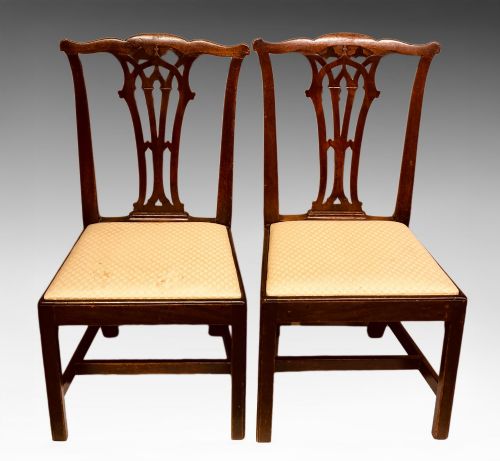
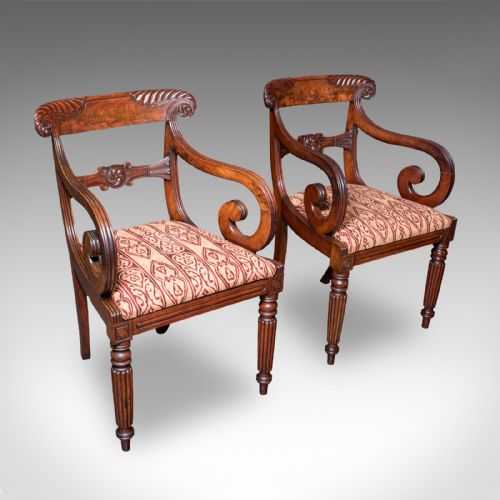
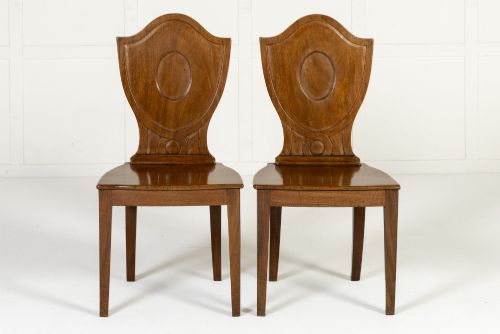
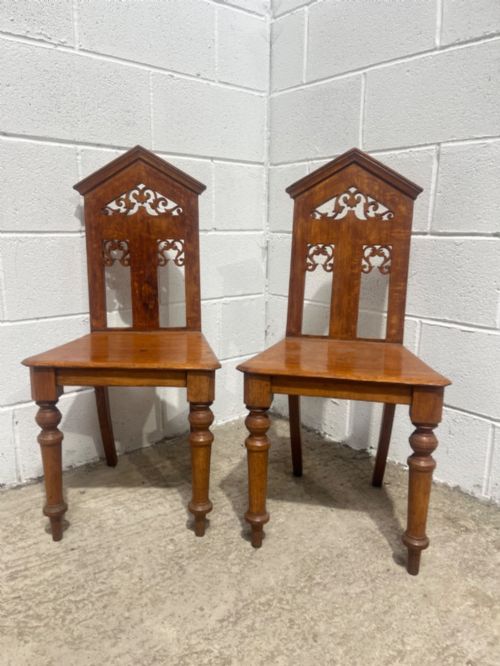
Pair of Wooden Hall Chairs
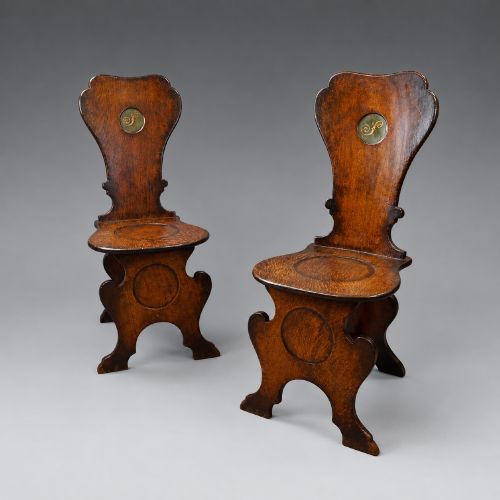
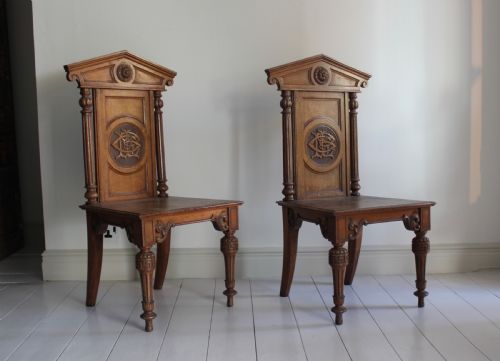
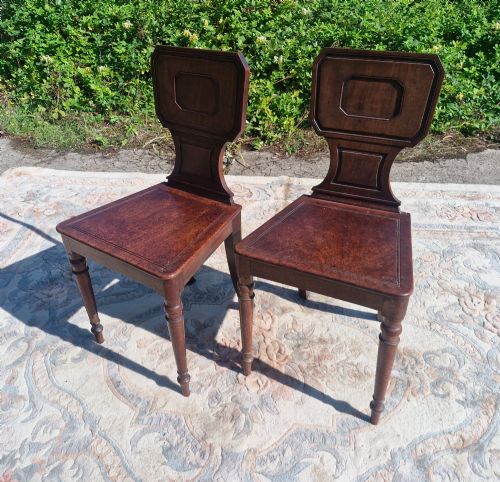
A pair of wooden hall chairs brings architectural presence and formal symmetry to an entrance, crafted to greet visitors in grand homes.
Pair of Wooden Hall Chairs
A pair of wooden hall chairs offers matched seating designed primarily for reception spaces and entrance halls rather than daily domestic comfort. When searching for this phrase, a buyer encounters formal seating built to make a strong impression upon arrival.
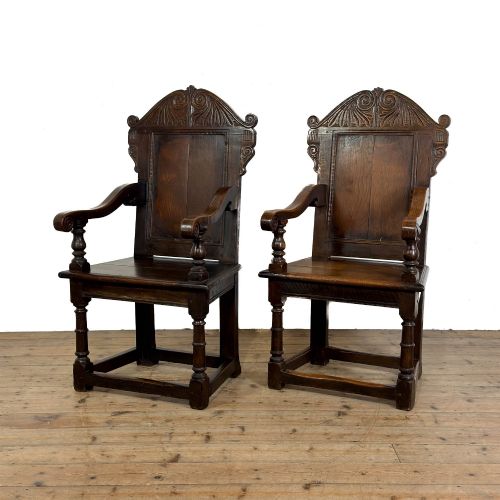
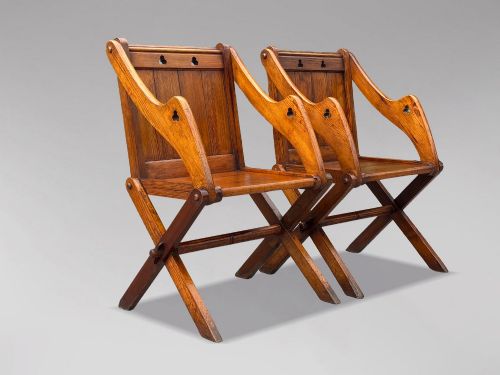
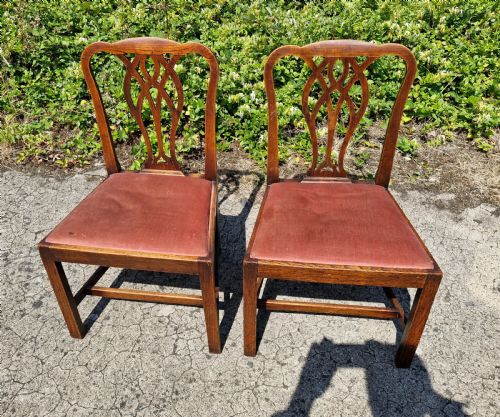
The versions met most frequently on this page span the 18th century, the Regency era, and the Victorian period, reflecting evolving tastes in interior design. These pieces often showcase rigid upright backs and solid timber seats intended for brief occupation.
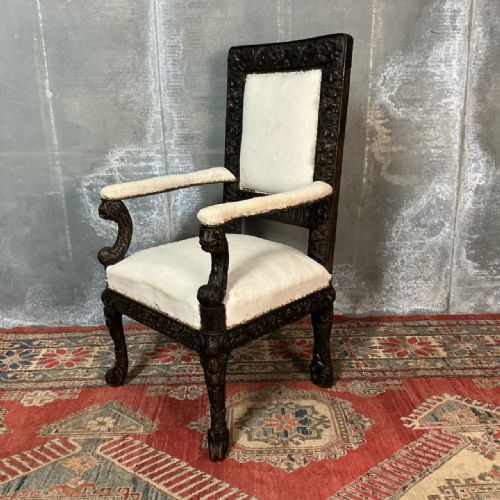
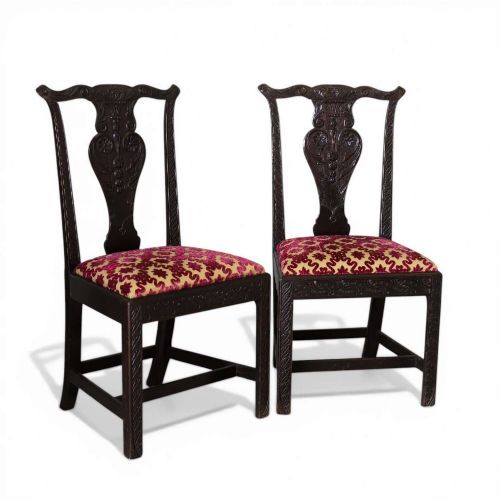
Makers utilised various timber species, including mahogany, oak, elm, and walnut, translating period aesthetics into practical hallway furniture. Such chairs frequently incorporate carved crests, painted finishes, or heraldic motifs suited to domestic reception rooms.
Construction and timber selection
Cabinet makers relied heavily on solid hardwoods like mahogany and oak, selecting durable timbers that could withstand heavy hallway traffic. Joinery techniques such as mortise and tenon joints ensured structural rigidity across upright frames.
Carving served as the primary method of ornamentation, with craftsmen shaping solid timber backs into architectural forms, shield motifs, or intricate revival styles. Selected examples integrate turned elements or inlaid details to enhance the visual weight of the wood.
Some hall chairs were deliberately uncomfortable, ensuring lingering guests moved swiftly along.
Assessing craftsmanship and proportion
Superior examples display crisp, deep carving executed with precision across the timber grain, whereas lesser pieces show shallow or softened detail. The depth and clarity of ornamentation indicate the skill of the original workshop.
Proportion and timber selection dictate the standing of a piece within its period. Tighter grain matching, heavier stock timber, and well-balanced structural proportions separate standard utility seating from masterworks commissioned for prominent estates.
Gillows
The Pair of Wooden Hall Chairs Glossary
- Sgabello
- A Renaissance-style chair featuring a wooden seat and trestle supports instead of traditional legs. This form gained popularity through revival movements in the 19th century.
- Pelta back
- A shield-shaped chair back design inspired by classical antiquity. The distinctive curved outline appears frequently on Regency and Victorian hall seating.
- Wainscot chair
- An early wooden armchair constructed with panelled backboards and solid joinery. These pieces reflect robust 17th-century domestic traditions.
- Bobbin turning
- A form of furniture turning producing a series of rounded spheres or discs resembling bobbins along a wooden spindle. This decorative technique appears on 17th- and 18th-century frames.
- Gothic Revival
- An architectural and decorative movement reviving medieval pointed arches and tracery. Furniture from this style translates structural stonework motifs into carved timber.
Pair of Wooden Hall Chairs: Frequently Asked Questions
Where were hall chairs placed?
Hall chairs stood against the walls of entrance corridors, lobbies, and grand staircases in large houses. They served as formal seating for visitors waiting to be announced.
Because inhabitants rarely sat in them for long periods, makers prioritised sculptural presence, carved heraldry, and upright posture over ergonomic comfort.
How do I date a hall chair?
Dating relies on combining timber choice with the prevailing stylistic motifs of the period. Georgian examples lean towards plain mahogany or Chippendale influence, whilst Victorian pieces often adopt Gothic or Renaissance revival carvings.
Construction methods also provide clues, as machine-sawn components replace hand-cut joinery towards the later decades of the nineteenth century.
Are these chairs comfortable for daily use?
Most historic hall chairs feature solid timber seats and rigid upright backs designed for short-term seating. They function best in entryways or as decorative accent pieces rather than lounge seating.
Adding loose cushions can soften the seat, though collectors usually prefer to keep them in their original unpadded state.
Why are they sold as pairs?
Architectural symmetry governed the interior design of historic hallways, where furniture was arranged in balanced pairs flanking doorways or console tables. Finding surviving matching pairs remains desirable for maintaining historical room layouts.
Individual chairs often became separated over centuries, making matched pairs increasingly sought after by collectors.