




Pair of Tiered Nightstands
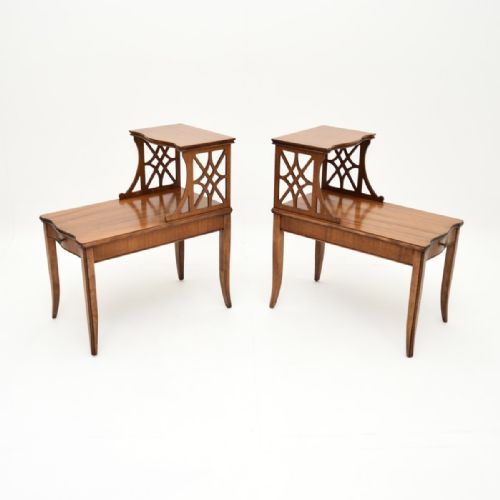
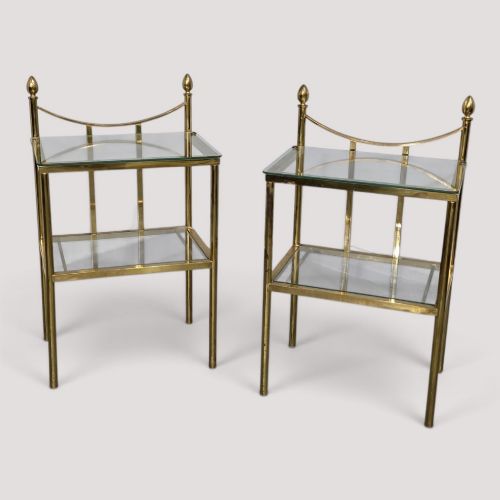
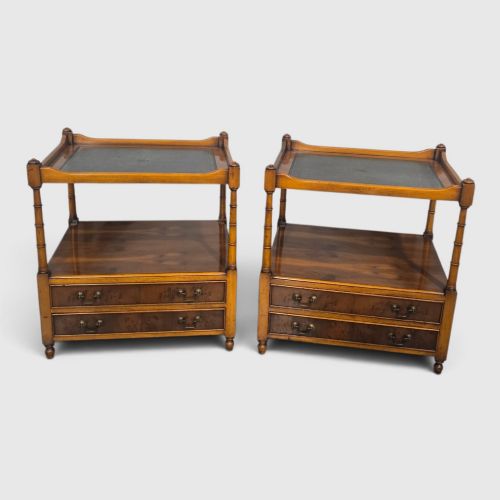
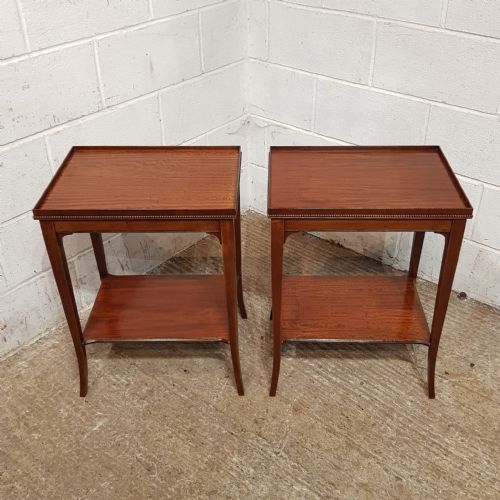
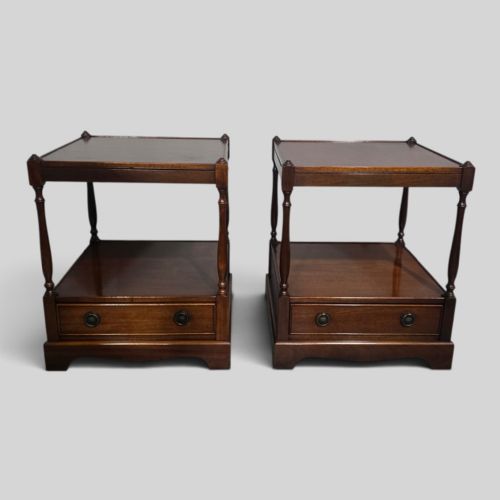
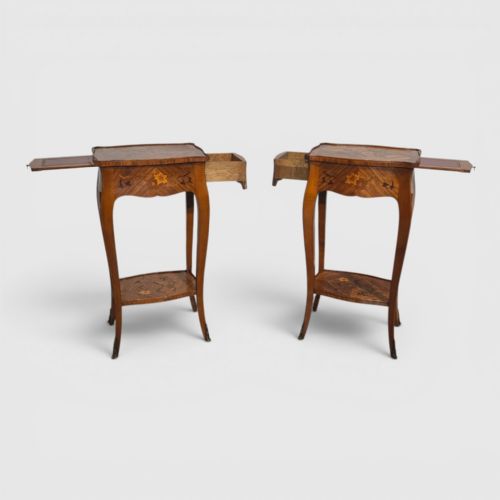
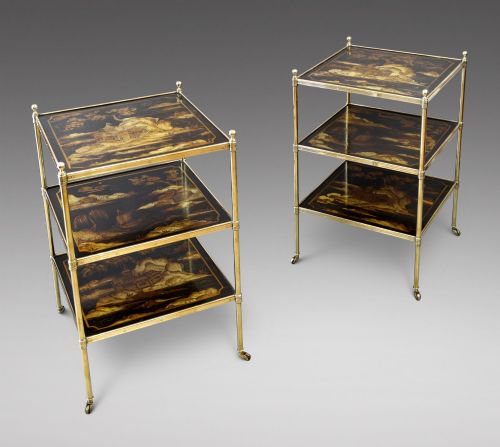
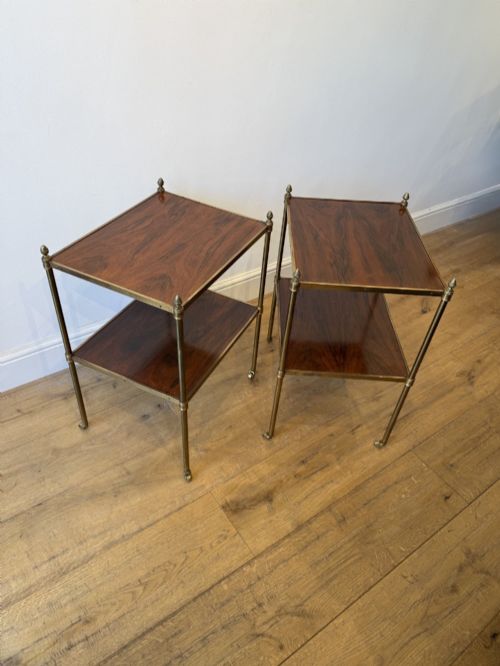
These pair of tiered nightstands offer symmetry and surface space by the bed, combining functional bedside tables with tiered display design.
Pair of Tiered Nightstands
When searching for a pair of tiered nightstands, buyers encounter matched pairs of small tables designed for bedside or lamp use featuring multiple levels. The selection spans periods from the 19th Century and 1800 up through Edwardian and 1930 examples.
Forms include side tables, bedside tables, lamp tables, étagères, and open bookcases that provide stacked surfaces. These pieces draw on styles such as Regency, Georgian Style, French Chateau, Hollywood Regency, French Neoclassical, and Louis XV Style.
The most common versions on this page are Edwardian and 1930 lamp or bedside tables built with two or more tiers for convenient placement beside a bed or chair.
How they were made
Makers utilised a variety of timbers including mahogany, walnut, rosewood, yew, satinwood, and general wood, often enriched with marquetry inlay. Brass, glass, gilt metal, and leather also appear as structural or decorative elements.
Construction techniques range from solid wood joinery to detailed veneering and marquetry work, supporting multi-tiered etagere designs and shelf arrangements.
Pair of Tiered Nightstands Retail Price Guide 2026
Typical asking prices for pair of tiered nightstands among the pieces listed under this phrase on Sellingantiques today, from the lower quarter to the upper quarter. They describe what is for sale here now, not the wider market.
Listings feature pieces spanning the 1800s, 19th Century, Edwardian era, and the 1930s, constructed from mahogany, walnut, brass, and rosewood.
What varies in quality
Quality rests upon the choice of timber and the precision of the marquetry or inlay work. Finer examples display superior grain matching and sophisticated period styling.
The refinement of brass fittings, glass integration, and structural joinery separate standard items from pieces reflecting higher cabinetmaking standards.
Mallett
The Pair of Tiered Nightstands Glossary
- Étagère
- A piece of furniture consisting of a set of open shelves for displaying small objects. These tiered stands often serve as lamp tables or bedside surfaces.
- Marquetry
- Decorative veneer applied to furniture in geometrical patterns or pictorial designs. Craftsmen use various coloured woods to create detailed surface decoration.
- Regency
- An English architectural and decorative style spanning the early nineteenth century. Pieces from this period frequently feature classical lines and dark timbers like mahogany.
- Edwardian
- A stylistic period spanning the start of the twentieth century up to the First World War. Furniture from this era often reinterprets earlier Georgian and classical motifs.
- Satinwood
- A durable, yellowish wood used for fine cabinetmaking and inlay work. Its lustrous grain adds bright contrast to darker timbers like mahogany and rosewood.
Pair of Tiered Nightstands: Frequently Asked Questions
What is a tiered nightstand?
A tiered nightstand is a small bedside table featuring multiple surfaces or shelves. These levels provide extra space for lamps, books, and nighttime essentials.
Such pieces appear in various historical styles, functioning as both practical bedside storage and decorative display stands.
How were these tables used historically?
Historically, these small tables stood beside beds to hold lighting, clocks, and personal items within reach. Multiple tiers allowed owners to separate reading materials from decorative objects.
They also functioned in sitting rooms as lamp tables or étagères for displaying ornaments.
How do I identify an Edwardian tiered table?
Edwardian tables often feature lighter timbers such as mahogany or satinwood, sometimes combined with subtle inlay work. Their proportions tend to be refined and draw inspiration from earlier design periods.
Examining the construction methods and wood types helps confirm this early twentieth-century origin.
What materials are common in these nightstands?
Common materials include traditional hardwoods like mahogany, walnut, rosewood, and yew. Many examples incorporate brass fixtures, glass shelves, or detailed marquetry.
Selection depends on the specific period and style, ranging from solid walnut to exotic wood veneers.