





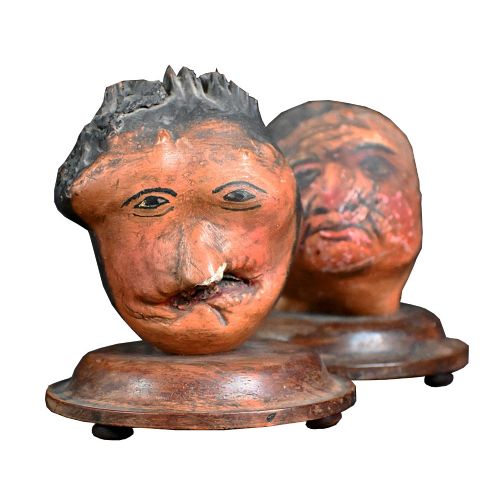


Pair of Portrait Busts
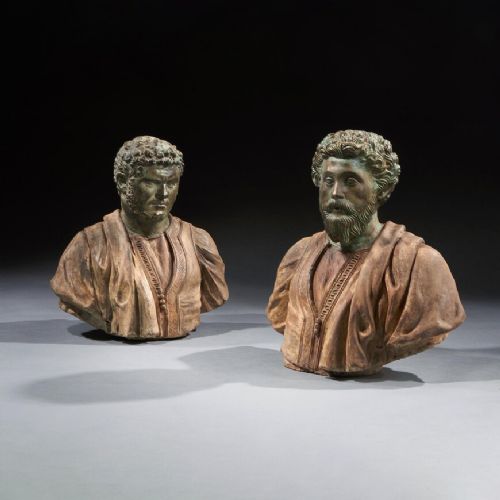
A pair of portrait busts captures likeness in three dimensions, offering balanced symmetry for a mantelpiece or library shelf.

Pair of Portrait Busts
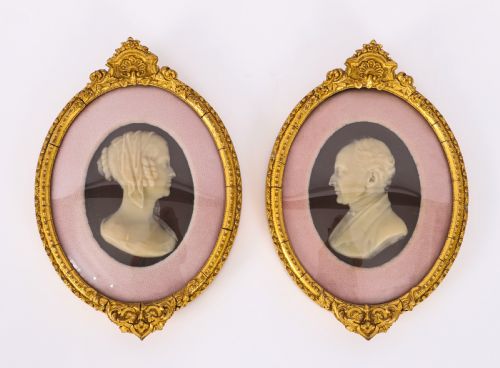
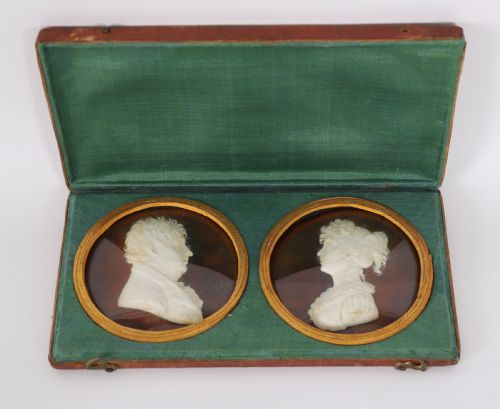
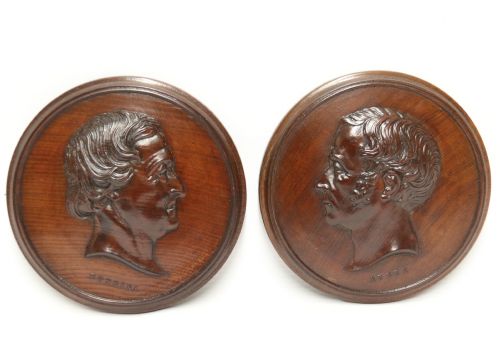
A pair of portrait busts presents two sculptural likenesses of individuals, often designed to face one another in symmetrical display. When searching for a pair of portrait busts, buyers encounter materials ranging from carved marble and terracotta to wax reliefs and cast iron.
The selections span the eighteenth century through the Art Deco era, including Neoclassical depictions of classical philosophers and Roman emperors alongside Victorian literary figures. Italian Grand Tour souvenirs and folk art heads also appear frequently among these matching pieces.
Materials and methods
Sculptors carved stone and wood directly using chisels, producing detailed profile plaques and freestanding marble heads. Terracotta and wax required modelling before firing or cooling, while bronze and iron employed casting techniques.
Pair of Portrait Busts Retail Price Guide 2026
Typical asking prices for pair of portrait busts among the pieces listed under this phrase on Sellingantiques today, from the lower quarter to the upper quarter. They describe what is for sale here now, not the wider market.
Among classical emperors and poets, a pair of folk art heads brings an eccentric charm to the shelf.
Assessing quality and execution
The distinction between tiers rests upon the anatomical precision of the carving and the subtlety of expression captured in the material. Master sculptors rendered musculature, drapery, and hair with naturalism, whereas simpler workshop pieces rely on schematic incision.
Leonhard Posch·V . Ramirez Bolivia
The Pair of Portrait Busts Glossary
- Grand Tour
- A cultural journey undertaken by wealthy young Europeans in the eighteenth and nineteenth centuries, resulting in the acquisition of souvenirs like marble profile portraits and carved plaques.
- Neoclassical
- An artistic style drawing inspiration from the classical art and culture of ancient Greece and Rome, visible in depictions of emperors and philosophers.
- Bas-relief
- A sculptural technique where the figures project only slightly from the background plane, common in wax reliefs and marble plaques.
- Terracotta
- A porous reddish-brown earthenware clay used for fired sculptural busts and figures.
Pair of Portrait Busts: Frequently Asked Questions
How were portrait busts displayed originally?
These sculptures typically occupied prominent positions in libraries, studies, and drawing rooms on mantelpieces, pedestals, or dedicated brackets.
Framed reliefs and wall plaques were hung in symmetrical arrangements on panelled walls alongside paintings and mirrors.
What is the difference between a bust and a profile plaque?
A bust is a freestanding three-dimensional sculptural representation of a person's head, shoulders, and chest.
A profile plaque presents the head from the side, often carved in low relief against a contrasting backing material.
How do I care for marble and terracotta sculptures?
Marble requires gentle dusting with a soft dry cloth and protection from acidic liquids that can etch the polished surface.
Terracotta is fragile and porous, meaning it should be handled minimally and kept away from moisture.
Why were classical figures popular subjects?
Nineteenth-century collectors valued classical philosophers, poets, and Roman emperors as symbols of learning, history, and refined taste.
Displaying such figures signalled an education rooted in classical literature and antiquity.