

Pair of Oak Side Chairs
When you search for a pair of oak side chairs, you enter a tradition of sturdy domestic seating spanning centuries of British and European craftsmanship.
Pair of Oak Side Chairs
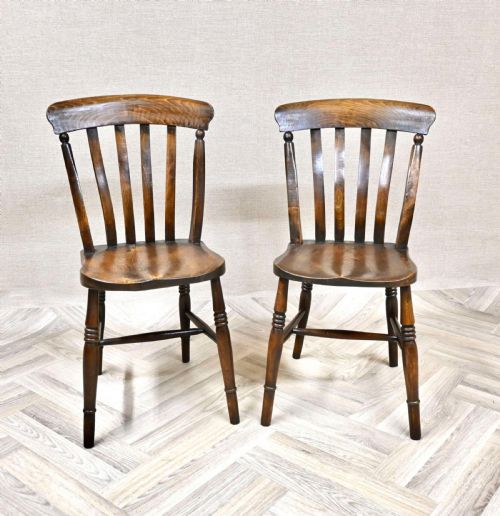
A pair of oak side chairs brings matched historical seating into a room, serving functional roles in halls, dining spaces, and parlours. These survivors range from austere seventeenth-century joined forms to elaborate Victorian Gothic revivals and Georgian country designs.
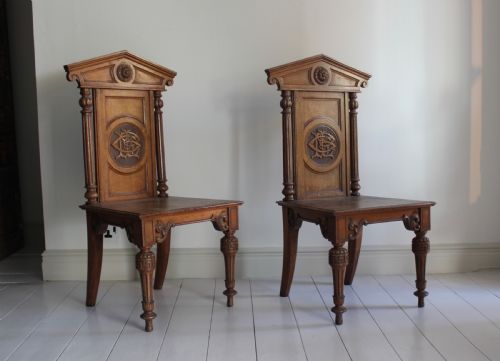
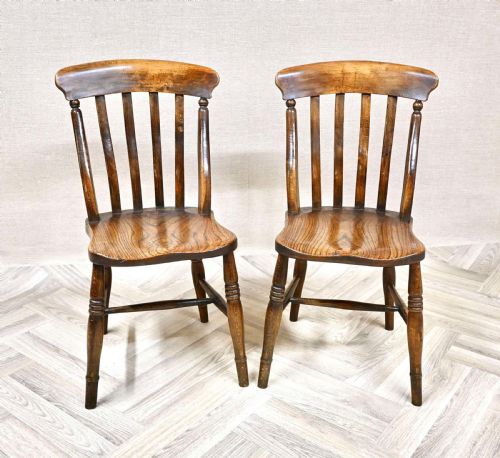
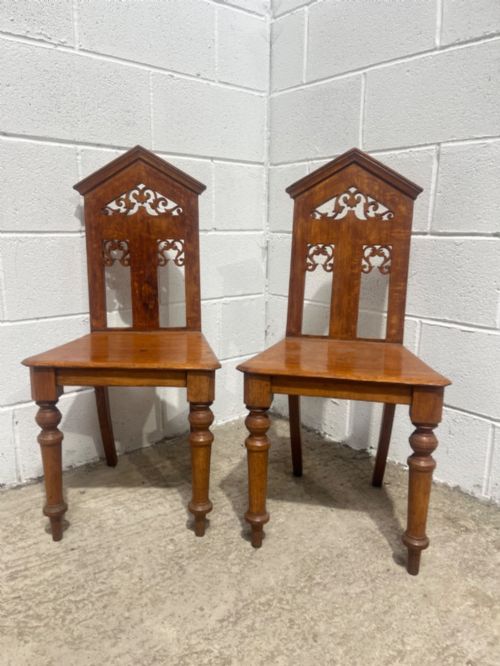
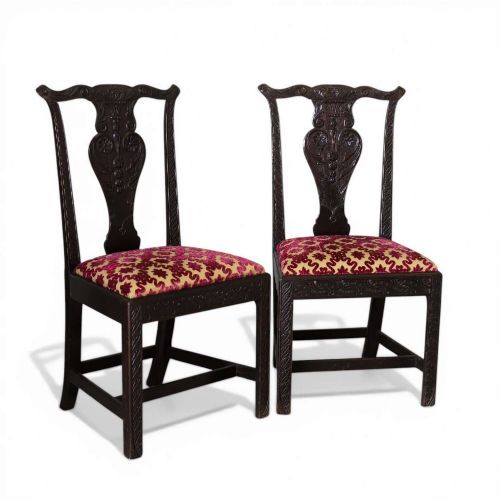
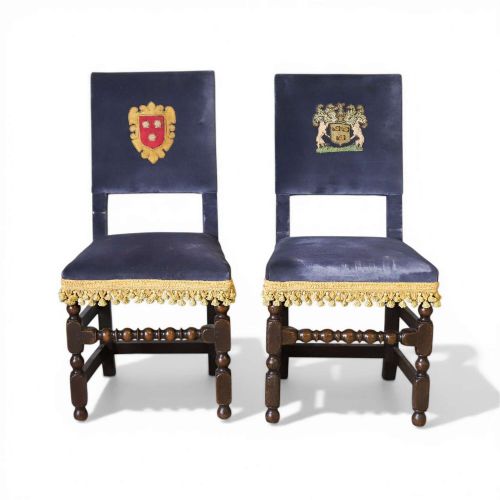
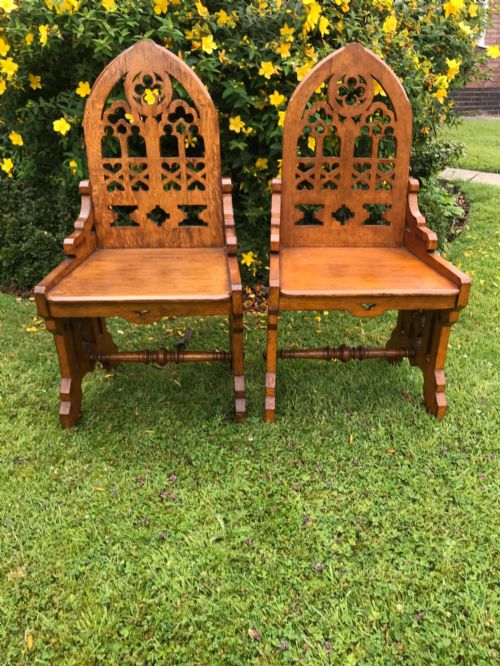
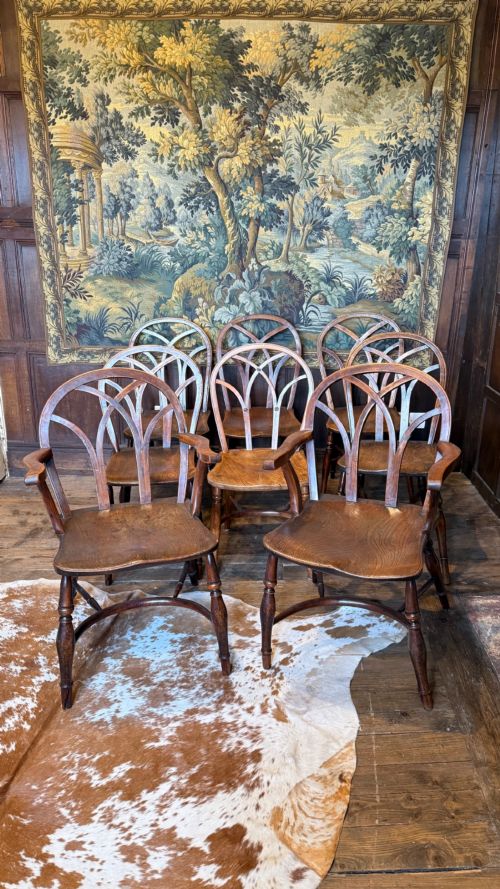
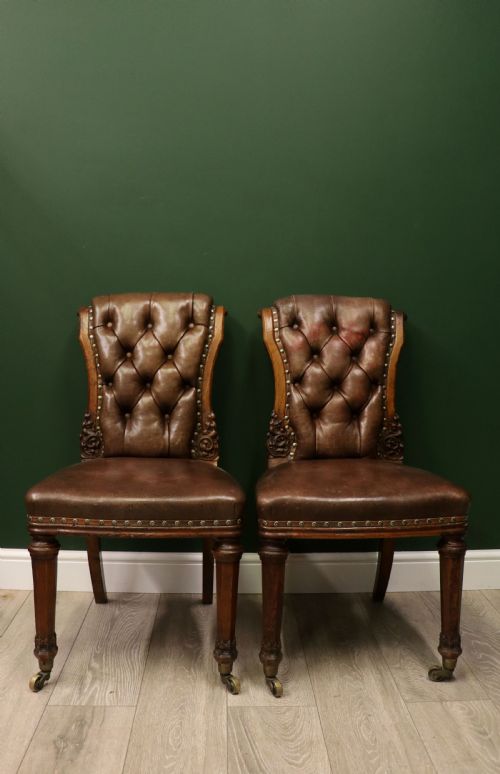
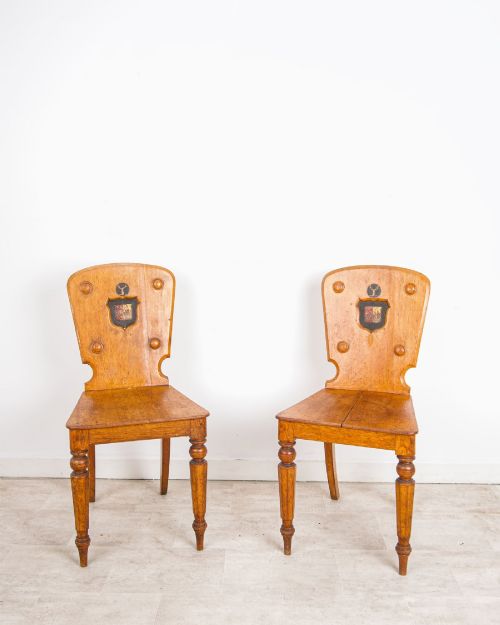
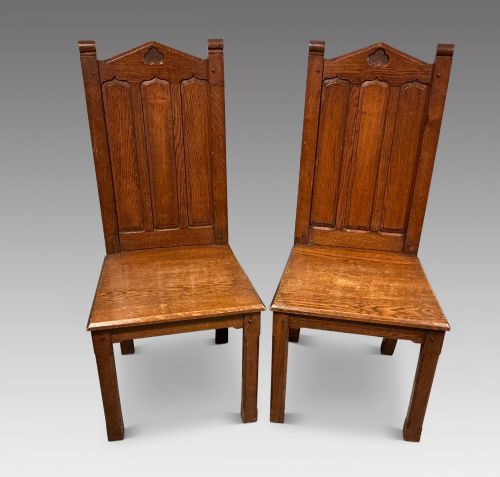
The nineteenth-century Victorian interpretation dominates current and archived stock, frequently manifesting as carved hall chairs with heraldic shields or trefoil details. Buyers encounter everything from rustic Windsor kitchen iterations to formal Chippendale and Baroque revival styles.
Materials and construction
Makers relied primarily on solid oak, frequently supplemented by secondary timbers such as elm, beech, and rush for seats or framing components. Structural integrity relied on traditional joinery methods, including pegged mortise and tenon joints in earlier centuries.
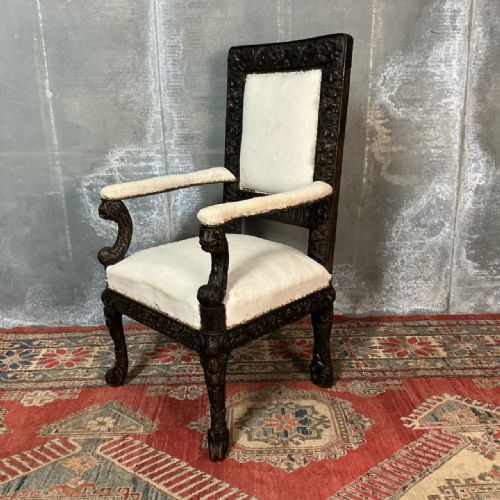
Surface ornamentation involved intricate hand-carving, bobbin turning, and applied heraldic crests. Upholstery materials like leather, velvet, and patterned fabric appeared on padded variants, secured with brass tacks.
Some adventurous mice left their carved signature in the wood of early twentieth-century workshops.
Separating the ordinary from the exceptional
Quality rests in the crispness of the timber carving, the symmetry of the matched pair, and the depth of the grain in the oak. Maker attribution, such as stamps from established workshops like Gillows, elevates historical standing.
Superior examples retain their original structural timber without extensive replacement parts or unsympathetic restoration. The integration of decorative elements, from carved armorial backs to well-executed bobbin turnings, defines the upper tier.
Gillows of Lancaster·Liberty and Co·William Birch Ltd·Mouseman
The Pair of Oak Side Chairs Glossary
- Sgabello
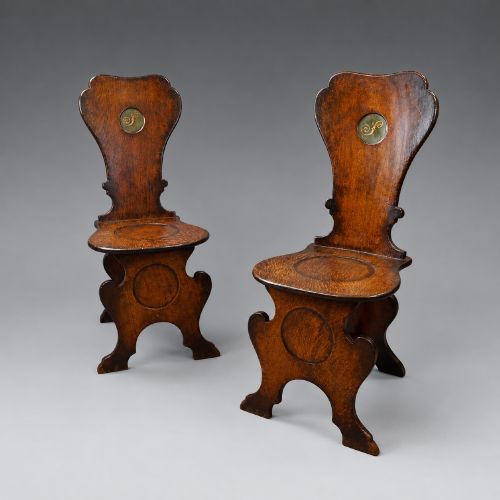
- A Renaissance-style chair featuring solid carved board sides and an octagonal or polygonal seat. These portable seats frequently served a decorative function in entrance halls.
- Bobbin turning
- A form of furniture leg or stretcher shaped on a lathe to resemble a string of beads or bobbins. This technique appears widely on seventeenth-century and revival pieces.
- Gothic Revival
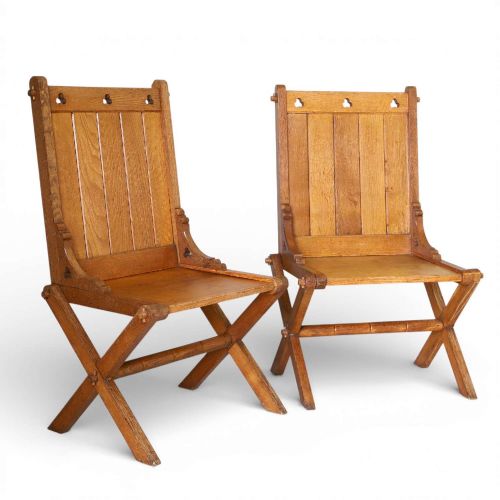
- An architectural and decorative style drawing inspiration from medieval design. Pieces often incorporate pointed arches, trefoils, and heraldic motifs.
- Joined chair
- An early form of seating constructed by specialist joiners using tight mortise and tenon framing before the widespread adoption of nailed furniture.
- Windsor chair
- A seating form featuring a solid wooden seat into which the legs and back spindles are directly bored. Country variations frequently pair elm seats with ash or oak spindles.
Pair of Oak Side Chairs: Frequently Asked Questions
How do I date an oak chair?
Dating relies on examining the joinery methods, tool marks left on the timber, and the specific decorative vocabulary of the period. Earlier pieces exhibit pegged construction and hand-sawn surfaces, whereas later revival items show mechanical manufacturing traces.
Stylistic markers also help secure a date range, shifting from the severe lines of the seventeenth century to the flamboyant carvings of the Victorian Gothic revival.
Where were side chairs used originally?
These chairs originally populated the periphery of formal rooms, dining spaces, and grand hallways where seating served as much to display status as to provide a seat. Paired examples were positioned against walls when not in active use.
Country variations found homes in farmhouse kitchens and vernacular parlours, prioritising utility alongside straightforward durability.
Are these chairs suitable for daily dining?
Many sturdy examples handle regular daily use, particularly nineteenth-century interpretations built with robust timber frames and solid joints. Buyers should check the structural rigidity before assigning them to heavy daily seating duties.
Antique upholstered variants may require careful treatment to preserve fragile historical textiles or leather surfaces.
What is a hall chair?
A hall chair is a rigid, wooden-seated chair designed primarily for entrance halls and reception areas. They typically feature high carved backs displaying crests, shields, or family heraldry.
Because they were meant for brief waiting periods rather than long hours of comfort, they lack upholstery and emphasise architectural display.