






Pair of Lustre Candlesticks
A pair of lustre candlesticks combines practical lighting with hanging glass prisms that catch and refract the flicker of a flame.
Pair of Lustre Candlesticks
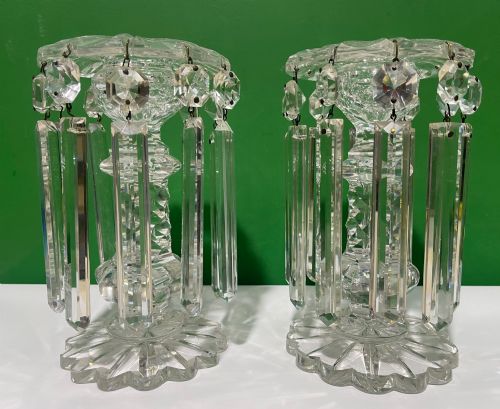
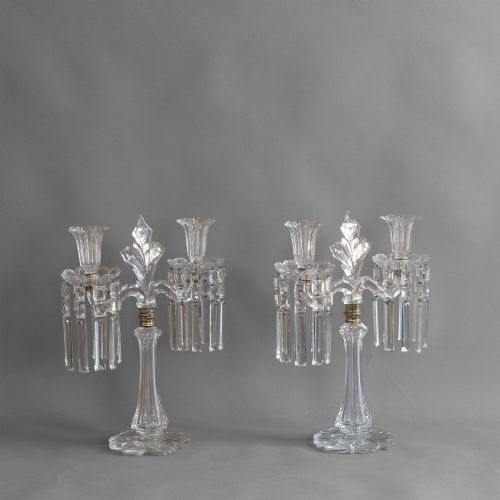
A pair of lustre candlesticks unites standard candleholders with suspended glass drops known as prisms or lustres, which amplify the illumination of the room. The items on this page span several centuries, including Regency, Victorian, and later nineteenth-century examples alongside early twentieth-century pieces.
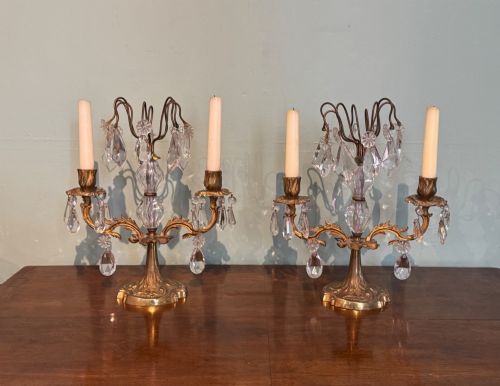
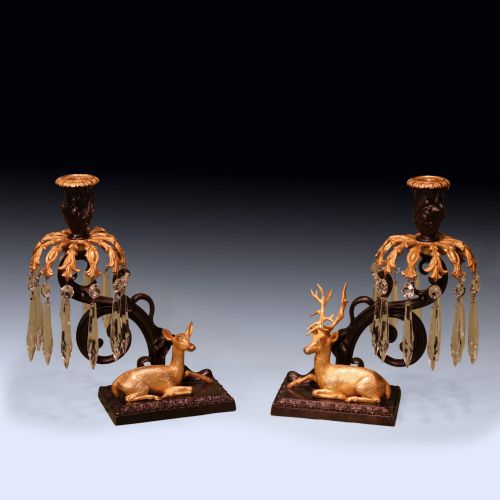
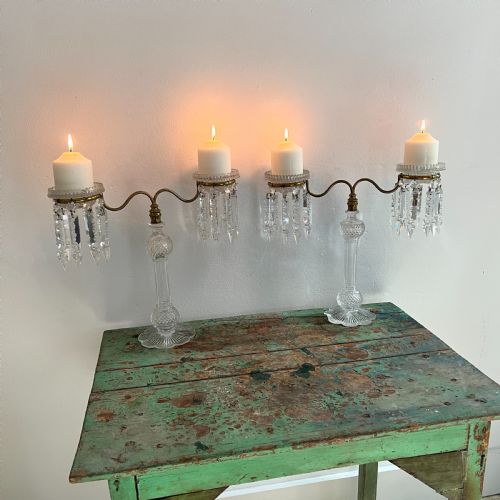
The forms vary widely across the inventory, ranging from simple brass stems with glass drops to elaborate figural designs featuring stags, does, or griffins in bronze and ormolu. Table lustres, candelabras, and candle lamps with storm shades also appear frequently among the listings.
Origins stretch across English and French workshops, utilising styles that encompass French Chateau, Rococo Revival, and French Empire alongside traditional British Victorian and William IV aesthetics.
How they were made
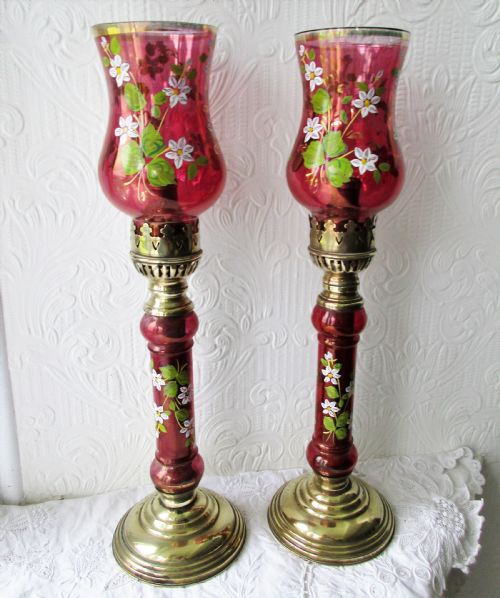
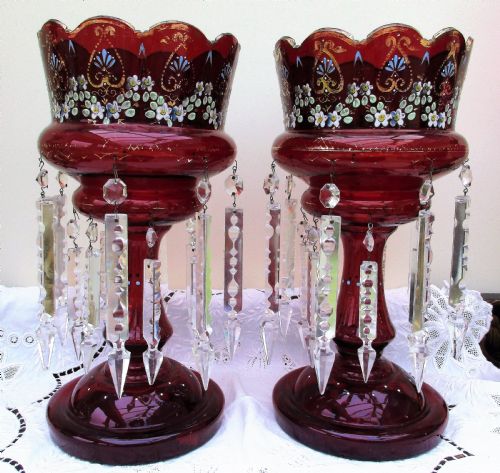
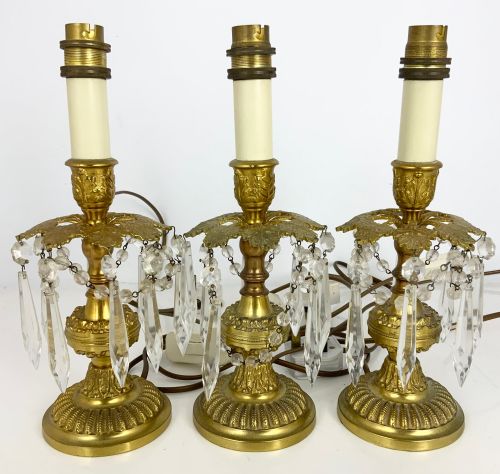
Makers constructed these pieces using a combination of cast metals such as brass, gilt bronze, ormolu, and heavy cut glass or crystal. Ruby glass and opaline variants also feature prominently, often paired with gilded metal mounts or gold leaf detailing.
Glass components rely on precise cutting and polishing techniques to create facets that maximise light refraction from the hanging drops. Metal bases and figural supports require skilled casting, chasing, and gilt finishing to achieve the ornate decorative styles.
Pair of Lustre Candlesticks Retail Price Guide 2026
Typical asking prices for pair of lustre candlesticks among the pieces listed under this phrase on Sellingantiques today, from the lower quarter to the upper quarter. They describe what is for sale here now, not the wider market.
Listings feature cut glass, crystal, brass, enamel, ruby glass, and gold leaf across nineteenth-century and early twentieth-century periods.
What varies in quality
Quality rests heavily on the clarity and depth of the cut glass prisms, as well as the crispness of the casting in the metal mounts. Finer pieces demonstrate superior hand-finishing on ormolu details and substantial weight in the glass components.
The completeness and matching nature of the hanging crystal drops influence the overall standard of the piece, alongside the sophistication of the design, such as intricate figural mounts or complex multi-light candelabra configurations.
Clarkes
The Pair of Lustre Candlesticks Glossary
- Lustre
- A type of candlestick or ornamental vase fitted with hanging glass pendants designed to reflect light. These pendants are often called drops or prisms.
- Ormolu
- Finely chopped and amalgamated gold and mercury applied to bronze or brass objects, creating a rich golden surface finish. It is characteristic of decorative French and English metalwork.
- Cricklite
- A proprietary brand of candle lamp and candelabra system patented in the nineteenth century, typically utilising specialised cut glass and brass assemblies.
- Opaline
- An opaque or semi-translucent glass, often tinted in pale colours, popular in nineteenth-century decorative objects and table lustres.
- Candelabra
- A branched candlestick holder designed to support multiple candles simultaneously from a single central base.
Pair of Lustre Candlesticks: Frequently Asked Questions
How were lustre candlesticks used historically?
Historically, they sat upon dining tables, sideboards, and mantelpieces to provide ambient light during evenings. The hanging glass prisms caught the flickering candlelight from tapers, multiplying the illumination in dimly lit rooms.
In addition to practical lighting, they served as status symbols reflecting the wealth and taste of the household through their ornate materials and complex designs.
How do I date a pair of lustre candlesticks?
Dating relies on examining the manufacturing techniques, the style of the metalwork, and the specific cut of the glass prisms. Regency and William IV pieces often display crisp bronze casting and clean neoclassical lines, whereas Victorian examples lean toward heavier glass and elaborate figural or ruby glass designs.
Comparing the methods of assembly and the type of metal alloys used helps place the objects within the nineteenth or early twentieth century.
How do I style lustre candlesticks in a modern room?
Place them on a dining table, sideboard, or mantelpiece where natural daylight can catch the glass prisms even when unlit. They pair well with traditional and eclectic interiors, adding a layer of reflective texture and historical character to the space.
Keep surrounding decor simple to let the intricate glass and metal details of the candlesticks remain the focal point of the arrangement.