





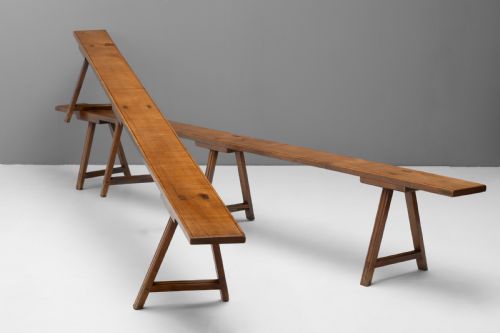


Pair of Long Benches
A pair of long benches offers practical seating with matched proportions, drawn chiefly from nineteenth and early twentieth century rural and formal traditions.
Pair of Long Benches
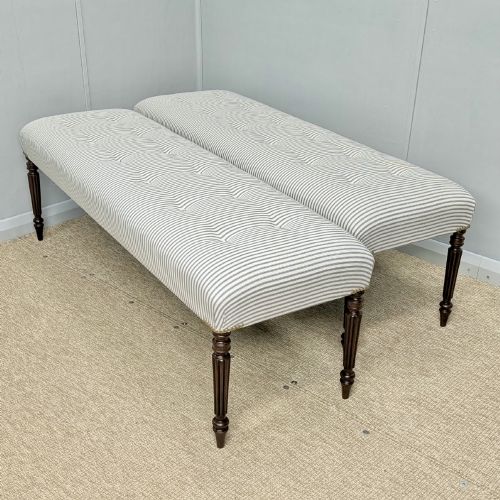
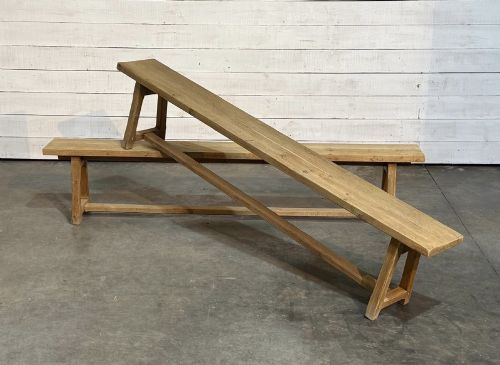
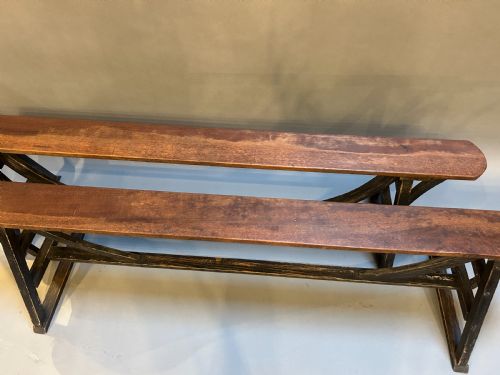
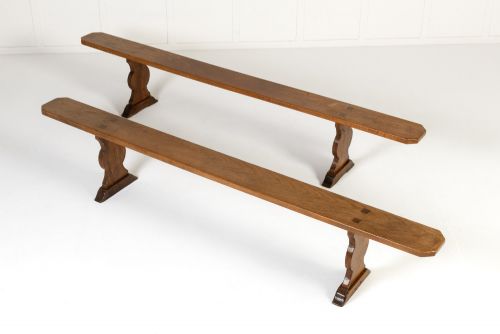
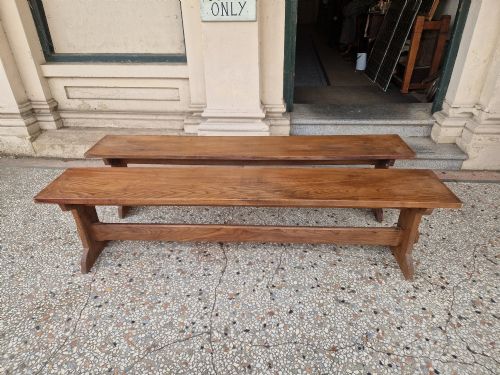
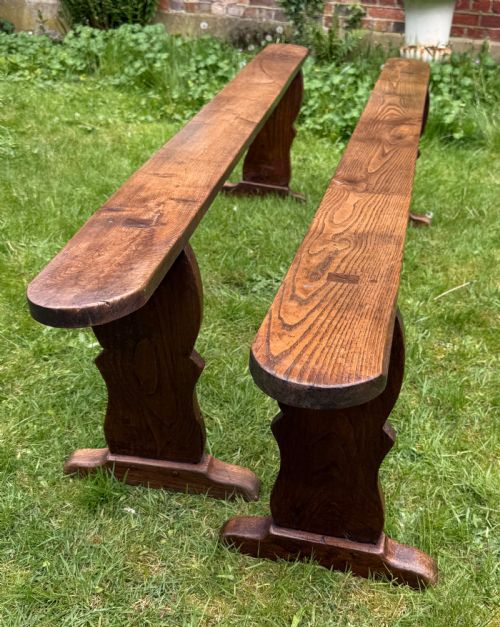
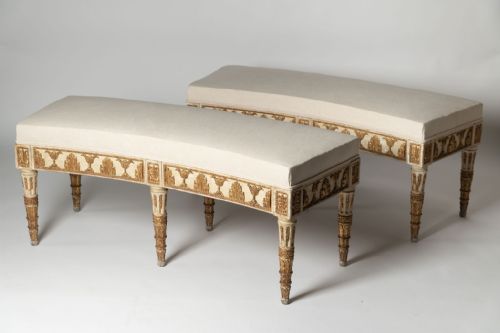
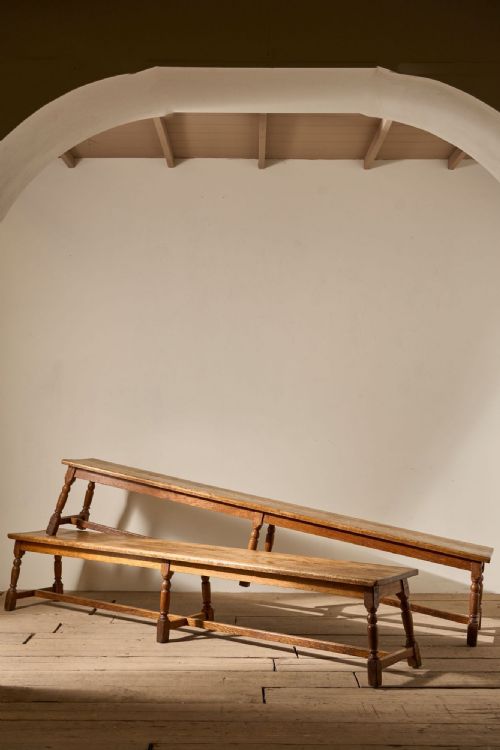
A pair of long benches serves as extended seating for dining tables, hallways, and informal rooms, bringing symmetry to a space through matched proportions. These pieces emerge in various forms, including sturdy refectory styles, narrow school benches, and upholstered long stools suited for more formal interiors.
Buyers seeking a pair of long benches will frequently encounter sturdy wooden constructions rooted in French, English, and Scandinavian country traditions. Examples span from the nineteenth century through the early twentieth century, utilising native timbers and regional construction methods.
The selection ranges from rustic planked pine and solid oak dining benches to buttoned leather and mahogany frames resting on Georgian or Regency legs. Such variety allows these matched pairs to function in both rustic kitchens and elegant reception spaces.
How they were made
Construction relies heavily on dense hardwoods and resilient softwoods, with oak, pine, mahogany, fruitwood, cherry, and elm forming the primary structures. Workshops utilised solid timber boards for tops and seats, supported by turned, tapered, or fluted legs.
Many formal examples incorporate traditional upholstery techniques, featuring buttoned leather fastened with brass studs over padded foundations. Unupholstered pieces display exposed grain, pegged joints, and occasionally painted surfaces reflecting their regional origins.
Pair of Long Benches Retail Price Guide 2026
Typical asking prices for pair of long benches among the pieces listed under this phrase on Sellingantiques today, from the lower quarter to the upper quarter. They describe what is for sale here now, not the wider market.
Some nineteenth century school benches retain ink stains from past pupils, recording decades of classroom life beneath their long polished tops.
What varies in quality
Quality rests upon the selection of timber and the integrity of the joinery connecting the long top to the underframe. Dense, well-figured hardwoods such as mahogany and cherry indicate higher workshop ambition than utilitarian pine.
Proportion and the execution of turned or fluted legs distinguish standard utility seating from finer pieces designed for formal interiors. The condition of original leather upholstery and brass studwork further separates decorative reception furniture from basic vernacular forms.
The Pair of Long Benches Glossary
- Refectory bench
- A long, narrow bench traditionally designed to sit alongside a long dining table. These pieces often feature stretcher bases for added stability.
- Fluted leg
- A column leg decorated with parallel vertical grooves, commonly found on formal nineteenth century mahogany and Regency frames. This detail adds classical architectural refinement.
- Buttoned upholstery
- A method where upholstery is pulled tight and secured with buttons set in a geometric grid, creating deep indentations. It provides both structural firmness and decorative texture to leather seats.
- Brass-studded
- A decorative finishing technique using individual brass tacks driven along the margins of leather upholstery. This method secures the hide while adding a metallic trim.
Pair of Long Benches: Frequently Asked Questions
Where should I place long benches?
These matched sets fit naturally along dining tables, providing extended linear seating that tucks away neatly when not in use.
They also serve well in hallways, at the foot of beds, or against living room walls where symmetry and length are required.
How do I care for wooden benches?
Maintain timber surfaces by dusting regularly with a soft cloth and applying appropriate wax to nourish the grain. Avoid placing wooden furniture in direct sunlight or near heat sources to prevent timber splitting.
For leather upholstered examples, condition the hide periodically to keep the material supple and prevent cracking around the buttoning.
Are these benches sturdy enough for daily dining?
Solid timber construction in oak, elm, and pine provides the structural integrity necessary for regular seating use around a busy dining table.
Upholstered versions with sturdy mahogany frames offer comfortable support, though care should be taken to protect the leather surface during daily meals.
How do I distinguish regional styles?
Scandinavian and French country pieces often feature pale painted pine or fruitwood with simple lines and functional proportions. English and colonial examples frequently utilise darker woods like oak or mahogany, occasionally displaying formal stylistic influences like Georgian or Regency legs.