



Pair of Drawer Pedestals
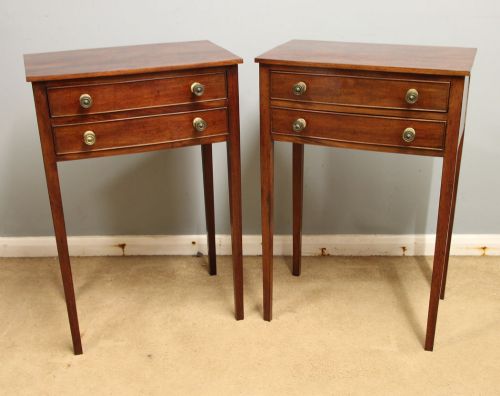
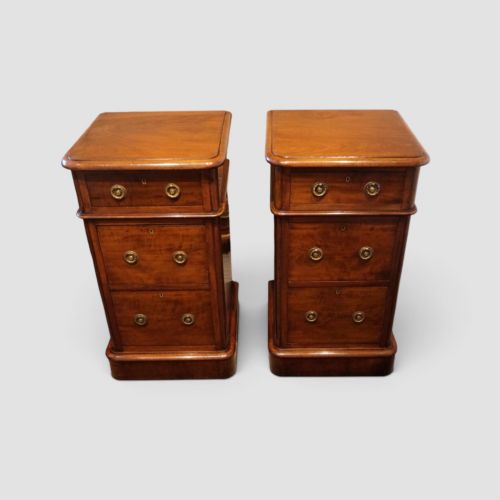
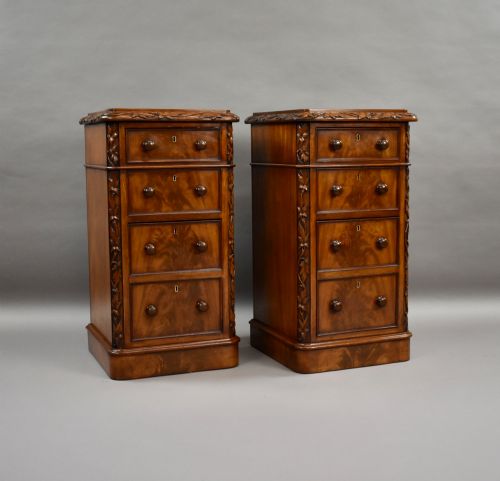
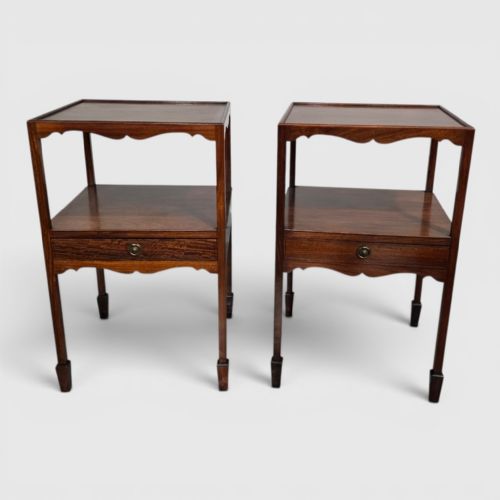
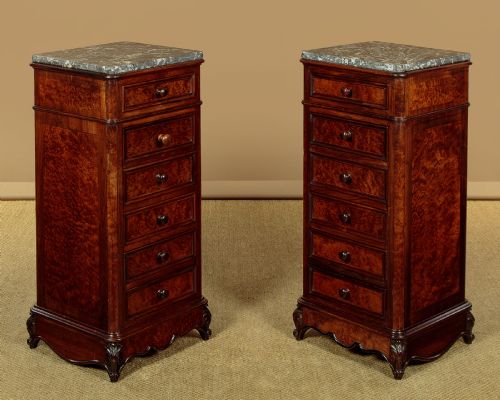
These pair of drawer pedestals offer practical bedside storage while bringing period character to a bedroom.
Pair of Drawer Pedestals
A pair of drawer pedestals functions as matching bedside storage units, taking the form of small chests, cabinets, or nightstands equipped with multiple drawers. Buyers searching this phrase encounter matching sets designed to sit symmetrically on either side of a bed.
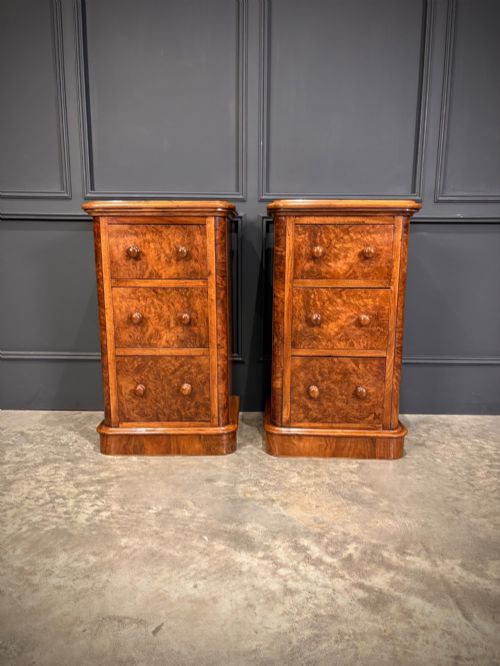
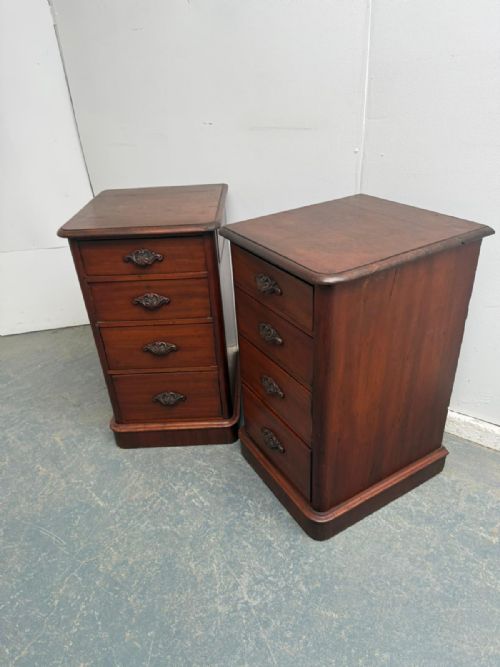
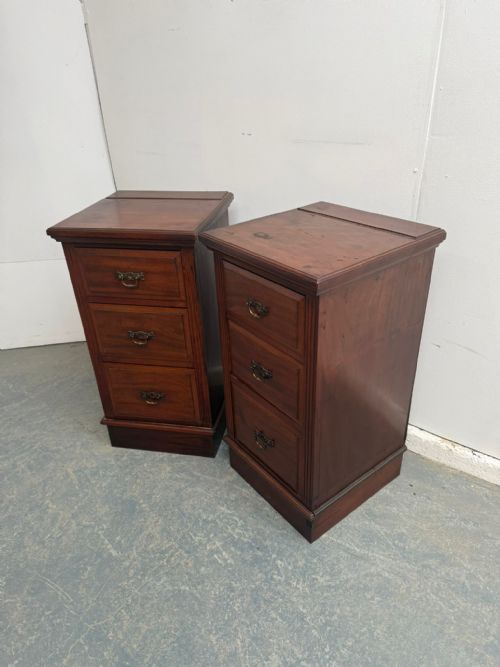
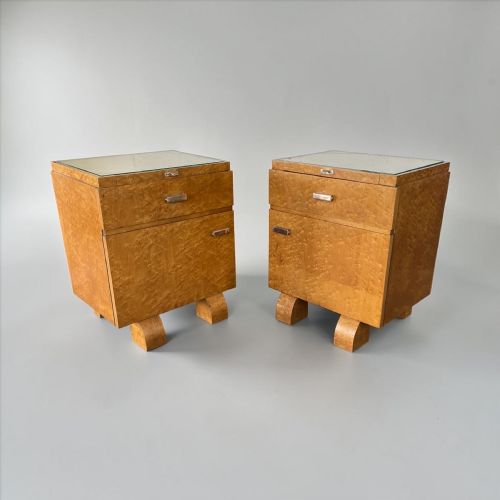
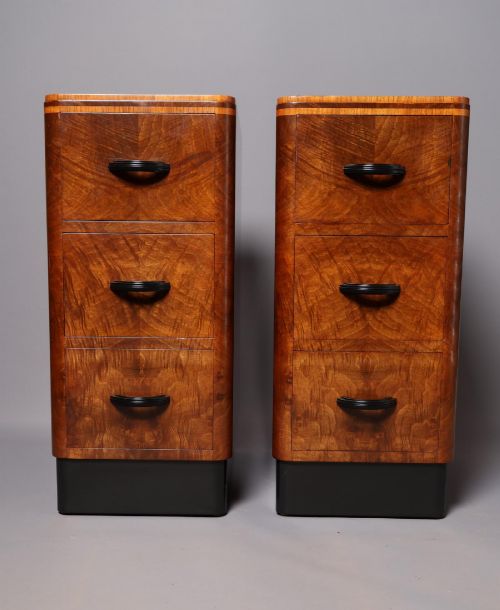
The selections span from the Victorian period through to Art Deco designs of the 1930s. Victorian mahogany and burr walnut examples dominate the listings alongside twentieth-century walnut and satinwood iterations.
Alternative forms include side tables, lamp tables, and small chests of drawers functioning as bedside storage. Proportions vary from neat thirty-seven centimetre widths up to taller Wellington-type chests.
Materials and construction
Cabinet makers utilised dense hardwoods including mahogany, walnut, burr walnut, and rosewood for structural durability and rich grain patterns. Satinwood, satin birch, and kingwood appear as lighter timbers or decorative veneers.
Drawer construction frequently incorporates secondary timbers such as pine alongside hand-cut joinery. Surfaces receive wax finishes or polish, occasionally complemented by leather top inserts, gilt metal mounts, or marquetry inlay.
Victorian nightstands were occasionally called pot cupboards because they housed chamber pots before indoor plumbing reached the bedroom.
Assessing quality and craftsmanship
Quality rests upon the selection of timber figures, such as burr walnut or figured mahogany, matched evenly across both pedestals in the pair. Superior examples display crisp inlay work, marquetry, and secure structural joinery.
Hardware and secondary details separate standard utility pieces from finer productions. Original brass handles, neatly fitted drawers operating smoothly, and intact gilt metal mounts indicate higher workshop standards.
The Pair of Drawer Pedestals Glossary
- Wellington chest
- A tall, narrow chest of drawers characterised by a hinged locking stile secured with a side-mounted bar and lock. This style originated in the nineteenth century and maximises vertical storage space.
- Marquetry
- The art of applying decorative veneer pieces to a structure to form intricate geometric or floral patterns. Craftsmen use contrasting timbers to achieve pictorial depth.
- Nightstand
- A small low table or cabinet placed beside a bed for holding lamps or nighttime items. These serve the same functional purpose as bedside chests and pedestals.
- Satinwood
- A durable, lustrous timber native to India and Ceylon displaying a yellowish colour and satiny sheen. It was frequently utilised for fine cabinetwork during the eighteenth and nineteenth centuries.
- Gilt metal
- Base metal treated with a thin layer of gold or gold-coloured finish to simulate solid ormolu mounts. It provides decorative highlight accents on nineteenth and twentieth-century furniture.
Pair of Drawer Pedestals: Frequently Asked Questions
What is a drawer pedestal?
A drawer pedestal is a compact, freestanding cabinet or small chest containing multiple drawers for bedside storage.
Pairs of these items are designed to match and sit symmetrically on opposite sides of a bed.
How were these used historically?
Historically, these cabinets stood beside beds to store personal items, nightwear, and small belongings.
Many incorporated surfaces designated for oil lamps, candlesticks, or later, electric bedside lamps.
How do I date a Victorian piece?
Victorian pieces often display characteristic timber choices like mahogany or burr walnut paired with hand-cut drawer dovetails.
Construction methods shifted towards machine assistance by the late nineteenth century alongside the introduction of aesthetic movement and Gothic revival styles.
Are Art Deco pedestals different?
Art Deco pedestals from the nineteen-thirties favour streamlined silhouettes and contrasting veneers such as satinwood and walnut.
These twentieth-century examples typically omit the heavier carved ornamentation found on earlier Victorian counterparts.