




Pair of Crystal Lamps
A pair of crystal lamps brings light and brilliance to a room through cut glass and metal mounts.
Pair of Crystal Lamps
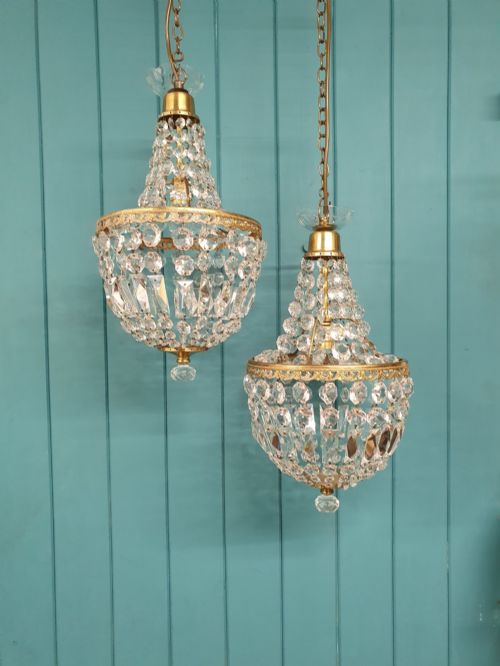
When you search for a pair of crystal lamps, you encounter lighting fixtures composed of glass or cut crystal combined with metal frames. These pieces take forms such as table lamps, wall lights, and small chandeliers designed to sit on surfaces.
The selection on this page draws from periods spanning the Victorian era through the Edwardian years into the 1920s, 1930s, and 1960s. French styles appear frequently alongside English examples, often showing influence from neoclassical or Belle Epoque designs.
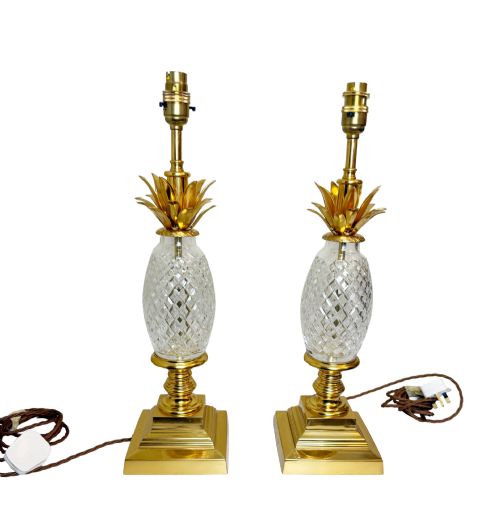
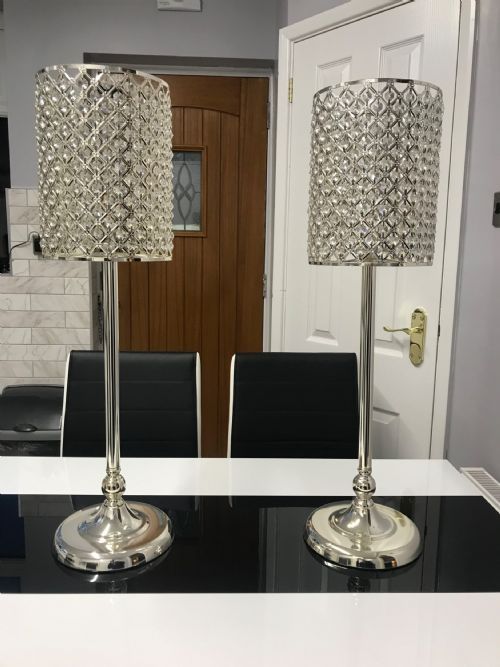
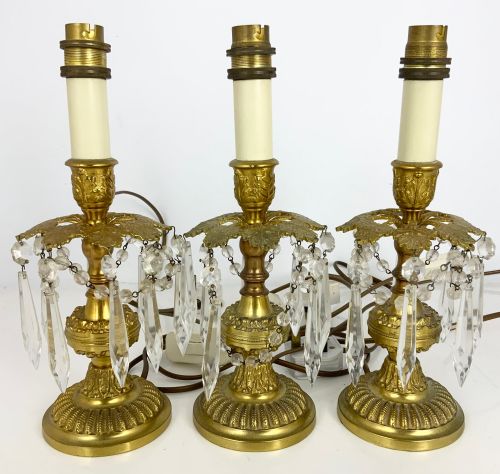
Many items originated as candelabra or lustres before conversion to electricity, while others were built as dedicated lamps from the start. Buyers find everything from small spike chandeliers to grand pineapple or column table lamps.
Materials and construction
Makers utilised cut crystal, cut glass, and plain glass suspended from structural metal frames. These metallic elements typically consist of brass, gilt bronze, or ormolu, providing a stable support for the glass components.
Casting and metalworking formed the bases and arms, while glass cutters shaped the pendants, drops, and prisms by hand. Components were then assembled with pins or wire to allow the crystal to move and catch the light.
Pineapple-shaped crystal table lamps let you illuminate your drawing room with a Victorian symbol of hospitality.
Assessing quality and craftsmanship
Quality rests in the clarity and depth of the crystal cutting, which determines how sharply the glass refracts light. Superior pieces show precise facets and heavy, well-cast bronze or brass mounts rather than thin pressed metal.
The harmony of the matching pair dictates its desirability, as minor variations in the glass drops or frame casting can occur in older hand-finished items. Heavier metal gauge and intricate chasing on the ormolu mark the finer end of the range.
F. & C. Osler·Clarke
The Pair of Crystal Lamps Glossary
- Crystal
- Glass containing lead oxide to increase weight, brilliance, and refractive power. This material gives these lamps their characteristic sparkle when lit.
- Ormolu
- Gilt bronze produced by applying a mercury and gold amalgam to cast bronze. This technique creates a rich golden finish on the metal mounts of French lighting.
- Lustre
- A decorative tabletop ornament featuring hanging glass prisms designed to reflect candlelight or electric light. They frequently appear converted into lamps.
- Girandole
- An ornamental branched candlestick or light fitting featuring mirrors or extensive crystal drops. They often display ornate brass or gilt bronze frames.
- Cricklite
- A patented brand of night light and small lamp utilising specialised glass shades and stands. Victorian examples often bear specific maker stamps.
Pair of Crystal Lamps: Frequently Asked Questions
How do I wire old lamps?
Rewiring involves replacing perished internal cables with modern flex suited to current electrical standards. Many vintage fittings require professional rewiring to ensure safe daily operation in a home.
Qualified electricians can adapt older brass and crystal frames without damaging the original metalwork or obscuring period details.
Were these originally electric?
Many examples began life as oil lamps, gas fixtures, or candleholders before later conversion to electricity. This evolution means modern bulb holders are often integrated into older frames.
Converted pieces retain their original glass drops and metal bodies while accommodating contemporary wiring and standard bulbs.
How do I clean crystal lamps?
Dusting the glass drops regularly prevents grime buildup that dulls the natural sparkle of the cut crystal. Gentle wiping with a soft cloth and mild soapy water keeps the facets bright.
Harsh chemical cleaners can damage gilt finishes on the bronze or brass mounts, so care must be taken around the metal parts.
Where should I place them?
These lamps suit sideboards, mantels, and bedside tables where their reflective glass drops can catch natural and artificial light. Their decorative metalwork adds an ornamental focus to a room even when switched off.
Pairs look best balanced on matching surfaces or flanking mirrors to maximise the visual impact of the crystal.