


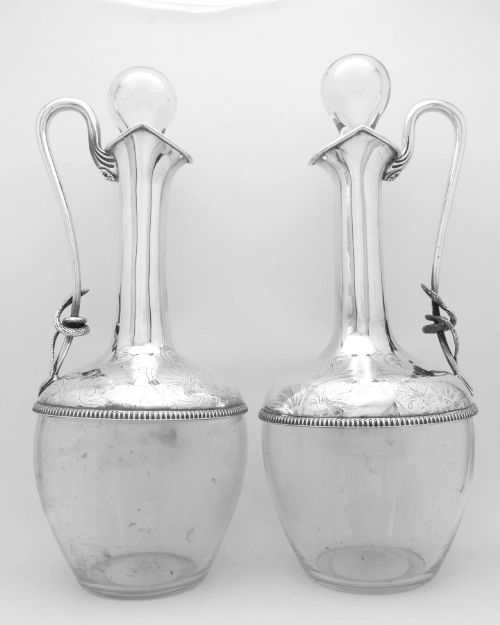


Pair of Crystal Decanters
A pair of crystal decanters brings symmetry and light to a sideboard, holding spirits or wine with traditional weight and polish.
Pair of Crystal Decanters
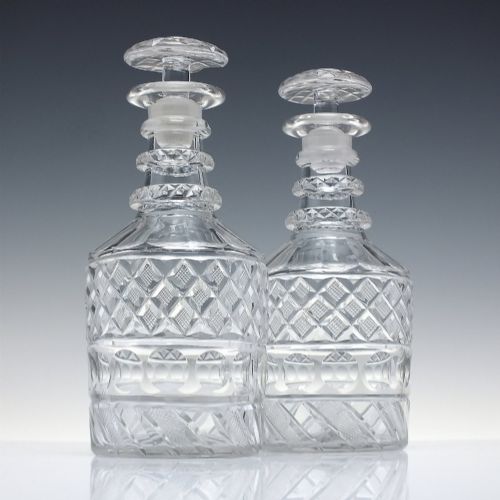
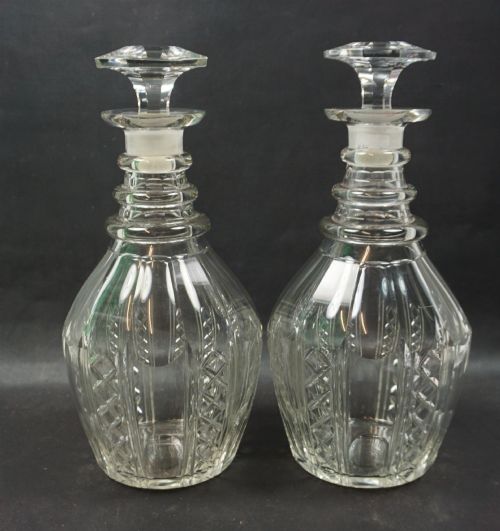
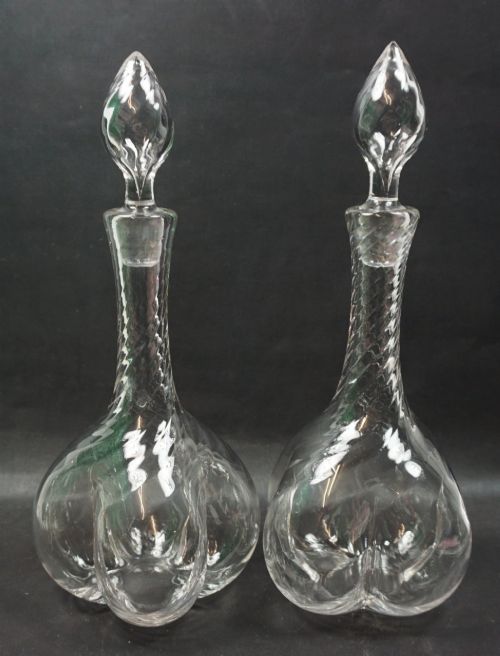
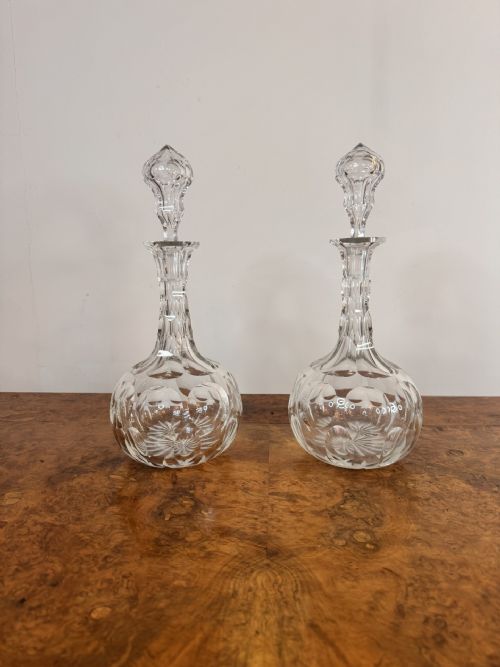
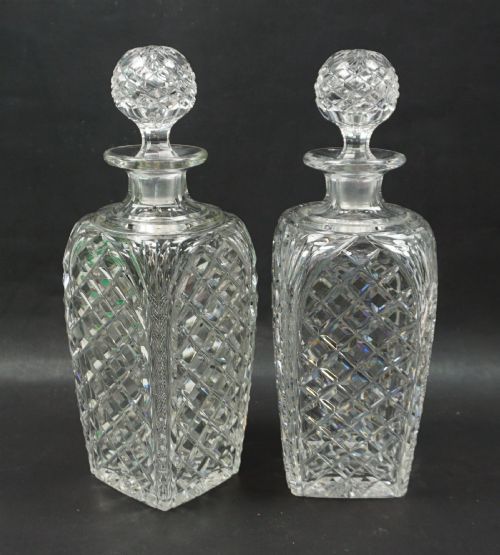
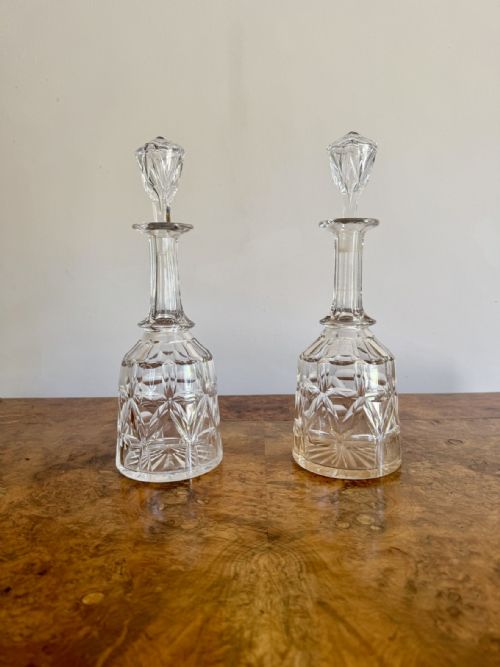
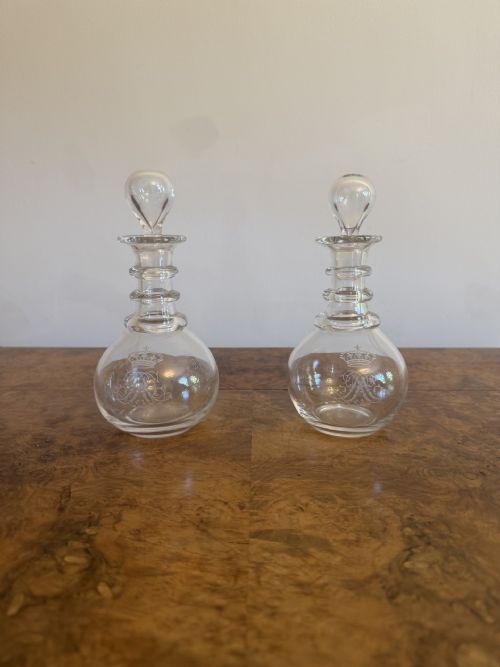
A pair of crystal decanters comprises matching vessels designed to hold wine, claret, or spirits in domestic settings. When searching for a pair of crystal decanters, collectors encounter various forms ranging from Georgian three-ring Prussian styles to Edwardian spirit decanters and Victorian shaft and globe shapes.
Most examples found on this page date from the nineteenth and early twentieth centuries, spanning the Victorian, Edwardian, and Georgian periods. Alongside standard decanters, related items such as claret jugs, carafes, and smaller perfume bottles appear across these eras.
The aesthetic of these pairs reflects the prevailing design movements of their time, including Arts and Crafts, Art Deco, and French Rococo Revival styles. Buyers select these matching sets for functional use on the dining table or as decorative focal points in a cabinet.
How they were made
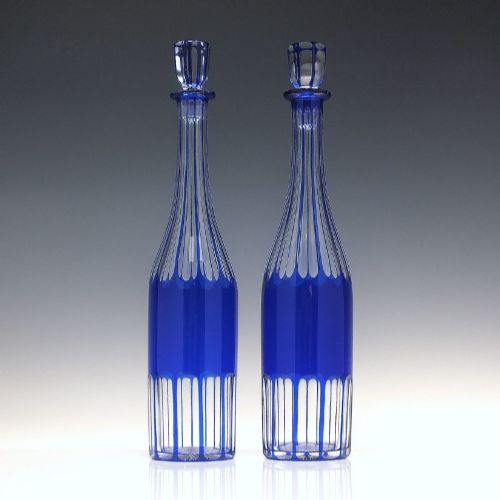
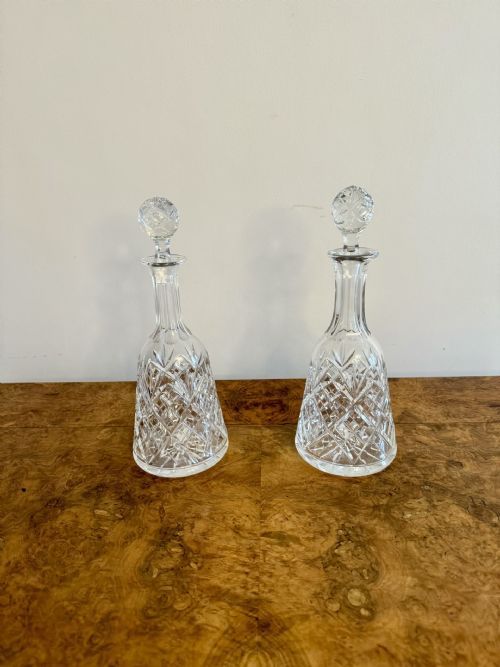
Makers shaped the glass using lead crystal, clear glass, or cut crystal, employing techniques like optical blowing to achieve thin yet resilient walls. Artisans then applied deep wheel-cutting to create facets, hobnail patterns, or pillar cuts that catch the ambient light.
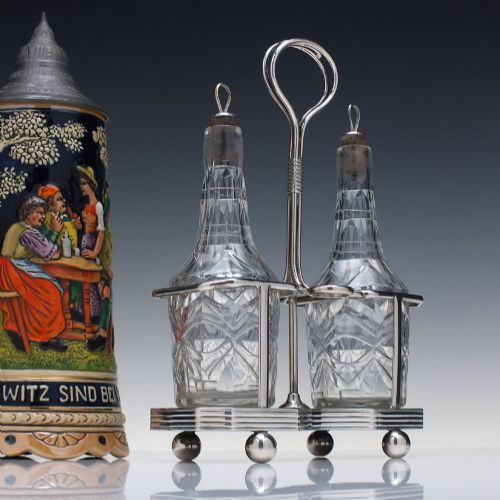
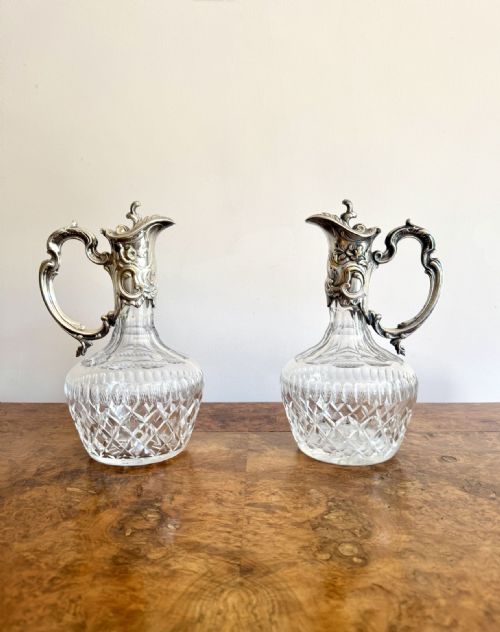
Many specimens incorporate metal elements, featuring solid silver mounts, silver-plated collars, or serpent and face spouts cast in metal. Engraving was frequently added by hand, displaying stars, floral motifs of the union, or specific spirit labels such as brandy and whisky.
Pair of Crystal Decanters Retail Price Guide 2026
Typical asking prices for pair of crystal decanters among the pieces listed under this phrase on Sellingantiques today, from the lower quarter to the upper quarter. They describe what is for sale here now, not the wider market.
Some Edwardian claret jugs feature unusual face spouts, glaring across the dinner table with metallic disapproval.
What varies in quality
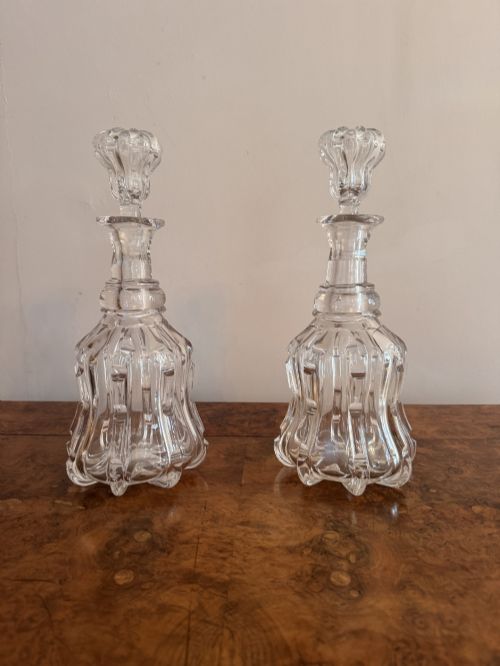
The clarity and weight of the glass dictate the baseline standard, with heavier lead crystal offering a more resonant ring and deeper refractive properties. Superior examples exhibit crisply executed hand-cut facets that remain sharp to the touch, distinguishing them from softer, moulded alternatives.
The integration of precious mounts alters the standing of a piece, particularly when solid silver collars or maker-stamped silver hardware accompany the glassware. Well-matched stoppers original to the bodies and refined proportions further separate standard utility pieces from collector-grade items.
James Powell·Rene Lalique·Mappin & Webb·William Hutton & Sons
The Pair of Crystal Decanters Glossary
- Prussian decanter
- A form characterised by a broad base and tapering neck, popular during the Georgian period. This shape provided stability on board ships and dining tables.
- Lead crystal
- Glass containing a high proportion of lead oxide, increasing weight, brilliance, and softness for easier cutting. It forms the heavy body of many antique vessels.
- Hobnail cut
- A raised, pointed geometric facet pattern resembling the hobnails on boots. It creates intense light refraction across the surface of the glass.
- Claret jug
- A specialised pouring vessel, frequently featuring a silver-plated or solid silver mount and handle. They were designed specifically for serving red wine.
- Shaft and globe
- A decanter profile featuring a spherical body topped by a long, slender neck. Victorian makers produced these in substantial numbers.
Pair of Crystal Decanters: Frequently Asked Questions
How do I clean antique decanters safely?
Wash the glass by hand using warm water and mild detergent, avoiding sudden temperature changes that can crack aged material. Use specialised cleaning beads rather than abrasive brushes to reach internal residue without scratching.
Allow the decanters to air dry completely upside down on a cloth before replacing the stoppers. Storing them with the stoppers slightly loose prevents moisture entrapment and stuck stoppers.
Are these decanters safe for daily use?
Most antique lead crystal and cut glass vessels remain entirely functional for serving wine, whisky, or water at the table. Ensure the interior is thoroughly cleaned and inspect the rim for any historical chips before pouring.
Acidic contents like wine should not be left inside lead crystal containers for extended periods. Hand washing preserves the clarity and prevents damage to any silver-plated or solid silver mounts.
How do I distinguish Georgian from Victorian decanters?
Georgian examples often feature simpler, heavier proportions with distinct three-ring necks and hand-blown pontil marks on the base. The glass on early pieces typically has a slightly darker tone and minor optical distortions from manufacture.
Victorian pieces frequently display heavier, more complex hobnail or deep-relief cutting, alongside brighter, clearer metal content. Silhouetted forms also shifted during the Victorian era toward shaft and globe shapes and engraved union motifs.
Why do some decanters have matched stoppers?
Stoppers were individually ground to fit the specific neck of each decanter during production, creating a unique airtight seal. Over decades of use and washing, original stoppers were frequently misplaced or mixed up between pairs.
Finding a set with its original matching stoppers enhances the completeness of the object. Look for corresponding numbers cut into both the base of the stopper and the interior neck of the vessel.