



Pair of Classical Busts
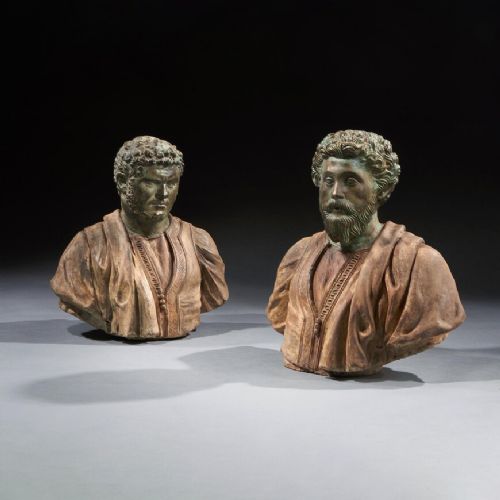
These pair of classical busts bring antiquity into the room, cast in bronze, marble, and terracotta to capture the likenesses of emperors, poets, and philosophers.
Pair of Classical Busts
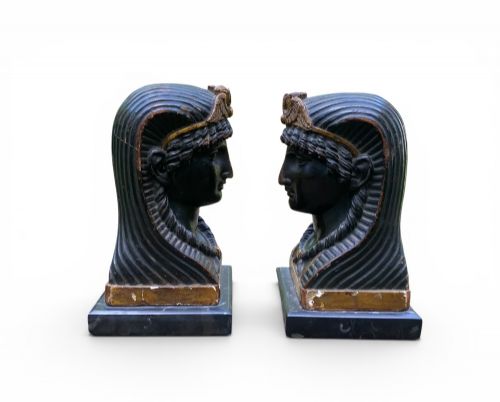
A pair of classical busts represents famous historical figures, philosophers, and literary icons, modeled after ancient Greek and Roman sculpture. Buyers searching for a pair of classical busts typically encounter nineteenth-century interpretations, from Grand Tour marble cameos to cast iron profile plaques.
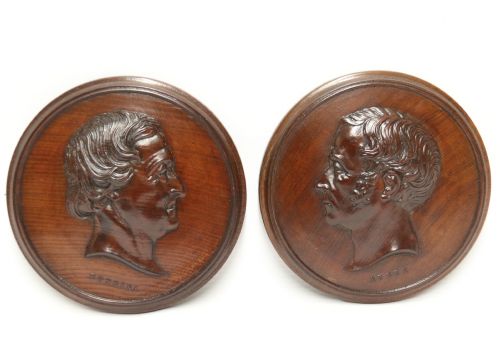
The selections span freestanding portrait sculptures and wall-mounted profile reliefs, often depicting specific historical figures such as Marcus Aurelius, Virgil, Dante, Rossini, and Auber. Mahogany wall plaques and marble profile plaques offer a flatter alternative to traditional three-dimensional marble and terracotta busts.
Italian workshops feature prominently among these listings, alongside English interpretations influenced by Regency taste and Thomas Hope designs. Nineteenth-century examples dominate the selection, capturing the enduring European fascination with classical antiquity.
Materials and construction methods
Carved marble and cast bronze form the backbone of these sculptures, offering a weight and finish that mimics ancient statuary. Artisans also utilised terracotta, carved mahogany, chestnut, and cast iron to render detailed facial expressions and draped garments.
Surface treatments enhance the visual depth of the pieces, employing verdigris patina, gilt highlights, and painted details on wood and metal. Wall plaques integrate carved wooden grounds with mounted profiles, while heavier stone and marble pieces often rest on dedicated pedestals and stands.
Period origins on this site range from late eighteenth-century Grand Tour souvenirs to early twentieth-century terracotta and cast works.
Assessing quality in sculptural pairs
Consistency across the pair matters immensely, as matching proportions, patination, and mounting details confirm that the two items were conceived and executed together rather than assembled later. Original mounts, such as ormolu additions or specific wooden backing boards, elevate the integrity of the ensemble.
Thomas Hope·Leonhard Posch
The Pair of Classical Busts Glossary
- Grand Tour
- A nineteenth-century tradition where wealthy travellers collected art and antiquities across Europe, bringing home souvenir marbles and reliefs. These items often emulate ancient Roman emperors and philosophers.
- Herm
- A sculptural pillar terminating in a carved head or bust, frequently used as a boundary marker or decorative architectural support. The form dates back to ancient Greece.
- Bas-relief
- A sculptural technique where figures project only slightly from the background plane, commonly seen in profile plaques and marble cameos. This method creates depth while maintaining a flat overall profile.
- Ormolu
- Gilded bronze mounts applied to furniture, stands, and decorative objects during the eighteenth and nineteenth centuries. The technique involves applying a gold-mercury amalgam to bronze.
- Patina
- The surface appearance or coloration that develops on materials like bronze, marble, and wood over time through age and handling. A deliberate verdigris patina is often applied to mimic ancient weathering.
Pair of Classical Busts: Frequently Asked Questions
Where should I display a pair of classical busts?
These pieces suit mantelshelves, bookcases, or dedicated pedestals and stands where their three-dimensional form or wall relief can be viewed clearly. Placing them symmetrically enhances their classical balance.
Ensure the surrounding furniture complements the material, pairing marble with stone surfaces and mahogany plaques with period wood finishes.
How do I distinguish nineteenth-century pieces from earlier originals?
Most works available date from the nineteenth century, drawing inspiration from earlier Roman and Greek archetypes rather than dating from antiquity itself. Tool marks, wood shrinkage, and casting methods help determine the actual manufacturing period.
Examining the underside, mounting brackets, and patination provides further clues to the workshop era.
What is the difference between a bust and a profile plaque?
A bust is a three-dimensional sculptural representation of a person's head, shoulders, and chest, designed to be viewed from multiple angles. In contrast, a profile plaque presents the subject from the side, usually mounted flat against a wooden or marble backplate.
Both formats share the same classical subject matter but serve different spatial requirements in an interior.
How do I care for marble and bronze sculptures?
Dust marble and terracotta gently with a dry, soft cloth, avoiding harsh chemical cleaners that can strip the surface finish. Bronze and cast iron require minimal maintenance beyond occasional dusting to preserve their patination.
Keep wooden plaques and chestnut herms away from direct heat sources to prevent timber splitting.