




Pair of Bronze Statuettes
When you handle a pair of bronze statuettes, you hold dual companions cast to mirror each other in subject and stance.
Pair of Bronze Statuettes
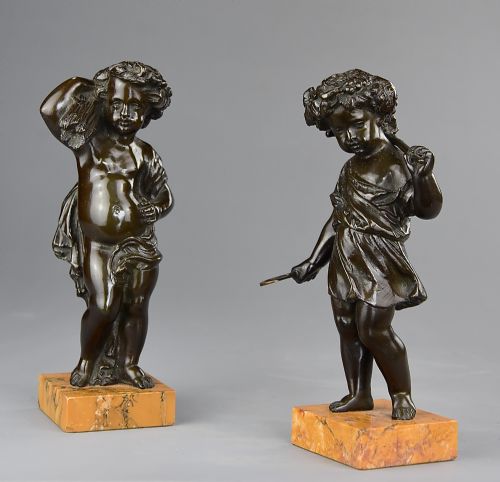
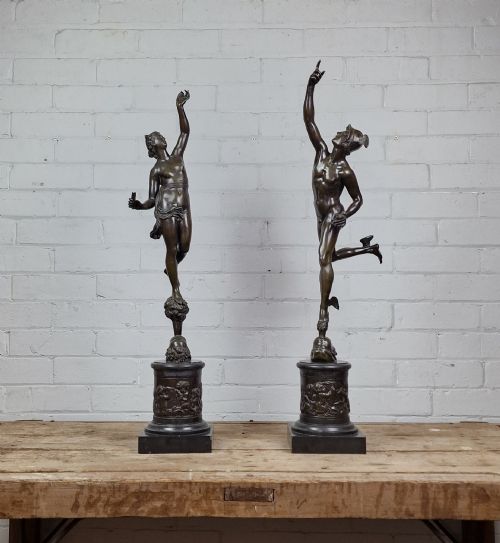
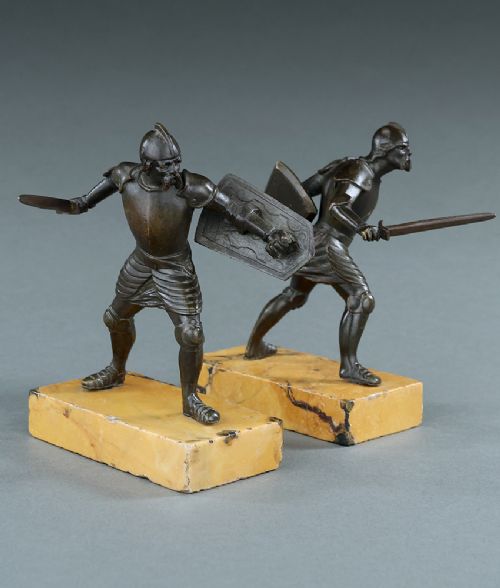
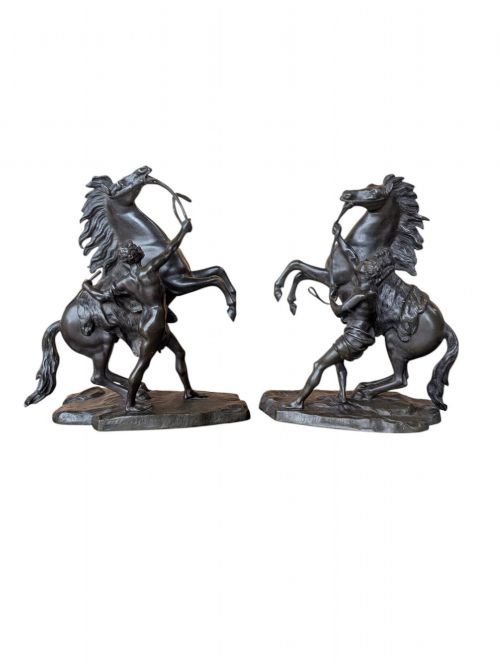
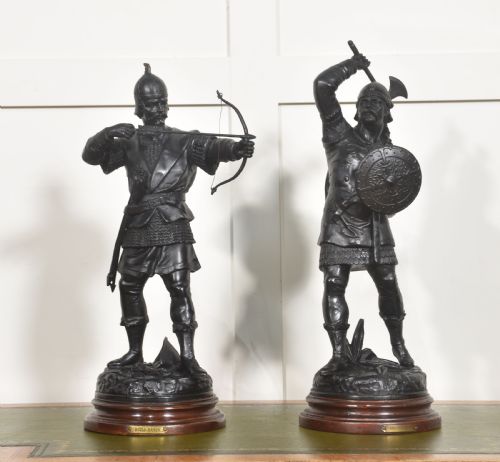
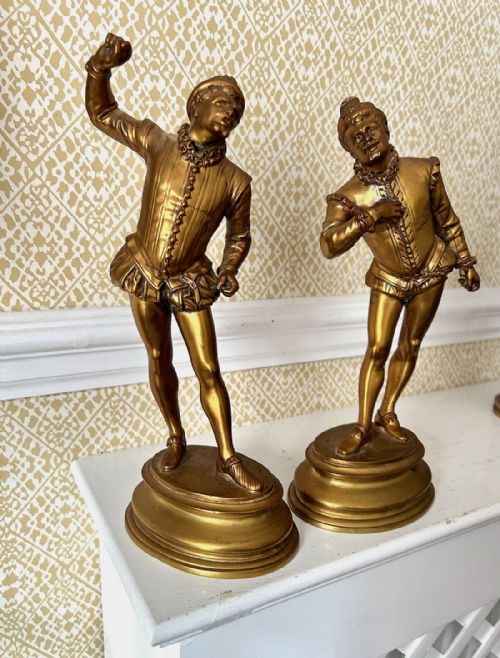
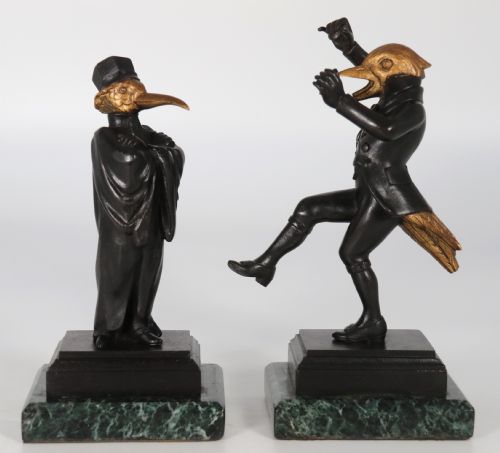
A pair of bronze statuettes comprises two matched sculptural figures cast in metal, designed to be displayed together on desks, mantelpieces or pedestals. These objects range from classical mythological deities and allegorical putti to Renaissance knights and theatrical animals.
The versions most commonly met on this page belong to the nineteenth century, often reflecting French or Italian foundry work in Neoclassical, Renaissance Revival or Grand Tour styles. Many sit upon integral bases of marble, wood or ormolu, completing a balanced composition for interior display.
How they were made
Foundries typically utilised the lost-wax casting method or sand casting to shape molten bronze into intricate figural forms, allowing for sharp detail in hair, drapery and facial expressions. Cold-painted surfaces, gilt highlights and chemical patination were subsequently applied to achieve varied tones ranging from deep brown to metallic gold.
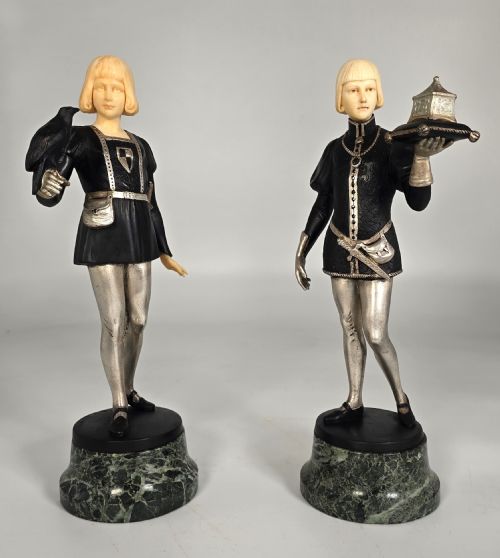
Alternative base materials such as marble, olive wood and china frequently support the metal figures, anchored by pins or screws to provide stability. Certain examples incorporate ivory components or contrasting metal alloys like spelter and ormolu to delineate specific textures within the design.
Materials across these listings include bronze, gilt bronze, patinated bronze, ormolu, marble, wood, china and spelter.
What varies in quality
The depth and nuance of the surface patination or cold-painted polychromy separate standard decorative items from superior sculptural works. A well-preserved original patina shows subtle tonal graduation rather than a flat, uniform lacquer.
Claude Michael Clodion·Giambologna·Emile-Coriolan Guillemin·Gotthilf Jaeger·Alfred Grevin·P J Mene·Dumond·Salmson·Albert Ernest Carrier-Belleuse·Emile victor BLAVIER·Francisque- Joseph-Duret
The Pair of Bronze Statuettes Glossary
- Patinated bronze
- Bronze that has been treated with chemical solutions to produce a specific surface colour, most commonly shades of brown, green or black.
- Grand Tour
- A nineteenth-century tradition of travel through Europe, inspiring souvenirs such as miniature bronze copies of classical antiquities and Renaissance sculptures.
- Putto
- A plump, naked male child figure frequently depicted in Renaissance and later art, often winged and resembling a cherub.
- Spelter
- A zinc alloy commonly utilised as a cheaper, softer alternative to bronze in nineteenth-century figural casting.
- Ormolu
- Finely ground high-carat gold applied to a bronze object through a mercury amalgamation process, or simply gilt bronze used for decorative mounts.
Pair of Bronze Statuettes: Frequently Asked Questions
What is a pair of bronze statuettes?
These items are matched sculptural figures cast in metal, created to represent mythological figures, historical personages, animals or allegorical themes in tandem.
Foundries produced them as decorative interior ornaments designed for balanced placement on furniture or architectural ledges.
How were they displayed originally?
Owners placed them on mantelpieces, library tables, and dedicated pedestals where their matched proportions could be viewed from multiple angles.
Many incorporated stone or wooden bases to elevate the metal figures and protect delicate furniture surfaces.
How do I care for bronze statuettes?
Dust the surfaces gently with a soft, dry brush to prevent accumulation in recessed crevices without disturbing the underlying patina.
Avoid applying liquid polishes, oils, or abrasive cleaners that can strip chemical patination or damage cold-painted details.
How do I identify nineteenth-century bronzes?
Examine the casting quality, foundry marks, and fastener types holding the figures to their bases, as older pieces often utilise hand-cut screws.
Consider the stylistic context, such as Grand Tour subjects or Victorian historicism, which align with nineteenth-century manufacturing methods.