
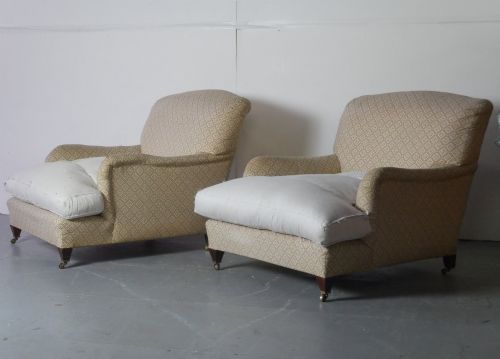
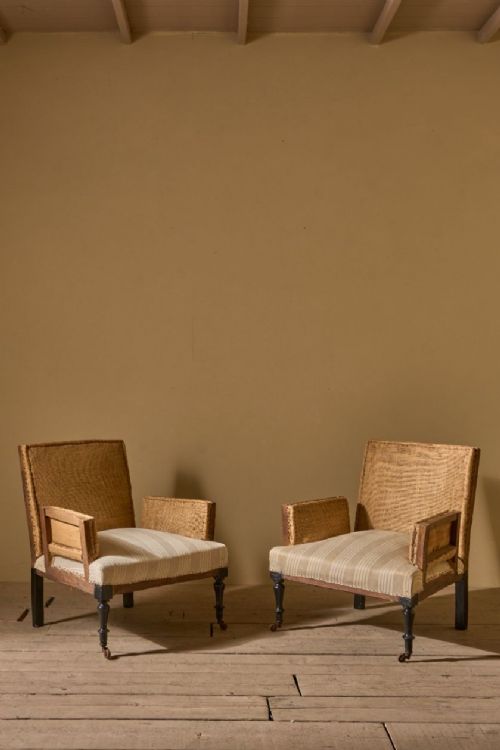

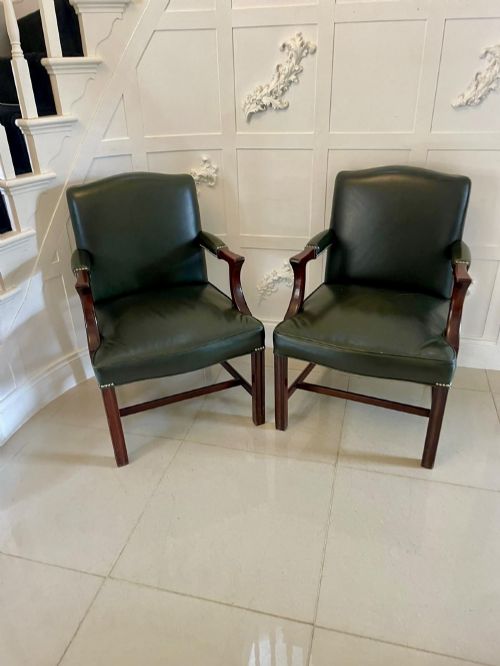
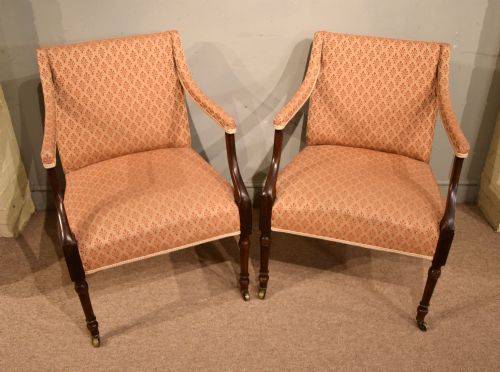

Pair of Brass Chairs
A pair of brass chairs brings matched symmetry and metallic warmth to a room, spanning Regency elegance and nineteenth-century worldly forms.
Pair of Brass Chairs
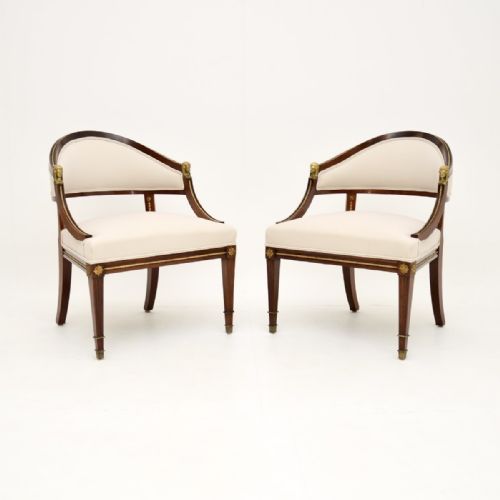
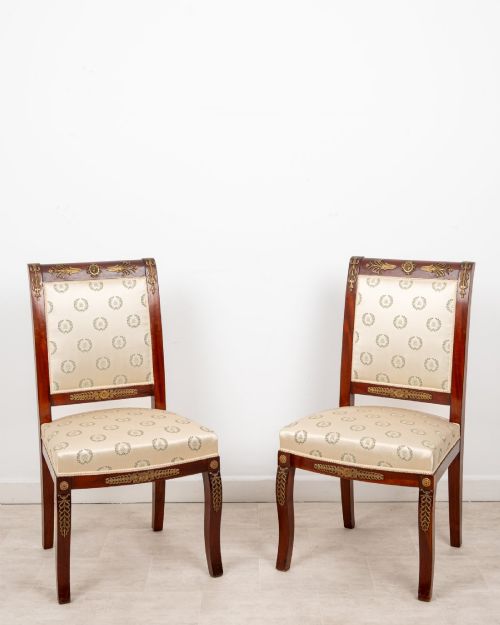
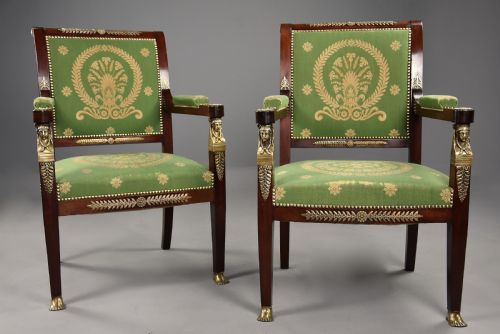
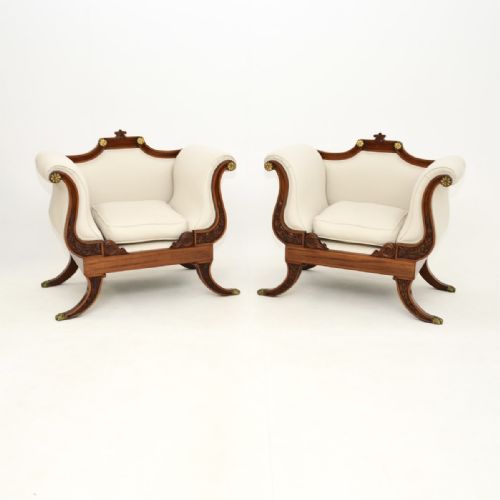
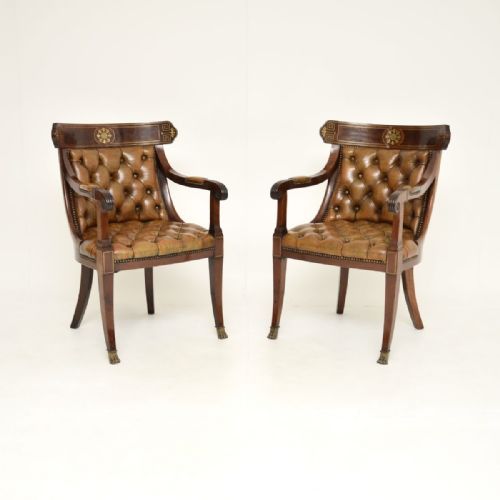
When searching for a pair of brass chairs, buyers encounter seating defined by brass inlay, mounts, or structural metalwork rather than chairs made entirely of the metal. The listings show these pieces most commonly take the form of Regency mahogany or rosewood models decorated with precise brass stringing, alongside nineteenth-century French and Swedish armchairs featuring gilt brass mounts.
The selection extends from library and desk chairs upholstered in leather to side chairs and elbow chairs originating across the nineteenth century. Alongside European styles, the evidence includes Chinese horseshoe shapes and Indian hardwood pieces incorporating brass work.
Materials and construction
Makers built the foundational frames of these chairs using dense timbers such as mahogany, rosewood, walnut, and oak, often incorporating secondary hardwoods. They applied decorative brass through intricate inlay, stringing, or cast ormolu mounts fixed to the wood.
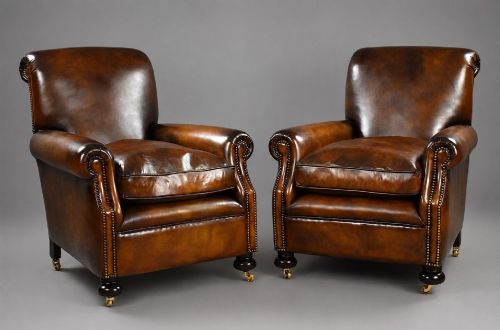
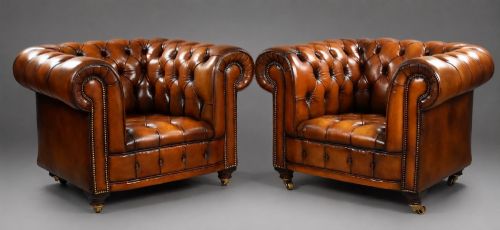
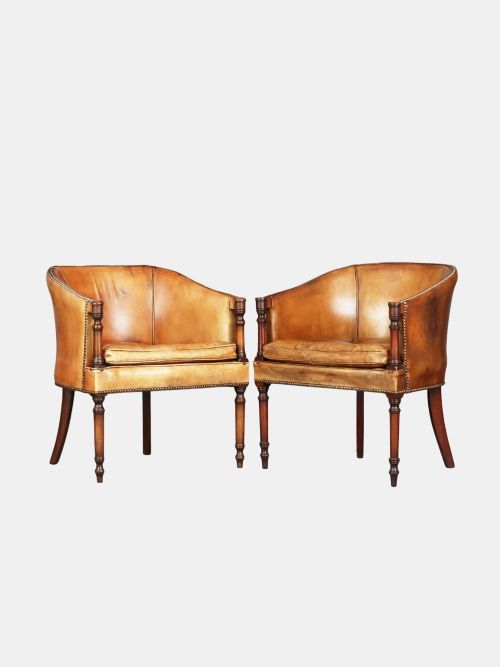
Upholstery materials recorded in the evidence range from supple leather and buttoned hide to velvet, fabric, and ticking, frequently supported by internal webbing and traditional stuffing.
Some nineteenth-century sitters enjoyed writing letters from a pair of chairs equipped with secret brass castors and hidden book troughs.
Defining quality and craftsmanship
Quality in these chairs rests upon the precision of the brass work and the integrity of the timber frame. Finer examples display crisp, flush brass inlay and hand-carved details on seasoned mahogany or rosewood rather than simpler applied metal.
The distinction between standard production and superior craftsmanship also shows in the depth of the timber grain, the weight and finish of the ormolu mounts, and the preservation of original upholstery methods.
Whytock and Reid·Howard and Sons·Harrods London·Gillows
The Pair of Brass Chairs Glossary
- Ormolu
- Gilded bronze or brass mounts applied as decorative ornaments to furniture. Makers used these cast metal details extensively during the nineteenth century on French Empire and Napoleon III pieces.
- Brass inlay
- Fine strips of brass set flush into channels carved into the wooden surface of the chair. This technique defines much of the Regency furniture in the evidence.
- Fauteuil
- An open-armed French upholstered armchair with exposed wooden armrests. These typically date from the nineteenth century in the recorded listings.
- Sabre leg
- A concave, outwardly curving furniture leg resembling a cavalry sword. This form appears frequently on Regency side and elbow chairs.
- Savonarola chair
- A folding chair constructed from intersecting curved wooden slats. The archive records examples incorporating wrought iron and brass elements.
Pair of Brass Chairs: Frequently Asked Questions
What periods do these chairs come from?
The evidence shows these chairs largely date from the nineteenth century, with strong representation from the Regency period, the Victorian era, and the early twentieth century. Makers continued interpreting classical styles well into the 1900s.
Buyers will also find occasional references to earlier Georgian and eighteenth-century aesthetics, alongside revival pieces produced around 1900 inspired by French Empire designs.
How were brass inlaid chairs used?
These chairs served primarily as formal seating in libraries, drawing rooms, and studies where polished mahogany and gleaming metal accents reflected wealth and taste. Desk chairs and elbow chairs provided functional seating for writing and reading.
Lighter side chairs and bedroom chairs were easily moved around a townhouse or country house for entertaining or private dressing rooms.
Are the brass elements original to the chairs?
In period pieces, the brass stringing, inlay, and mounts were integrated into the design during initial construction in workshops or factories. Craftsmen cut channels into the wood to house the metal flush with the surface.
Examining the tightness of the fit and the wear on the metal helps determine whether the brass work matches the age of the wooden frame.
How do I care for leather and brass seating?
Leather upholstery benefits from regular, gentle conditioning to keep the hide supple and prevent cracking over time. Avoid harsh chemical cleaners that can strip the natural finish.
Brass inlay and mounts require only soft dusting and occasional careful polishing to maintain their lustre without abrading the surrounding timber.