
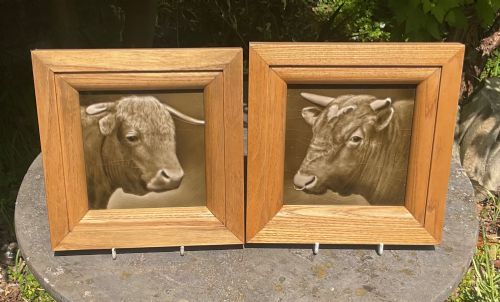


Pair of Tiles
These pair of antique tiles bring tactile depth and historic character to any wall or furniture panel.
Pair of Tiles
A pair of antique tiles represents matched ceramic panels from the Victorian, Edwardian, and nineteenth-century periods, often framed or integrated directly into larger furniture pieces.
Buyers searching for a pair of antique tiles encounter diverse forms, ranging from framed pictorial plaques depicting animals and musicians to decorative inserts mounted within oak hall chairs and jardinieres.
The aesthetic vocabulary spans late Victorian and Arts and Crafts movements alongside occasional Chinese Qing Dynasty porcelain panels and Japanese Edo to Meiji period roof ornaments.
Materials and construction
Potters shaped these objects from ceramic and glazed earthenware, applying glossy finishes and sometimes accentuating relief details with gold leaf.
Carpenters incorporated ceramic and porcelain elements into sturdy secondary woods like mahogany and oak wood, creating functional furniture items alongside standalone wall art.
Listings feature ceramic, earthenware, wood, and oak, spanning Victorian, Edwardian, and nineteenth-century periods.
Distinctions in quality
Execution of the glaze and the crispness of the modelled relief define the visual success of the surface, distinguishing routine factory output from ambitious artistic productions.
The integration of the ceramic components into supportive wooden frames or furniture structures dictates the structural integrity and overall visual harmony.
Sherwin & Cotton·Minton Hollins·Minton·Reginald Robert Tomlinson
The Pair of Tiles Glossary
- Earthenware
- Porous pottery fired at lower temperatures, serving as the common clay body for nineteenth-century decorative panels. It requires an opaque or transparent glaze to ensure a sealed surface.
- Glaze
- A glassy coating fused to the ceramic body through firing, providing colour, sheen, and protection. It defines the reflective quality and tonal depth of the piece.
- Relief
- Sculptural projection from a flat background surface, allowing figures and motifs to stand out in three dimensions. This technique adds tactile shadow and visual drama to tiles and plaques.
- Jardiniere
- An ornamental pot or planter designed to hold growing plants, occasionally mounted with inset ceramic panels. These items bring botanical display together with decorative ceramic art.
Pair of Tiles: Frequently Asked Questions
What periods do these tiles come from?
The listings encompass nineteenth-century, Victorian, and Edwardian periods, reflecting production eras from the late eighteen-hundreds into the early twentieth century.
Maker attribution and stylistic cues help contextualise the precise decade of manufacture.
How were these items used originally?
Many served as decorative wall art, framed plaques, or architectural elements, while others formed structural insets within hall chairs and planters.
Their dual function as applied art and durable surface decoration suited domestic interiors of the Victorian era.
Are the tiles always framed?
While some examples appear as dedicated framed wall plaques or standalone painted tiles, others are built permanently into wooden furniture like oak hall chairs and jardinieres.
The mounting style depends entirely on the original intended function of the object.
What materials predominate?
Ceramic and glazed earthenware form the primary canvas, frequently enhanced with glossy glazes and occasional gold leaf highlights.
Supporting frames and furniture structures rely primarily on hardwoods such as oak and mahogany.