


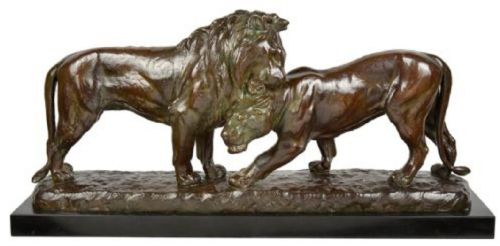


Pair of Cats
These pair of antique cats bring character and feline charm to any room, offering collectors delightful Victorian figures and bronze sculptures.
Pair of Cats
A pair of antique cats covers a surprisingly diverse array of objects spanning the nineteenth and early twentieth centuries, from earthenware figures to framed prints. When searching for a pair of antique cats, buyers encounter decorative works ranging from Staffordshire figures and Austrian cold-painted bronzes to Black Forest carvings and Edwardian illustrations.
The Staffordshire earthenware versions and Louis Wain prints appear frequently, alongside bronze desk sets and wall pockets. These pieces capture feline subjects through distinct period styles, including Regency, Victorian, Art Deco, and the Vienna School.
Materials and construction methods
Makers utilised bronze, earthenware, marble, alabaster, wood, and paper to create these sculptures, prints, and functional objects. Earthenware figures received hand-painted glazes, while bronze pieces often employed cold-painted techniques or gilding.
Wood carvings utilised traditional methods for functional items like inkwells, and prints relied on etching and framing techniques common to the nineteenth and twentieth centuries.
Pair of Cats Retail Price Guide 2026
Typical asking prices for pair of cats among the pieces listed under this phrase on Sellingantiques today, from the lower quarter to the upper quarter. They describe what is for sale here now, not the wider market.
Cats guard everything here, from inkwells tucked inside boots to majestic bronze lions and mischievous kittens at play.
Judging quality and craftsmanship
Quality in these pieces rests upon the crispness of the casting in bronzes, the precision of the hand-painting on earthenware surfaces, and the clarity of line in framed prints and etchings. Signed works or those attributed to known animaliers and artists generally demonstrate superior artistic execution.
The integrity of the material, whether carved wood, alabaster, or glazed pottery, dictates the overall refinement of the object. Finer examples retain their original surface finishes and patination without excessive wear or crude restoration.
Louis Wain·Bergman·Dumond·Herbert Dicksee·Louis Riche
The Pair of Cats Glossary
- Cold-painted bronze
- A bronze sculpture painted with oil-based paints rather than subjected to heat patination. This technique was popular in Austrian workshops during the nineteenth and early twentieth centuries.
- Staffordshire pottery
- Earthenware figures produced in the Staffordshire potteries of England. These decorative animals often feature hand-painted underglaze colours.
- Wall pocket
- A decorative vessel designed to be hung flat against a wall to hold small items or dried flowers. They were produced in various ceramic and pottery styles.
- Etching
- A printmaking process where lines are incised into a metal plate with acid before being inked and pressed onto paper. Herbert Dicksee utilised this method for miniature prints.
- Alabaster
- A soft stone used for carving sculptures and decorative objects. It provides a smooth, translucent surface favoured by Art Deco makers.
Pair of Cats: Frequently Asked Questions
What materials are common for these?
The listings show pieces fashioned from bronze, earthenware, glass, paper, marble, alabaster, wood, and paint.
These materials span different object types, including sculptures, desk sets, wall pockets, and framed prints.
How do I identify a Victorian pair?
Victorian examples often appear as Staffordshire earthenware figures or nineteenth-century bronze studies.
Stylistic cues and period materials help distinguish these nineteenth-century items from later twentieth-century Art Deco or Edwardian pieces.
Were these figures meant for display?
Many items served dual purposes, functioning as decorative sculptures, wall pockets, or inkwells in a desk set.
Others, such as the framed prints and miniature etchings, were designed purely for visual display on walls.
How do I care for bronze cats?
Bronze and cold-painted bronze pieces require gentle dusting with a soft, dry cloth to preserve their surface finishes.
Harsh cleaning agents must be avoided to protect the original patination and painted details.