



Pair Oak Club Chairs
These pair oak club chairs bring solid timber frames and deep seating together for heavy daily comfort.
Pair Oak Club Chairs
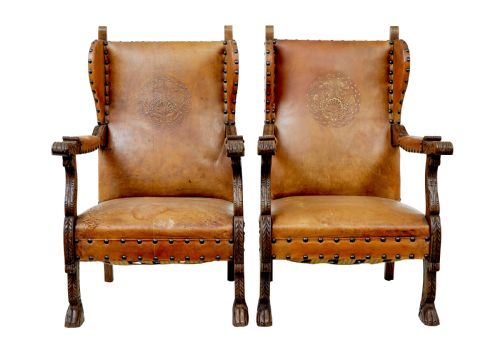
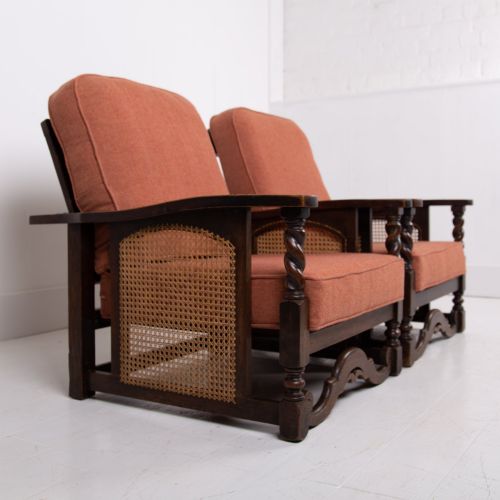
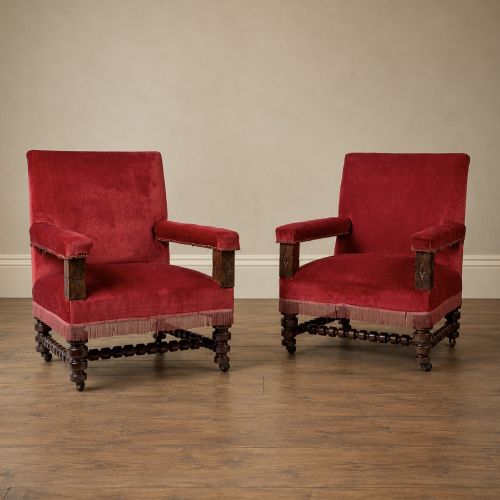
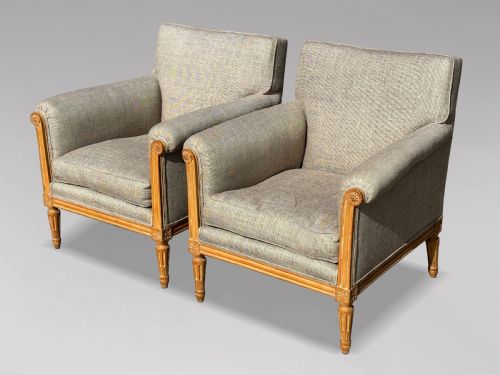
A search for pair oak club chairs uncovers substantial seating built around solid timber frames, frequently paired with deep leather or fabric upholstery. These armchairs appear across several distinct eras, spanning Victorian Gothic revivals and heavy Jacobean designs through to streamlined Art Deco interpretations.
The most frequent examples on this page date from the nineteenth century into the early decades of the twentieth century. They often feature robust oak armframes combined with leather, velvet, or cane surfaces designed for libraries, studies, and smoking rooms.
Makers ranged from Victorian workshops carving lions into heavy library chairs to Art Deco cabinetmakers simplifying the timber grain for modernist interiors. Buyers select them for matching proportions that anchor a room with architectural weight.
How they were made
Makers built the primary structural frames using seasoned oak and general hardwood, joined by mortise and tenon methods to handle heavy daily use. Carved details such as lion motifs appeared on Victorian library chairs, whilst Art Deco examples relied on smooth, exposed grain.
Upholstery layers depended on the period, utilising embossed leather, velvet, or woven fabric tacked over traditional stuffing. Brass studs and cane panels frequently accented the timber framework to finish the edges.
Pair Oak Club Chairs Retail Price Guide 2026
Typical asking prices for pair oak club chairs among the pieces listed under this phrase on Sellingantiques today, from the lower quarter to the upper quarter. They describe what is for sale here now, not the wider market.
Listings feature oak, leather, and brass across Victorian, Arts and Crafts, and Art Deco periods.
What varies in quality
The distinction between tiers rests on the precision of the timber joinery and the integrity of the underlying frame. Superior pairs retain dense, unwarped oak structures that have survived decades of shifting humidity without loosening at the joints.
Upholstery choices also separate standard examples from finer works, particularly where period leather retains its original texture or where carving remains crisp and deep. Replacements alter the character, so original surfaces or sympathetic re-coverings dictate the upper echelon.
The Pair Oak Club Chairs Glossary
- Club chair
- A deep, heavily upholstered armchair designed for relaxed sitting in private libraries or smoking rooms. These pieces prioritize supportive armrests and substantial cushioning.
- Jacobean Revival
- A nineteenth century decorative style borrowing heavy turned legs, dark oak framing, and geometric paneling from seventeenth century English furniture. It imparts a severe architectural presence.
- Art Deco
- A modernist design movement from the interwar period emphasising streamlined geometry, smooth surfaces, and minimal ornamentation. In seating, it translates to rounded club forms with polished oak bases.
- Cane
- Woven rattan material used to form open patterned panels on the backrests or sides of armchairs. This technique lightened the visual weight of heavy timber frames.
Pair Oak Club Chairs: Frequently Asked Questions
How do I style these chairs at home?
Position them opposite a fireplace or flanking a large writing desk to balance their visual weight. Their substantial oak frames anchor seating areas effectively.
Pair them with neutral textiles or simpler modern tables to let the aged timber and leather take visual priority.
Are these chairs comfortable for daily use?
Most variants offer deep seats and supportive backrests originally engineered for long hours of reading or conversation. Many surviving pairs feature updated interior padding.
Check the seat height and depth specifications against your proportions to ensure long-term physical comfort.
How do I date an oak club chair?
Examine the construction methods, tool marks on the underside, and the specific stylistic revival indicators present in the carved details. Victorian pieces often display heavy ornamentation.
Art Deco and 1930s examples favor cleaner geometric lines and simpler wood finishes without historical revival motifs.
How do I care for the leather?
Feed the hide periodically with appropriate leather balms to prevent cracking across the high-stress seating areas. Keep them away from direct heat sources.
Dust the timber frames regularly with a dry cloth and avoid harsh chemical cleaners on the polished oak surfaces.