


Pair Neoclassical Desk Lamps
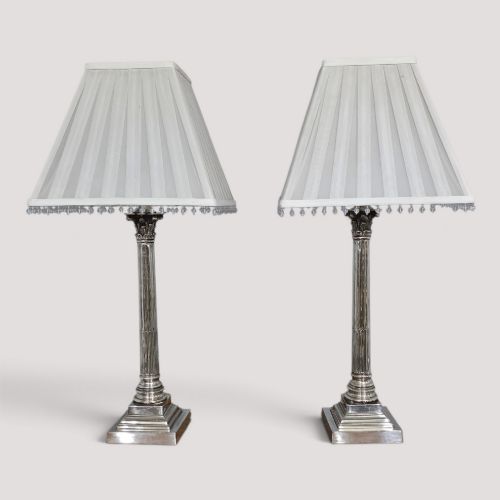
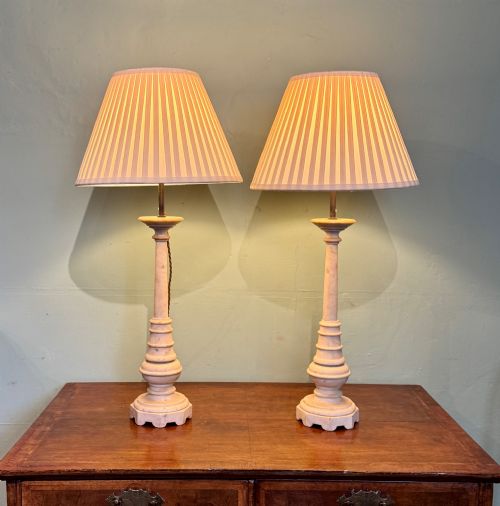
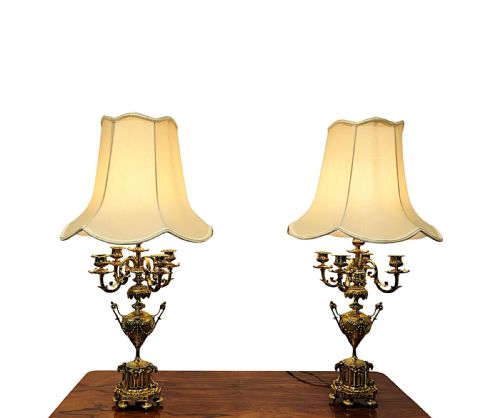
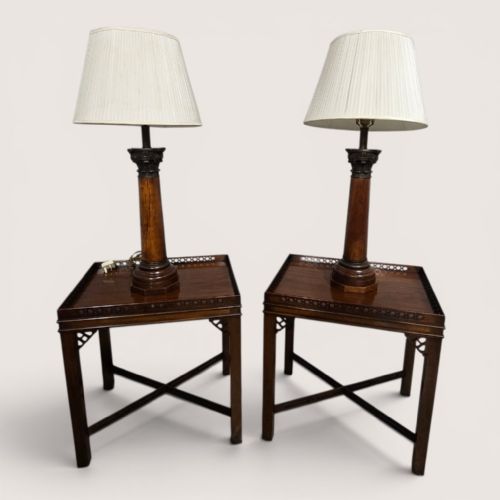
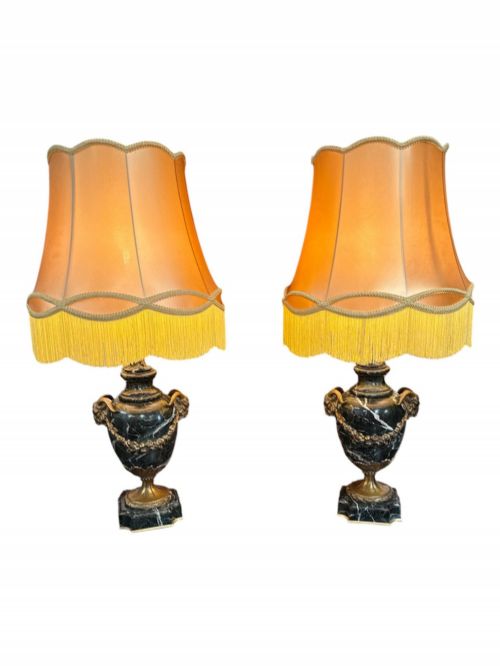
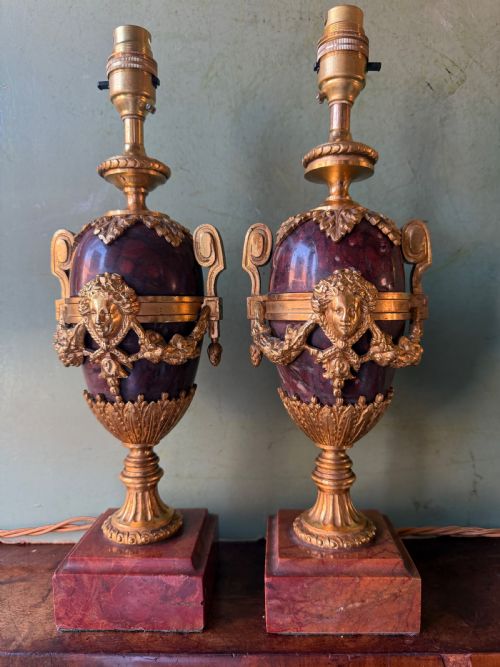
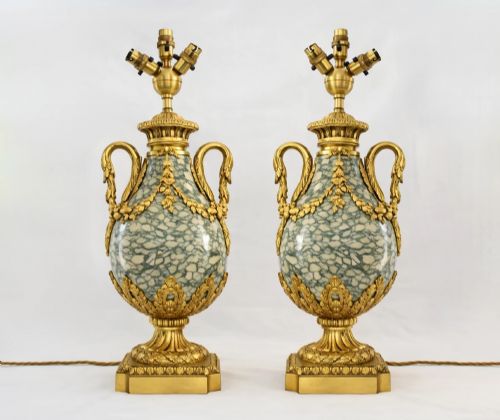
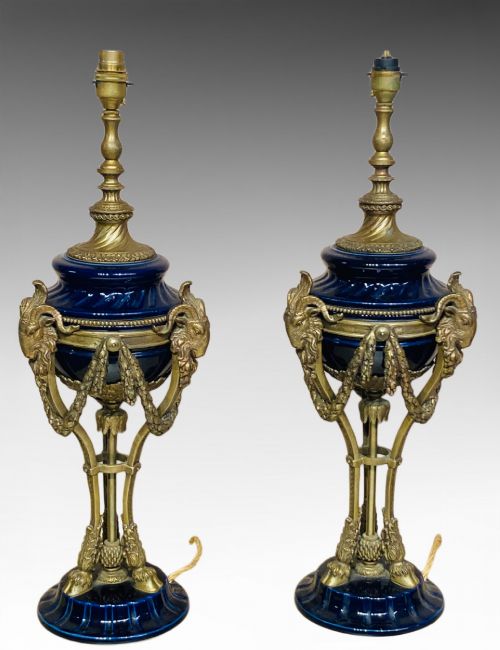
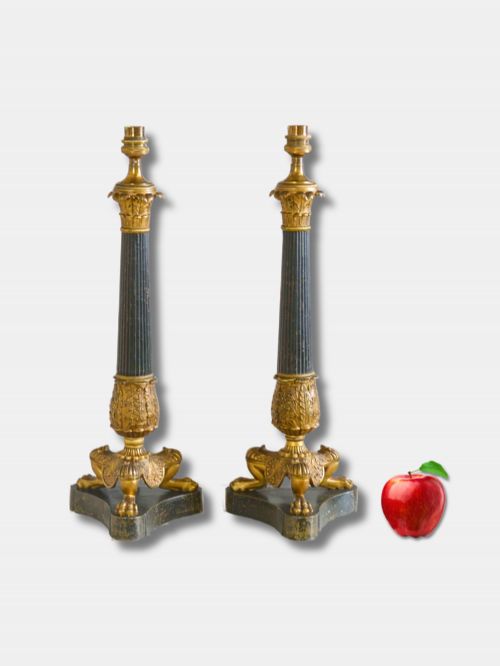
Pair neoclassical desk lamps bring balanced classical symmetry and rich cast metalwork to a study, drawing on ancient architectural forms.
Pair Neoclassical Desk Lamps
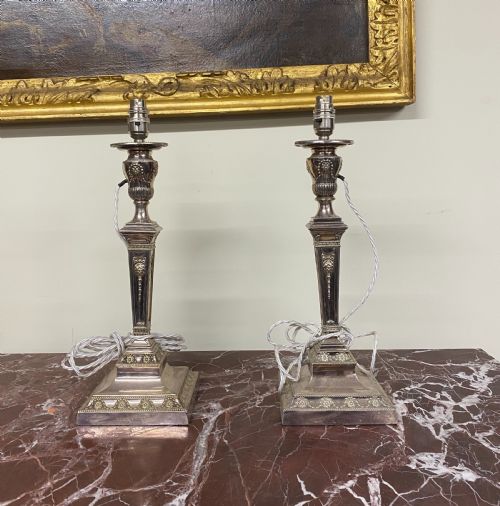
A pair neoclassical desk lamps setup typically involves matched columns, urns, or candelabra adapted from classical architecture and motifs. These pieces frequently date from the nineteenth century or early twentieth century, drawing heavily on French Empire and Louis XVI design vocabulary.
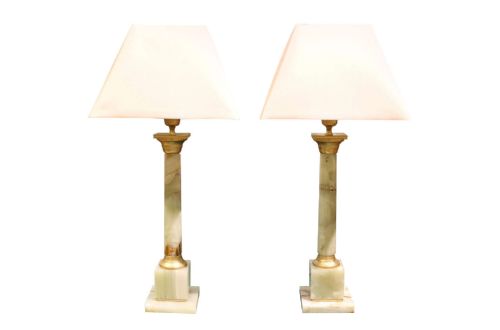
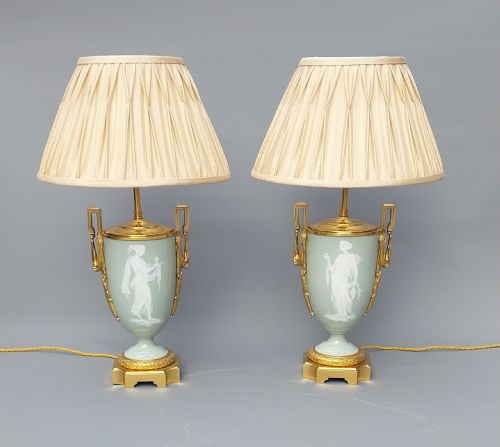
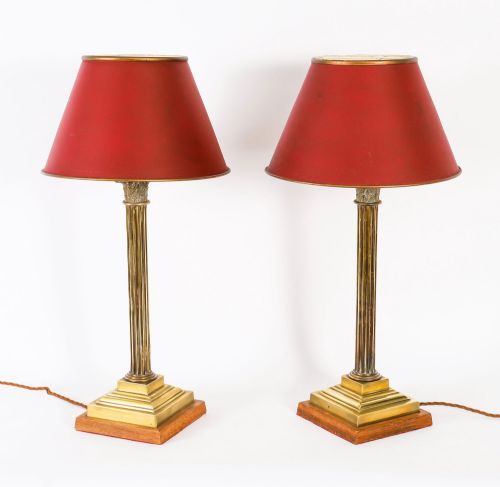
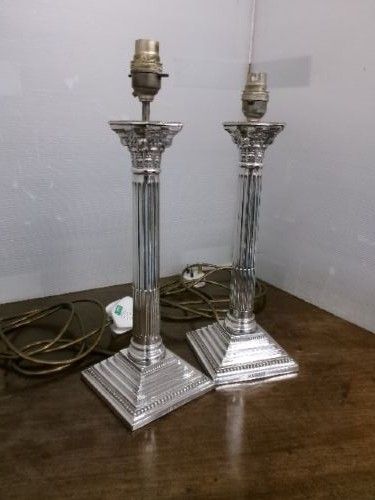
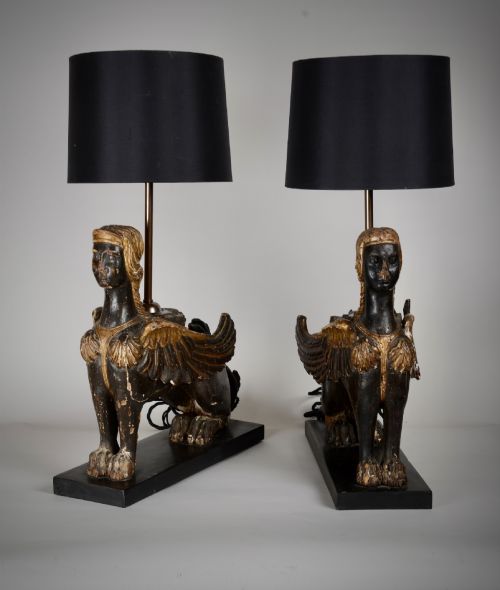
Buyers encounter numerous Corinthian column variations alongside marble urns and ormolu-mounted cassolettes. The selection also includes converted candelabra and figural bases that retain strict symmetry across the pair.
Materials and construction methods
Foundry work combined cast bronze, brass, and ormolu with natural stones such as white marble, rouge marble, and onyx. Artisans mounted metal collars and bases onto stone shafts, frequently adding silver plating or gilt finishes.
Later adaptations incorporated electrical wiring into older candelabra and candlestick bodies. Structural integrity relies on heavy metal mounts securing stone columns and turned wooden or plaster cores.
Pair Neoclassical Desk Lamps Retail Price Guide 2026
Typical asking prices for pair neoclassical desk lamps among the pieces listed under this phrase on Sellingantiques today, from the lower quarter to the upper quarter. They describe what is for sale here now, not the wider market.
Listings feature items spanning the eighteenth century through the 1960s, constructed from brass, marble, ormolu, and fabric.
Distinguishing quality factors
Superior examples demonstrate crisp chasing in the bronze and ormolu mounts, where leaf and dart motifs remain sharp and deep. Lower tiers often show softer cast details and simpler spun brass components.
The choice of stone body also dictates grade, with solid matched marbles and finely grained alabaster standing above moulded plaster or composite materials. Original mercury gilding or heavy silver plating indicates better workshop origin.
The Pair Neoclassical Desk Lamps Glossary
- Ormolu
- Gilded bronze produced by applying a mercury and gold amalgam to cast bronze before heating. This technique creates a durable, warm metallic surface found on many French lamps.
- Cassolette
- A decorative vase or urn with a reversible lid that functions either as a vessel or a candlestick holder. These often form the central body of classical lighting pairs.
- Corinthian column
- An architectural column style featuring an ornate capital decorated with acanthus leaves. It serves as one of the most common shaft designs for brass and silver-plated lamp pairs.
- Pâte-sur-pâte
- A ceramic decoration method where wet white porcelain slip is painted onto a contrasting coloured clay body in successive layers. This builds up a low-relief cameo effect on porcelain lamp bodies.
Pair Neoclassical Desk Lamps: Frequently Asked Questions
How do I wire old metal lamps safely?
Rewiring requires passing modern insulated cable through the original central channel without damaging the historical metal or stone body. Many pieces retain enough clearance to thread modern cord through existing brass hardware.
Qualified electricians should test older brass and bronze frames for earth continuity. This ensures safe operation while preserving the original candelabra sockets and mounting stems.
What styles fit alongside these lamps?
These pieces integrate naturally with period mahogany furniture, leather-topped partner desks, and neoclassical interiors. Their symmetrical silhouettes provide a formal anchor point on writing tables and sideboards.
Pairing them with neutral fabric shades softens the heavy metal and stone elements. This allows the classical proportions of the columns and urns to remain the visual focus.
How can I date nineteenth-century brass bases?
Dating relies on examining the construction marks, assembly screws, and the composition of the underlying metal. Nineteenth-century examples often use threaded brass components and hand-cut threads rather than modern machine fixings.
Patina also indicates age, with older brass showing deep handling wear beneath protective lacquers. Weight distribution and base casting thickness help separate nineteenth-century pieces from later revival items.
What is the difference between Empire and Louis XVI styles?
Louis XVI designs emphasise slender fluted columns, urns, and restrained classical foliage with delicate ormolu mounts. The proportions remain light, graceful, and strictly symmetrical.
Empire pieces adopt heavier militaristic and Roman symbols, including paw feet, sphinxes, and dense classical laurel wreaths. The cast bronze and ormolu work on Empire items tends to be bolder and more imposing.