






Pair Glazed Vitrines
Pair glazed vitrines are matching display cabinets designed to showcase collections behind glass, bringing symmetry and elegance to a room.
Pair Glazed Vitrines
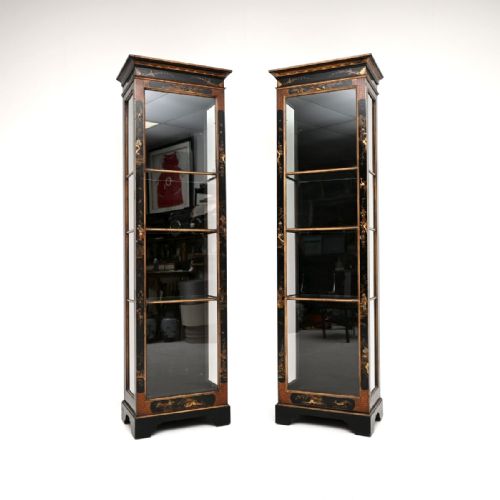
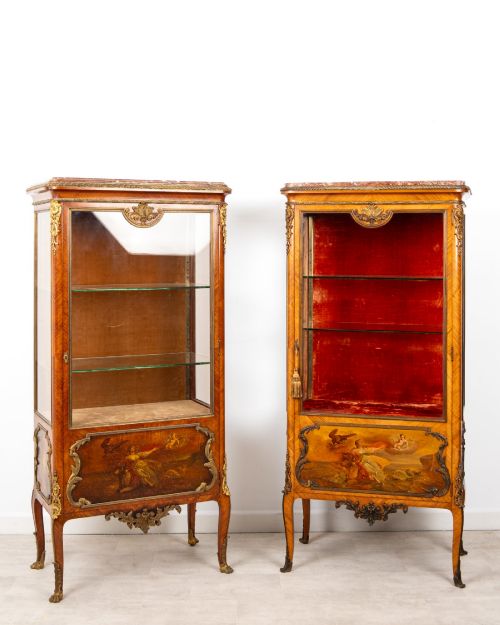
When searching for pair glazed vitrines, you are looking at matched sets of display furniture built to exhibit porcelain, books, or curiosities behind glass doors. These matching cabinets bring a sense of balance and formal symmetry to domestic interiors.
The examples gathered here span from the nineteenth century into the twentieth century, covering Victorian, Edwardian, and Art Deco periods. Forms range from tall pier cabinets and corner units to low display tables and polished bookcases.
French revival styles appear alongside English walnut and mahogany pieces. Most surviving examples rely on traditional cabinet-making formats designed for formal drawing rooms and parlours.
How they were made
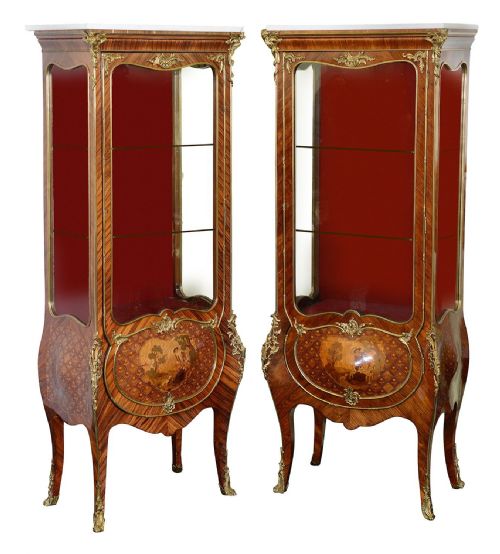
Carinthian and domestic timbers such as walnut, mahogany, satinwood, and kingwood form the primary structural carcasses. Cabinet-makers overlaid these woods with decorative veneers and intricate marquetry or parquetry patterns.
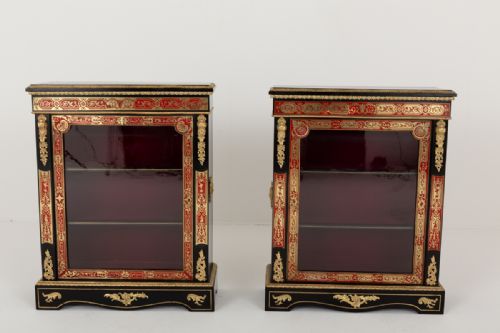
Metalwork played a defining role in embellishment, utilising cast brass and ormolu mounts to frame doors, cornices, and feet. Ebonised wood and tortoiseshell additions provided stark visual contrast in Boullework interpretations.
Glazing techniques required precise wooden frame construction to support large glass panels safely. Marble tops added weight and a finished classical surface to several French and English models.
Listings feature 19th Century, Victorian, Edwardian, and 1930s periods, utilising walnut, mahogany, glass, and ormolu.
What varies in quality
The distinction between standard commercial output and exhibition quality lies in the depth of hand-carving and the precision of the marquetry inlay. Superior pieces exhibit seamless veneer matching across both cabinets of the pair.
Mount quality dictates the upper tier of manufacture, where heavy, finely chased ormolu replaces simpler stamped brass. The choice of underlying timber, such as burr walnut or figured kingwood, marks the division between everyday utility and high status.
Edwards and Roberts·C Hindley and Sons·Arthur Reynolds of Ludlow·Paul Somani·Gouffel
The Pair Glazed Vitrines Glossary
- Vitrine
- A glass-fronted cabinet designed specifically for displaying fine objects and porcelain. The term derives from the French word for glass.
- Ormolu
- Gilded bronze used for decorative mounts and feet on nineteenth-century furniture. It provides a bright golden accent against dark timbers.
- Boullework
- A style of marquetry utilising tortoiseshell and brass inlaid in contrasting patterns. Named after the royal cabinet-maker André-Charles Boulle.
- Pier cabinet
- A slender cabinet built to stand against the wall space between windows. These pieces often feature glazed single doors and fitted interior shelving.
- Marquetry
- Decorative patterns formed by fitting together thin slices of various coloured woods and materials. Craftsmen glue these veneers onto the carcase structure.
Pair Glazed Vitrines: Frequently Asked Questions
What is a pair glazed vitrine used for?
These matching cabinets served historically to display valuable ceramics, glass, and small decorative art objects while protecting them from dust. Placing them symmetrically in a room created a formal balance popular in Victorian and Edwardian reception spaces.
Today, they perform a similar function for modern collectors who want to exhibit objects securely. The glass panels allow continuous visibility while keeping contents safe from everyday knocks.
How do I tell Victorian from Edwardian vitrines?
Victorian examples tend to feature darker timbers like walnut and mahogany, often paired with heavy marquetry, ebonising, or elaborate ormolu mounts. The overall aesthetic leans toward dense ornamentation and formal architectural styling.
Edwardian pieces frequently lighten the palette with satinwood, lighter mahogany, or painted finishes like Chinoiserie. The detailing becomes more delicate, reflecting changing tastes at the turn of the twentieth century.
How do I care for antique wood and glass?
Maintain timber surfaces by applying appropriate wax polish sparingly and buffing gently with a soft cloth. Avoid placing cabinets in direct sunlight, which can fade delicate veneers like kingwood and satinwood over time.
Clean the glass panels using standard non-abrasive glass cleaner applied to a cloth rather than sprayed directly near wooden frames. This prevents moisture from seeping into vulnerable veneer joints and mount fixings.