
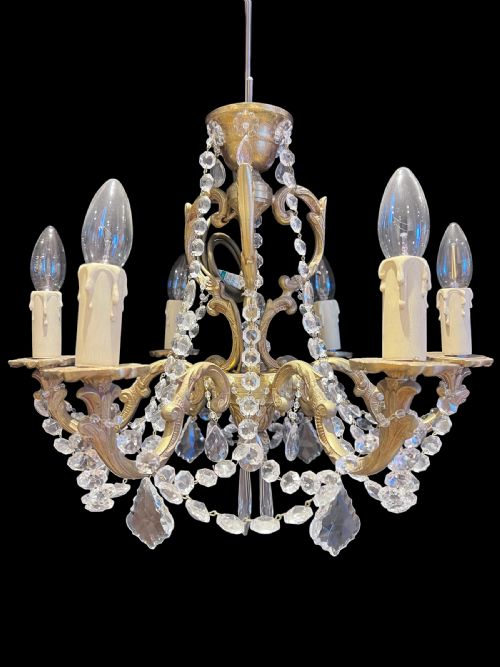
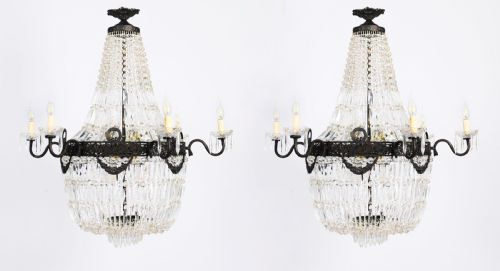
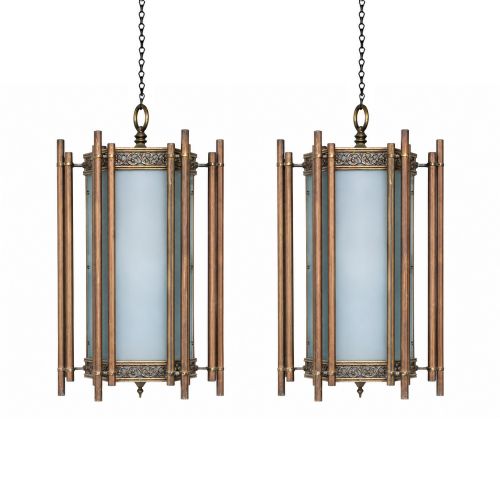
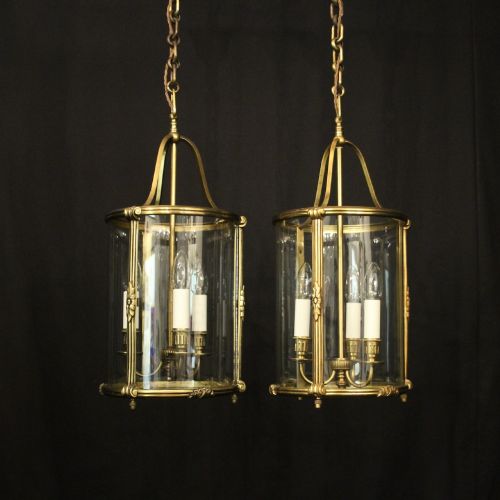


Pair Glass Pendant Lights
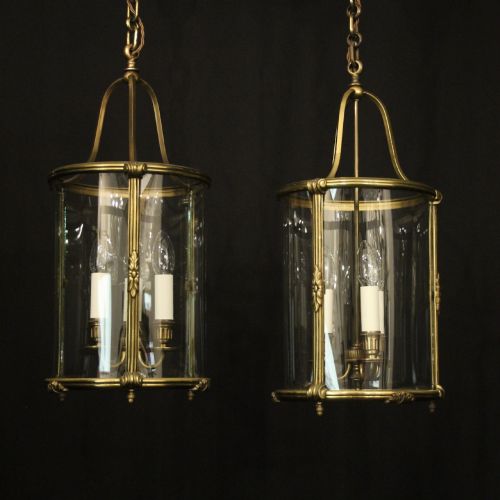
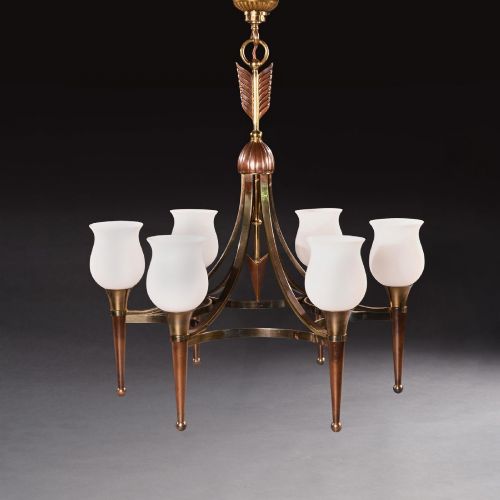
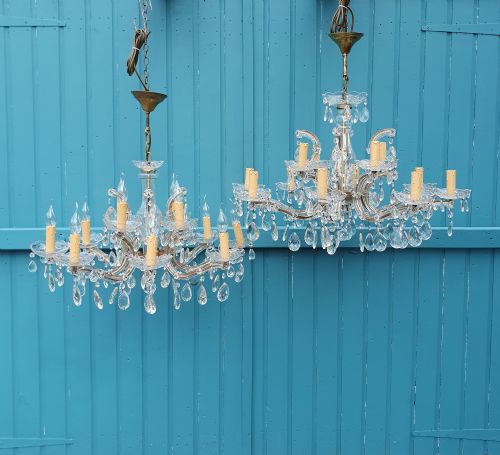
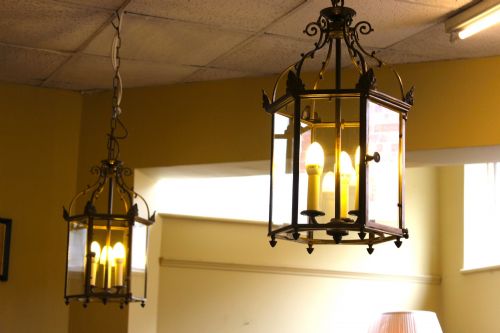
Pair glass pendant lights bring balanced illumination and period character to high ceilings, matching symmetrical rooms with matched fixtures from the early twentieth century.
Pair Glass Pendant Lights
Pair glass pendant lights comprise dual suspended ceiling fixtures, most commonly found from the early twentieth century and the 1920s.
The selections span utilitarian factory shades, opaline milk glass globes, and decorative French lanterns suspended by brass or bronze mounts.
Buyers encounter matching configurations designed for symmetry in hallways, dining rooms, and period interiors.
How they were made
Makers combined cast or spun brass, gilded bronze, and steel frames with blown, moulded, or cut glass shades and crystal drops.
Metal components were cast, chased, or patinated before assembly with internal wiring and suspension chains or rods.
Listings feature brass, bronze, and steel hardware paired with opaline, cut crystal, and mercury mirrored glass.
What varies in quality
Quality rests in the weight of the metal castings, the clarity and depth of the glass, and the crispness of decorative chasing.
Finer examples retain original gilding, hand-cut crystal prisms, and heavy structural mounts that maintain rigid symmetry when suspended.
Maison Jansen·F and C Osler·Schneider·S Fauer
The Pair Glass Pendant Lights Glossary
- Opaline glass
- An opaque or translucent white glass used for soft, diffused illumination. It appears frequently in early twentieth-century pendant shades.
- Gilded bronze
- Bronze coated with a thin layer of gold leaf or gilt, providing a durable metallic finish. This material characterises many French period lanterns.
- Holophane
- A brand of prismatic glass designed to direct and diffuse light efficiently. These industrial shades date primarily from the 1920s.
- Spike chandelier
- A compact chandelier featuring a central vertical spike fitted with multiple arms or candle lights. They appear in smaller dimensions across Edwardian properties.
- Mercury glass
- Double-walled blown glass coated internally with a silvering mixture to create a mirrored effect. It reflects ambient room light when unlit.
Pair Glass Pendant Lights: Frequently Asked Questions
Where should I hang these?
These fixtures suit high ceilings in entrance halls, over dining tables, or flanking architectural focal points where symmetry matters.
Ensure adequate clearance beneath the lowest glass shade for everyday movement.
Are they rewired?
Many surviving examples require modern electrical updates to meet current safety standards before installation in domestic spaces.
Check individual listings to confirm whether a professional rewiring has already been completed.
How do I date them?
Dating relies on material combinations, fixing styles, and glass manufacturing techniques typical of the Edwardian era through the Art Deco period.
Heavier cast brass and opaline glass usually point to the decades around 1920.
How do I clean the glass?
Careful removal of glass shades or crystal drops allows gentle washing in warm soapy water without damaging the metalwork.
Avoid harsh abrasives on gilded bronze or aged brass surfaces to preserve original patination.