




Pair Glass Candelabra
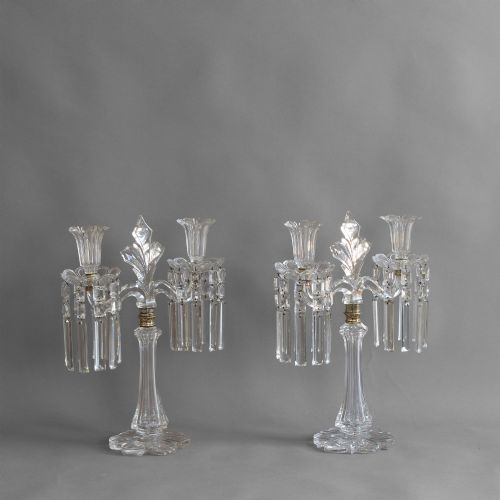
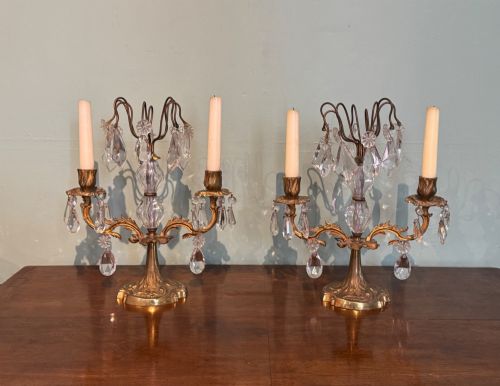
These pair glass candelabra bring genuine presence to a table, combining clear crystal with brass, bronze, and ormolu mounts.
Pair Glass Candelabra
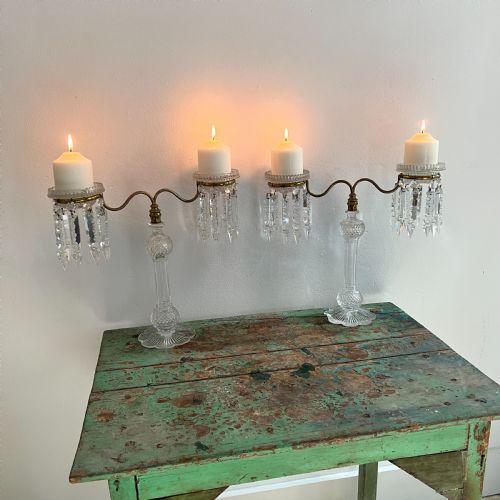
When you search for pair glass candelabra, you find matched sets designed to hold multiple candles, often featuring hanging drops or lustres. These decorative lighting pieces emerge from the Victorian, Edwardian, and Art Deco periods, alongside French and English workshops.
The most common examples on this page date from the nineteenth century into the 1930s, utilising cut glass, crystal, and brass or gilt metal mountings. They appear as table candlesticks, multi-branch candelabra, and occasionally converted table lamps.
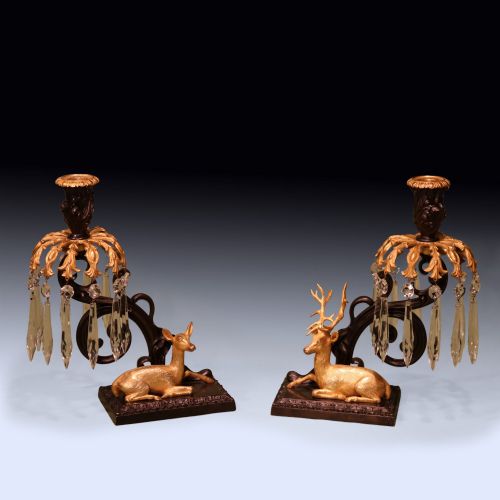
Styles range widely across these listings, taking in French Rococo Revival, French Empire, Art Deco, and Late Victorian designs. You will encounter animal figures, marble bases, and multi-branch configurations among the standard forms.
Materials and construction methods
Makers combined heavy cast brass, bronze, and ormolu with hand-cut glass and crystal components to form the structural body and decorative adornments. Metal frames and mounts secured the glass shafts and bobeches, often incorporating tiered bases or classical feet.
Cut glass elements relied on wheel-cutting techniques to create facets that caught the candlelight, while hanging drops were suspended by wire links. Workshops also integrated materials like green marble and frosted glass, particularly in later twentieth-century and Art Deco pieces.
A stag and a doe once stood guard beside the candles, keeping watch over nineteenth-century drawing rooms.
Distinctions in quality and finish
The standard of cutting on the glass separates finer examples from simpler production, with sharp, clean facets reflecting superior workshop skill. Better pieces display crisper chasing on the ormolu and brass mounts, alongside heavier, more stable casting.
Proportion and the completeness of original glass drops dictate the overall desirability of a pair. Matching components and uniform colour across the glass and metal elements demonstrate greater original integrity.
R Lalique·Clarkes
The Pair Glass Candelabra Glossary
- Candelabra
- A branched candlestick holding multiple candles on separate arms. This form developed for formal dining and drawing room illumination.
- Lustre
- A glass candlestick or ornament hung with cut glass prisms or drops. These pendants amplified the candle light through reflection.
- Ormolu
- Gilt bronze mounted on decorative objects, created by applying finely ground gold mercury amalgam to bronze. This finish gives a rich golden lustre.
- Bobeche
- A small collar or disc fitted below the candle nozzle to catch melting wax. It protects the arms and drops from drips.
- Cricklite
- A patented table light system utilising Clarke's child's food night lights within glass shades. These assemblies provided safe, steady illumination.
Pair Glass Candelabra: Frequently Asked Questions
How do I clean pair glass candelabra?
Wash the glass and crystal components gently in warm, soapy water using a soft cloth, avoiding harsh abrasives that might scratch the surface. Dry each piece thoroughly before reattaching any hanging drops or metal fittings.
Keep brass and ormolu mounts dusted with a dry brush, steering clear of metal polishes that can remove the original gilt finish. Handle the branched arms with care during cleaning to prevent stress on the joints.
Were these electrified later?
Some examples on this page began as pure candle holders and were converted into table lamps during the twentieth century. Other pieces retain their original function for candles without modern wiring.
Check the base and stems for cord exits or drilled channels to determine if a conversion took place. Conversions often utilise existing central hollows to preserve the metal and glass structure.
How can I date Victorian examples?
Nineteenth-century pieces often display heavier cast brass work, hand-cut crystal drops, and distinct stylistic revivals like French Rococo or Gothic forms. Examine the construction methods of the sockets and the weight of the metal components for period indicators.
Markings are uncommon on these decorative items, so dating relies on stylistic clues, glass cutting techniques, and material combinations typical of the era.
Where should I place them?
Display these matched sets on dining tables, sideboards, or mantelpieces where they can catch natural light during the day. Ensure they sit on stable, level surfaces away from heavy traffic.
Position them where the cut glass facets can reflect ambient room light or candle flames safely. Keep them clear of direct, intense heat sources that might affect older adhesives or marble.