

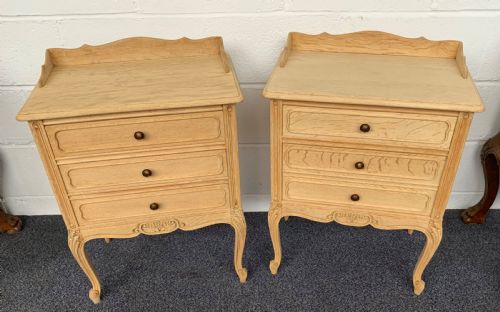
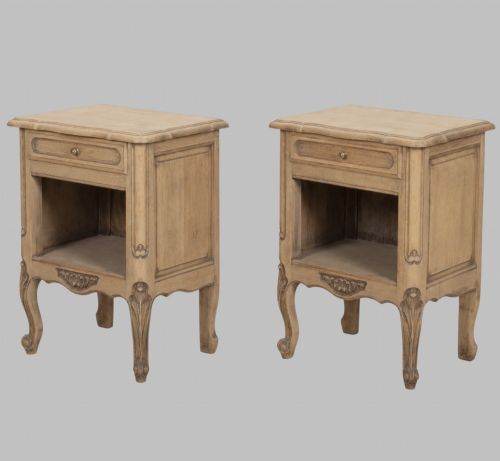


Pair French Oak Nightstands
Pair french oak nightstands bring practical bedside storage and classic European character to a bedroom.
Pair French Oak Nightstands
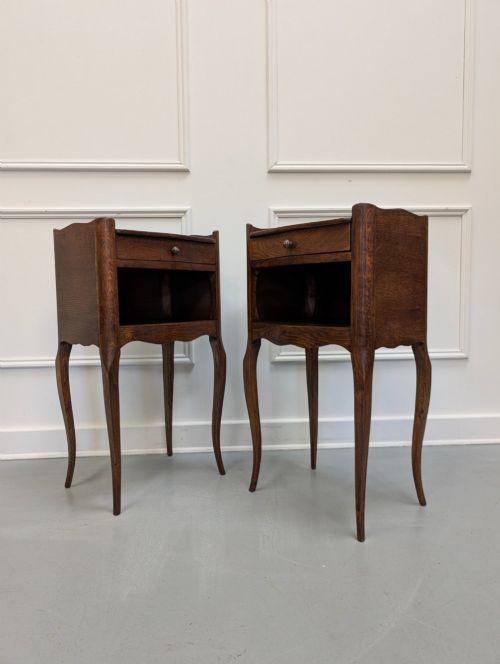
The selections available here encompass several distinct stylistic traditions, including French Provincial, Art Deco, and Louis XVI styles. You will frequently encounter pieces dating from the late nineteenth century through to the mid-twentieth century.
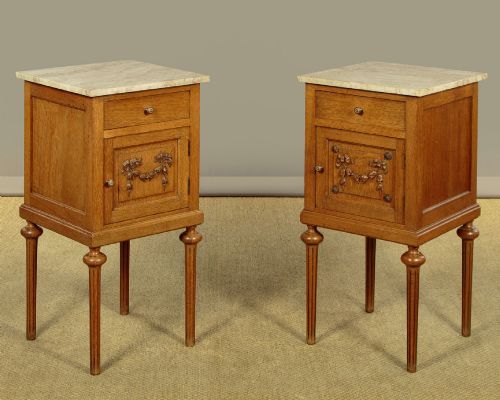
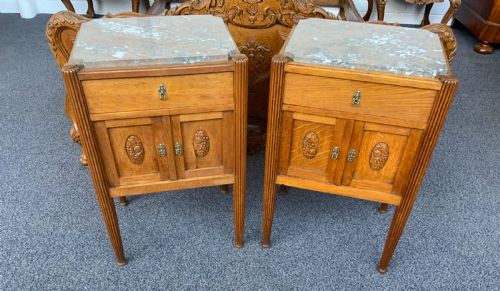
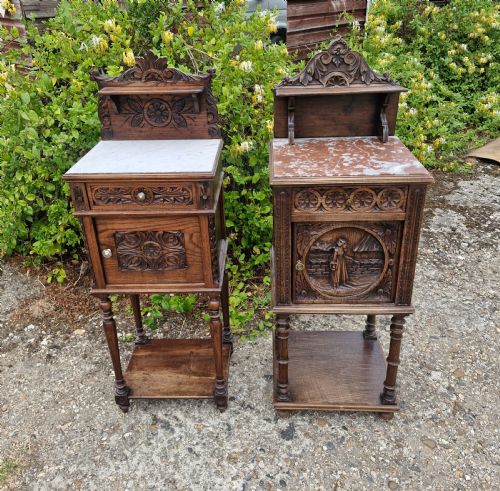
Forms range from simple carved wooden cabinets to sophisticated designs featuring contrasting marble tops and brass hardware. Many examples display regional interpretations such as French Country or Chateau aesthetics.
Materials and construction
Cabinet makers utilised solid oak as the primary timber, employing traditional joinery methods to build durable frames and doors. Selected examples feature carved ornamentation applied directly to the wooden structure.
Surface treatments vary between natural timber finishes and contemporary bleached oak appearances. Fitted marble tops and metal or brass components appear on specific stylistic variants to add functional durability and visual contrast.
Some nineteenth-century French tables were constructed just high enough to clear thick feather mattresses of the period.
Distinctions in quality
The standard of a pair french oak nightstands depends upon the crispness of the hand carving and the selection of the timber grain. Superior examples display balanced proportions and integrated structural details rather than purely decorative additions.
Additional quality is evident in the integration of materials such as heavy polished marble tops and substantial brass fittings. The precision of the joinery and the condition of the oak surfaces ultimately determine the standing of the piece.
The Pair French Oak Nightstands Glossary
- Bleached oak
- Timber treated to lighten the natural colour of the wood grain, creating a paler finish popular in twentieth-century furniture design. This treatment alters the visual weight of the piece.
- Art Deco
- A design style from the early decades of the twentieth century characterised by sleek geometric forms and streamlined silhouettes. It represents a departure from heavily carved historical revivals.
- Marble top
- A stone slab fitted to the upper surface of a cabinet to provide a durable, heat-resistant shelf. This feature often appears on mid-period French bedside tables.
- Serpentine
- A gently curved furniture front featuring a convex centre flanked by concave sides. This undulating shape requires advanced woodworking skill to execute properly.
- Louis XVI style
- A neoclassical aesthetic defined by straight tapered legs, restrained carved details, and classical symmetry. It reflects eighteenth-century French royal design preferences.
Pair French Oak Nightstands: Frequently Asked Questions
What periods do these nightstands come from?
The pieces span from the late nineteenth century through the art deco era and into the mid-twentieth century. Most examples date from the decades around nineteen hundred to nineteen thirty.
Craftsmanship styles shifted during this timeframe from ornate regional carving towards cleaner geometric lines.
Are all these nightstands made of solid oak?
The listings consistently point to oak as the primary timber used across these matched pairs. Artisans built the structural carcases and exterior doors using this sturdy hardwood.
Selected items also incorporate complementary materials like brass hardware and fitted stone tops.
How do I care for bleached oak nightstands?
Bleached oak surfaces require simple dusting with a dry cloth and protection from excessive moisture and direct sunlight. Avoid harsh chemical cleaners that might strip the treated timber finish.
Using coasters on the wooden top preserves the pale appearance against everyday wear.
What is the difference between provincial and art deco styles?
Provincial designs feature traditional regional woodwork, visible grain, and sometimes detailed carvings inspired by historical French furniture traditions. They offer a rustic or classic domestic character.
Art deco variants focus on streamlined symmetry and modern geometric forms typical of the interwar period.