


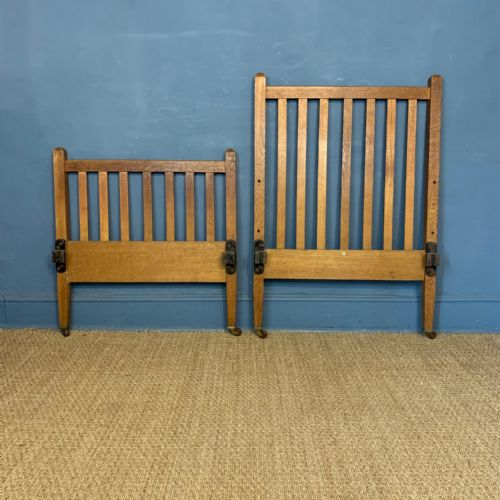


Oak Single Bed Frame
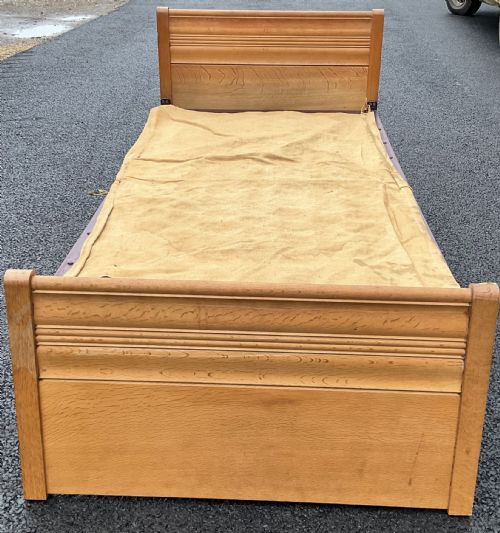
These oak single bed frame pieces span early twentieth-century workshops and rustic vernacular forms, offering sturdy construction and enduring timber grain for the bedroom.
Oak Single Bed Frame
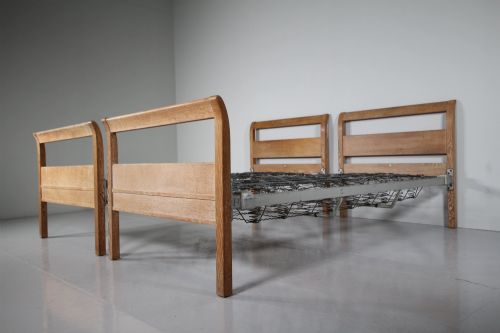
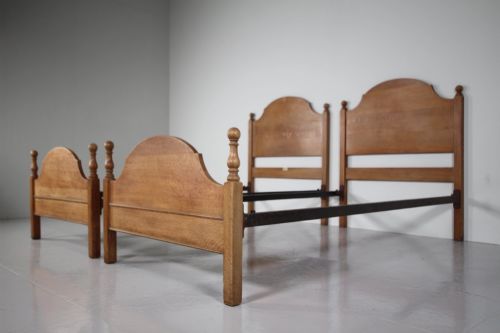
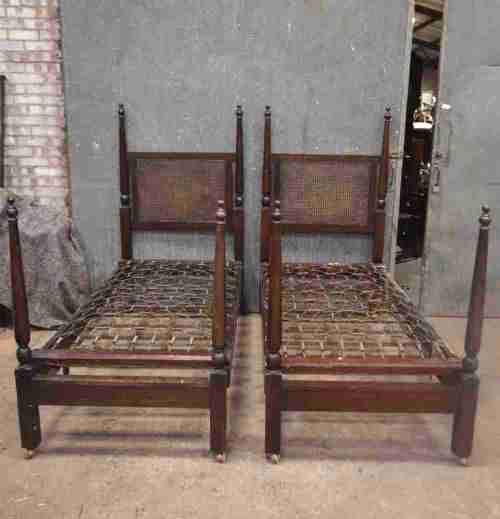
You meet various distinct formats on this page, including panelled headboards, four-poster configurations, and bergere cane insertions. Many examples appear as matched pairs, reflecting the historical production of twin bedroom furniture by prominent London retailers.
Stylistic influences range from austere Arts and Crafts ideals to Gothic Revival detailing and French Chateau aesthetics. Certain pieces bear maker labels or characteristic vernacular traits such as rustic surfaces and limed finishes.
Materials and construction
Makers utilised solid oak alongside supporting elements of iron, steel, and brass for internal brackets and structural stability. Caning and marble appear selectively as decorative inserts in headboards and associated bedside cabinetry.
Joinery methods rely on traditional panel construction, carved ornamentation, and pegged mortise and tenon joints. Timber surfaces receive wax polishing, liming treatments, or natural oil finishes to highlight the grain.
Listings feature oak single bed frames spanning the nineteenth century through the 1940s, incorporating iron, brass, and cane elements.
Evaluating craftsmanship and design
Quality rests upon the architectural integrity of the timber frame and the depth of the carving. Superior examples display carefully selected quarter-sawn oak grain and original maker documentation or paper labels.
The sophistication of the design distinguishes standard vernacular workshop pieces from commissioned retail output. Refined proportions, integrated side rails, and specialist secondary materials such as woven cane elevate the status of a bedstead.
Heals·Heal And Son·Gordon Russell
The Oak Single Bed Frame Glossary
- Bergere
- A wooden frame upholstered with woven cane panels. This technique appears frequently on headboards and footboards.
- Bedstead
- A framework of wood or metal that supports a mattress and forms the complete bed structure. It includes head and foot ends joined by side rails.
- Quarter-sawn
- Timber cut radially across the growth rings. This method produces durable boards with a distinct medullary ray figure.
- Limed oak
- Timber treated with a white pigment or lime finish to lighten the surface colour. This technique gained popularity in early twentieth-century modern design.
- Arts and Crafts
- A design movement prioritising traditional craftsmanship and simple forms. Pieces in this style often feature exposed joinery and minimal ornamentation.
Oak Single Bed Frame: Frequently Asked Questions
Are these beds standard modern single size?
Historical single beds often vary slightly from contemporary standard mattress dimensions. You should check the internal length and width measurements of each specific frame before sourcing a mattress.
Many antique bedsteads use wooden slats or replacement modern metal frames to support standard single mattresses securely.
How do I assemble an antique wooden bed?
Most frames utilise traditional metal bed bolts or slotted side-rail brackets that lock into the headboard and footboard posts. Proper assembly requires tightening these internal bolts evenly to ensure the frame remains square and stable.
Having a second person assist with holding the heavy oak panels during this process prevents strain on the original joints.
Can I use modern bedding with these frames?
Standard sheets, duvets, and blankets function effectively on these frames once a correctly sized mattress is fitted. The visual presentation depends on whether the side rails conceal the base or leave the lower structure exposed.
Pairing the bed with appropriate linen complements the historical character of the oak timber.
How do I care for antique oak furniture?
Regular dusting with a soft, dry cloth prevents the accumulation of grit on polished oak surfaces. You should apply a quality beeswax periodically to nourish the timber and maintain a soft sheen.
Positioning the bed away from direct heat sources and strong sunlight protects the wood from splitting or fading over time.