
Pair French Marquetry Tables
Pair french marquetry tables bring Continental elegance to a room, offering matched surface space with intricate inlaid timber designs.
Pair French Marquetry Tables
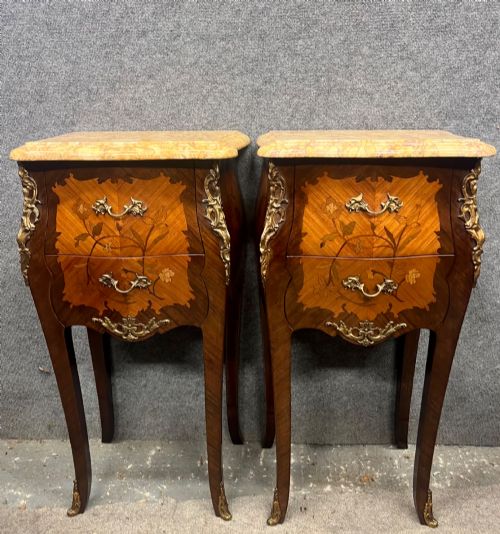
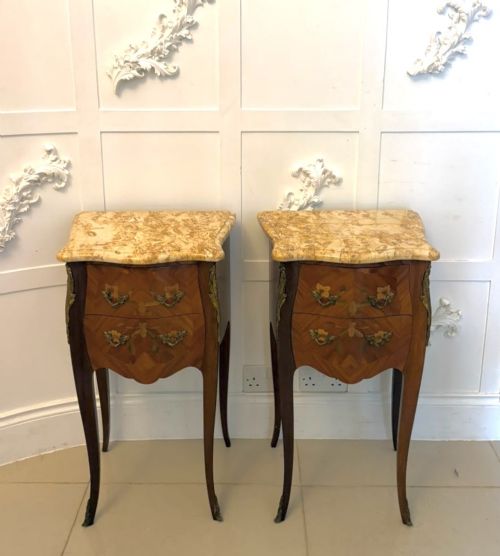
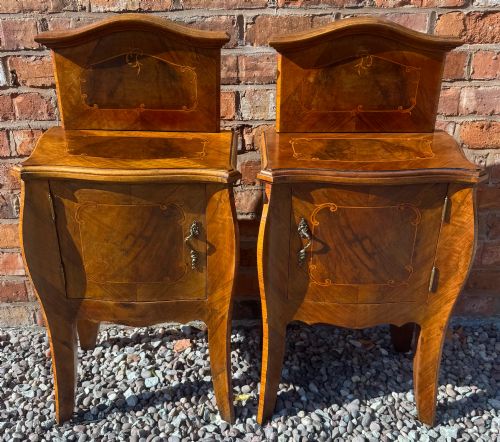
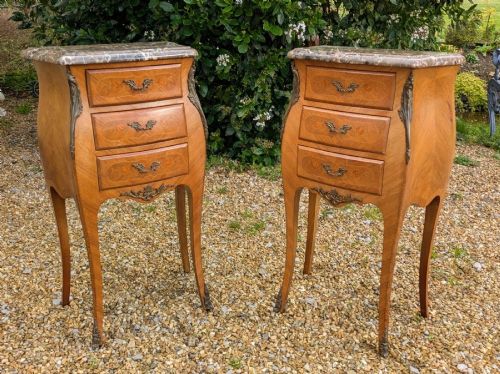
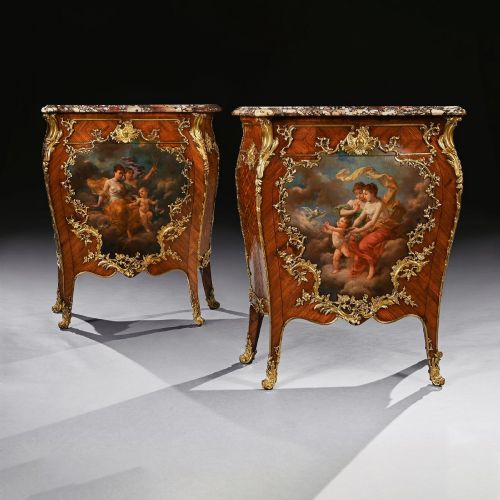
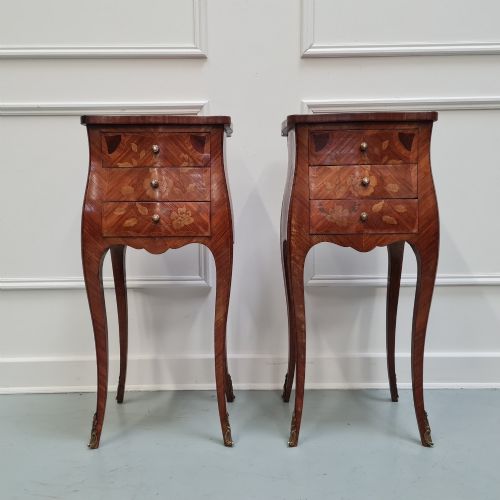
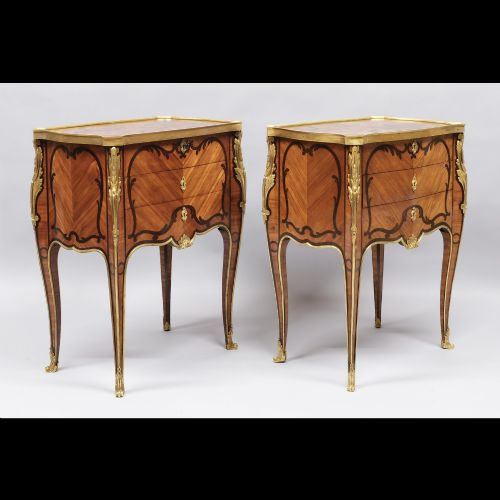
Pair french marquetry tables are matching small tables designed for domestic utility and display, most frequently encountered as bedside cabinets, nightstands, and lamp tables across this selection.
The pieces span the late nineteenth century through to the nineteen thirties, reflecting periods such as the Victorian era and the interwar decades alongside revivals of earlier French styles.
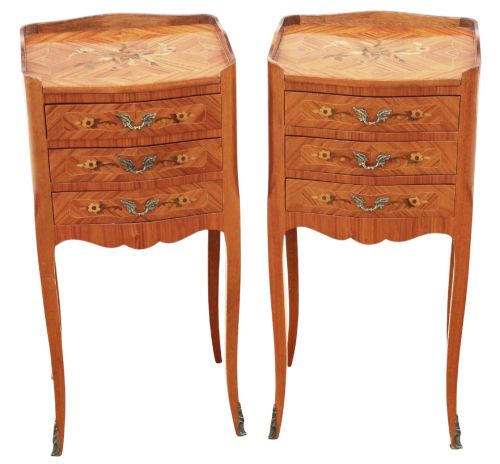
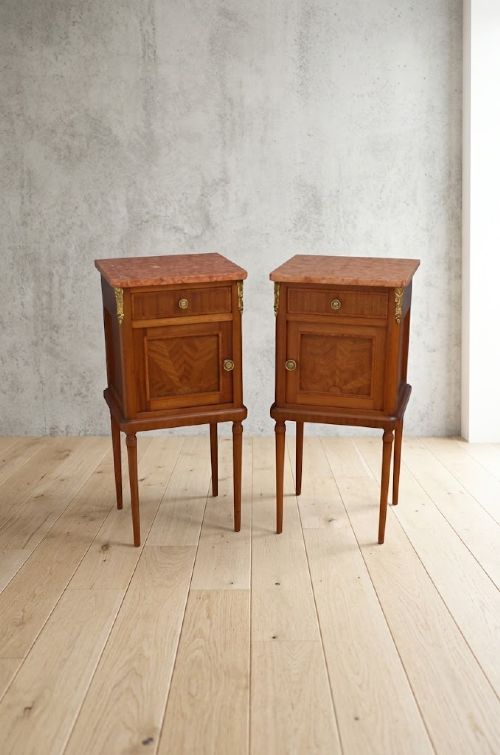
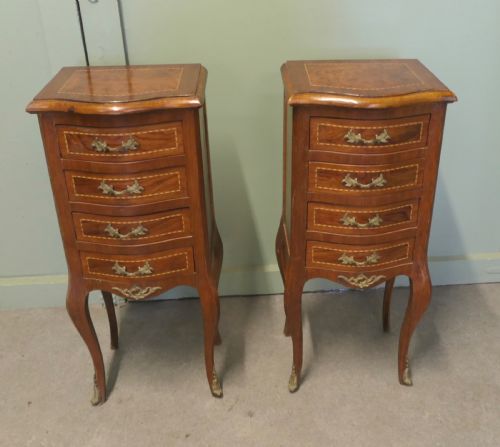
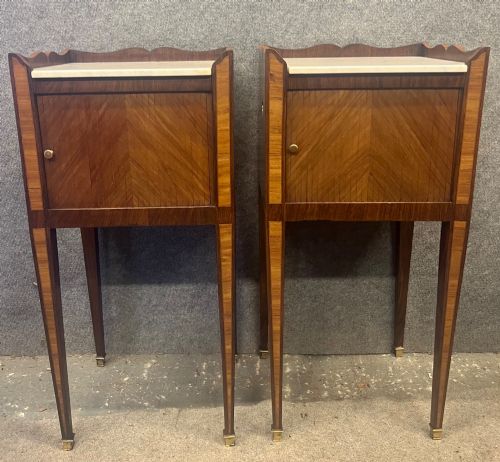
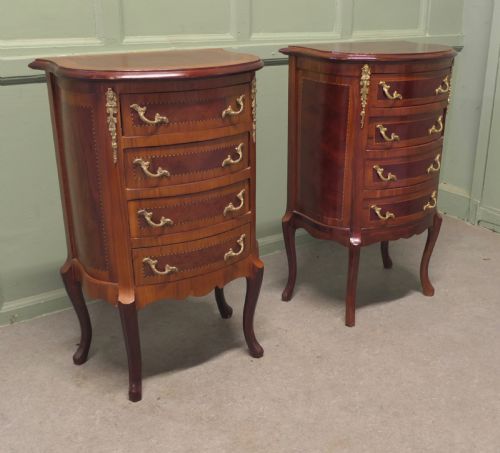
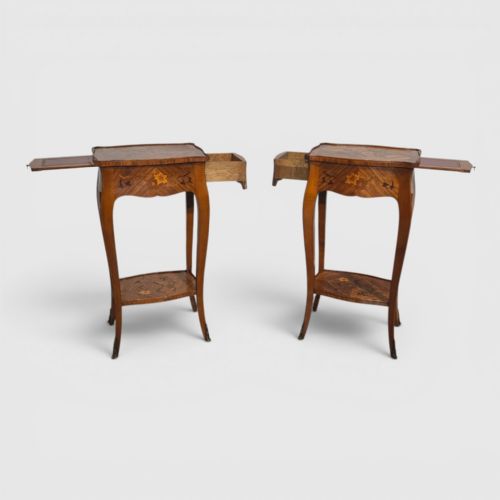
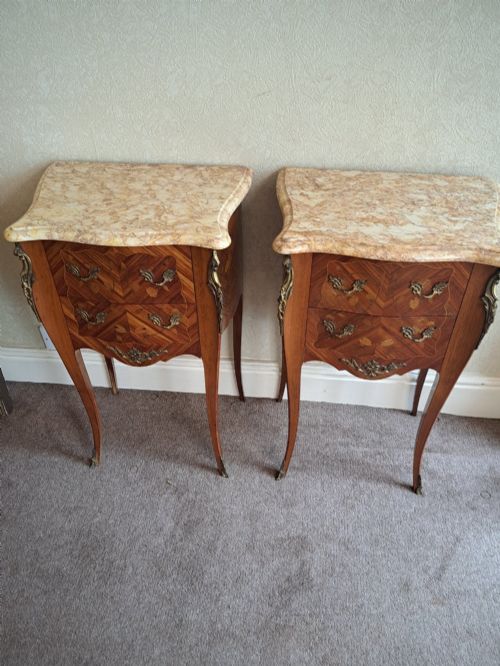
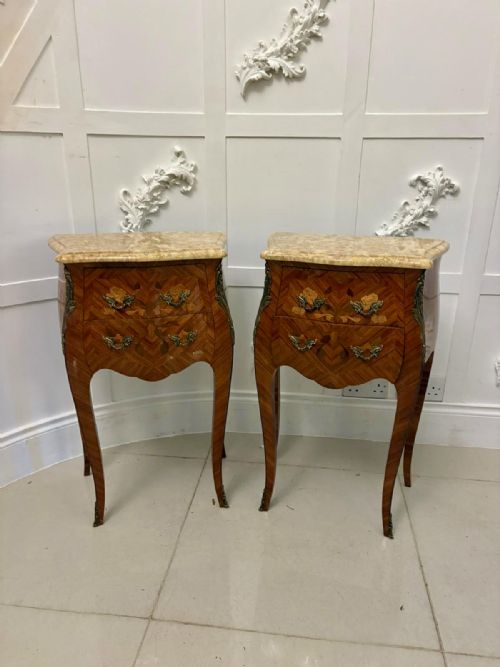
Forms include serpentine chests of drawers, oval occasional tables, and marble-topped bedside cupboards constructed to function symmetrically beside a bed or within a principal room.
How They Were Made
Craftsmen built structural carcases from timbers like walnut, mahogany, rosewood, and kingwood, often overlaying them with fine veneers of satinwood and tulipwood.
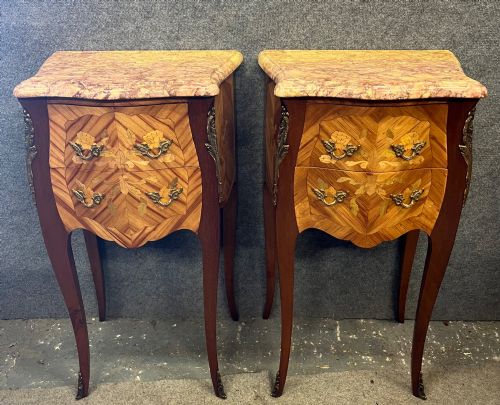
Surface decoration relies on marquetry and parquetry, where thin slices of tinted and figured wood form floral or geometric patterns embedded into the ground.
Mounts and fittings cast in ormolu, gilt bronze, and brass accent the corners, handles, and legs, while inset slabs of polished marble provide durable upper surfaces.
Several bedside chests conceal secret internal compartments once designed for midnight reading lamps or valuables.
What Varies in Quality
Quality rests upon the precision of the timber inlay and the variety of woods employed, with multi-toned floral marquetry requiring greater skill than simple geometric parquetry.
The weight, crispness of chisel work, and fire-gilding of the ormolu mounts distinguish standard production from exceptional furniture workshops.
Structural integrity reveals itself in the choice of secondary hardwoods, the neatness of drawer dovetailing, and the matching of veneer grains across both items in the pair.
Sormani
The Pair French Marquetry Tables Glossary
- Marquetry
- The art of forming decorative patterns on a wooden carcase using thin veneers of different timbers and materials. This technique allows for complex floral and pictorial scenes.
- Ormolu
- Gilt bronze mounts applied to furniture edges and feet for ornamentation and protection. The technique involves coating cast bronze with a mercury and gold amalgam.
- Parquetry
- Geometric wood inlay forming repetitive patterns such as cubes, lozenges, or chequers. It creates a structured texture distinct from curvilinear marquetry designs.
- Kingwood
- A dense, heavily figured Brazilian timber featuring dark violet and brown stripes, frequently utilised in fine French cabinetmaking. It forms a contrasting ground for lighter veneers.
- Commode
- A low chest of drawers or cabinet originating in France, appearing in matched pairs alongside beds and seating areas. They often feature serpentine fronts and marble tops.
Pair French Marquetry Tables: Frequently Asked Questions
What rooms suit pair french marquetry tables?
These pieces function ideally as bedside nightstands supporting reading lamps and small personal items. Their decorative surfaces also suit drawing rooms and reception spaces as matched lamp tables.
The dual nature of a matched set provides symmetrical balance on either side of a bed, fireplace, or sofa. Their compact proportions allow them to fit into narrower alcoves while supplying usable tabletop space.
How do I identify the wood types used?
Close visual inspection reveals the grain and natural colouration of the timbers beneath the polish. Kingwood displays deep violet streaks, walnut shows rich swirling figures, and satinwood offers a pale, golden sheen.
Contrasting veneers define the marquetry motifs, where darker hardwoods outline petals and leaves against lighter background panels. Edges and secondary areas often utilise sturdier timbers like mahogany or oak for structural stability.
What is the difference between marquetry and parquetry?
Marquetry involves cutting and assembling wood veneers to create pictorial, floral, or curvilinear designs. Artisans piece together varied timbers to form naturalistic scenes across the tabletop.
Parquetry constructs repeating geometric patterns, such as cubes, triangles, or chequers, using precise wooden tiles. Both techniques decorate the exterior surfaces, but they produce entirely distinct visual textures.
How should I care for marble-topped tables?
The marble slabs require gentle cleaning with a damp cloth and mild, non-acidic soap to preserve the polished surface. Avoid abrasive cleaners and acidic substances like citrus or vinegar that etch stone.
Wooden frames benefit from occasional dusting with a dry, soft cloth and protection from direct sunlight and extreme humidity changes. This maintenance preserves both the veneer and the underlying timber carcase.