
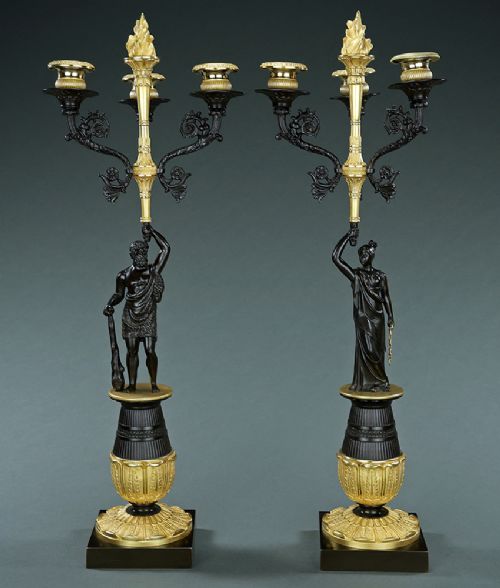
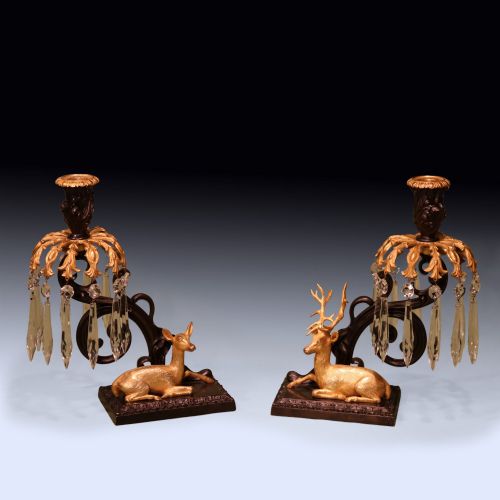
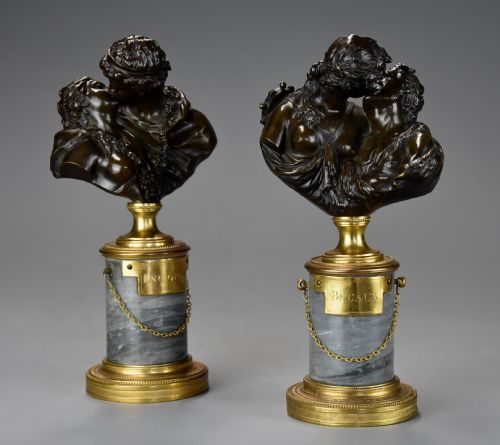
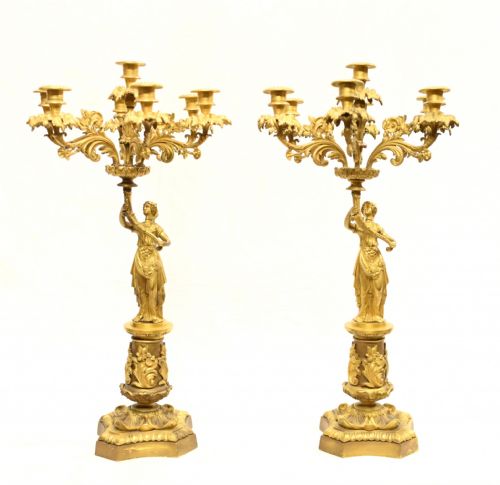
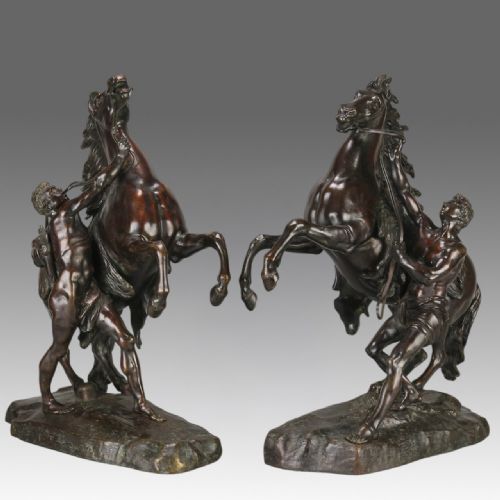
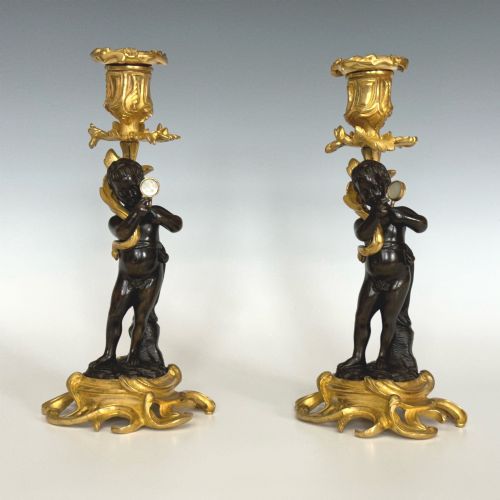


Pair French Bronze Figures
When you handle a pair french bronze figures, you hold centuries of foundry skill and classical design shaped for the mantelpiece.
Pair French Bronze Figures
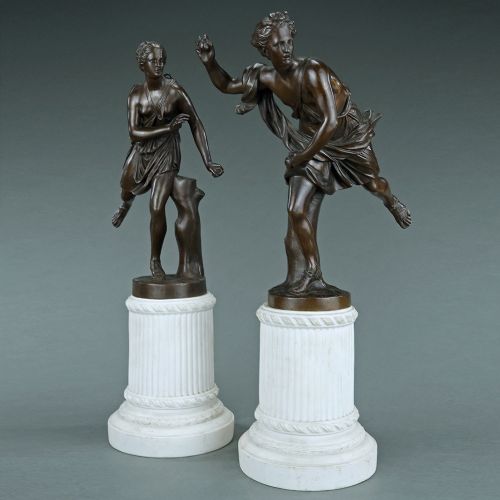
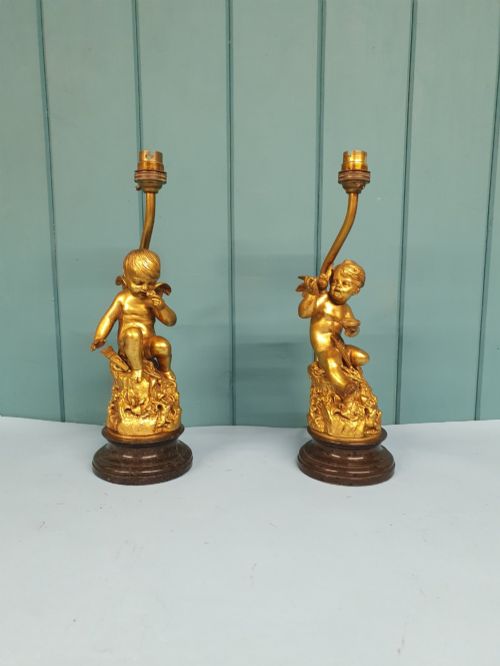
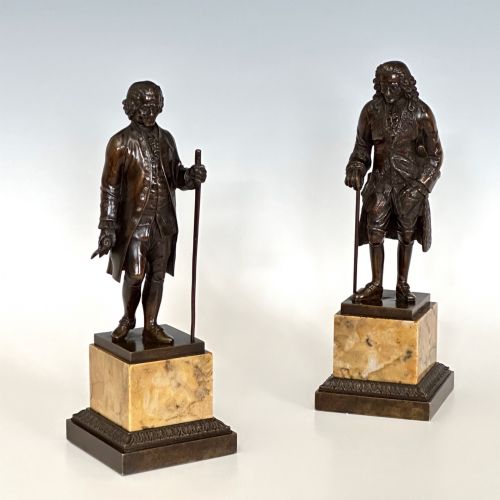
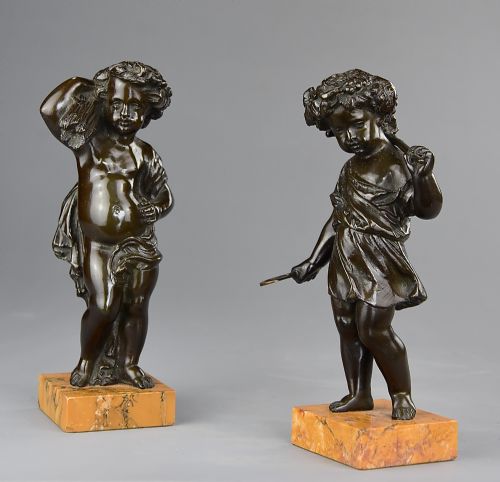
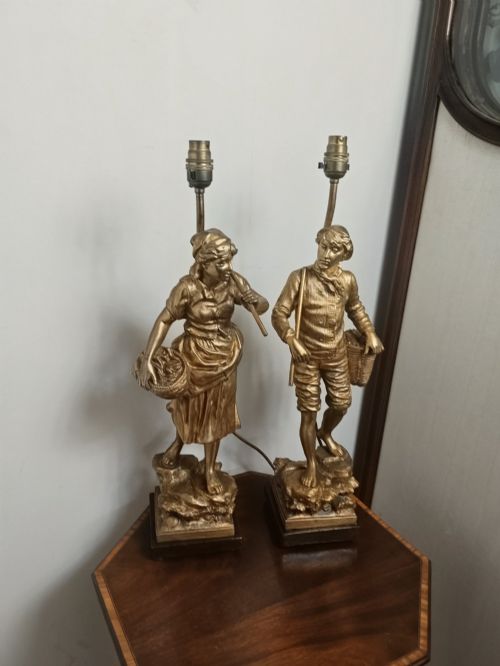
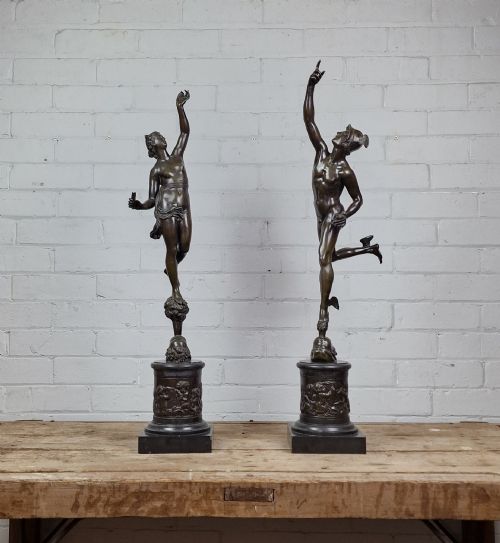
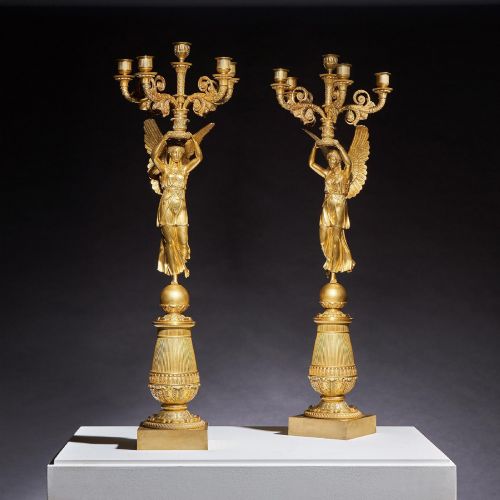
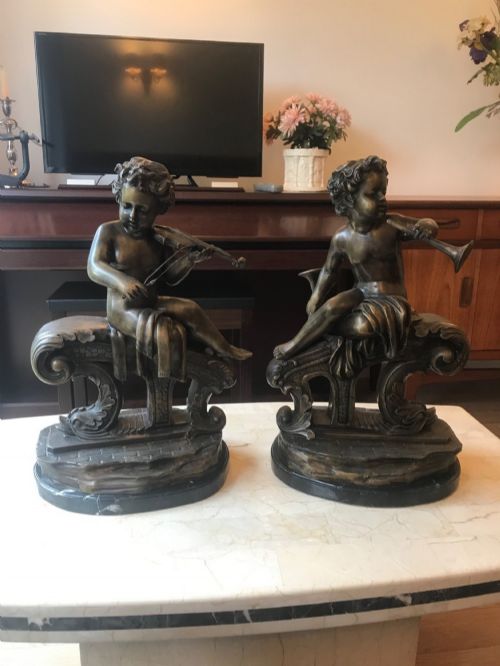
A pair french bronze figures search reveals matched symmetrical sculptures, candelabra, and figural candlesticks cast in continental foundries across the nineteenth and early twentieth centuries. Buyers encounter mythological subjects, allegorical putti, and historical characters designed to anchor a formal interior scheme.
The objects frequently rest upon fitted marble plinths or incorporate ormolu mounts, moving fluidly between standalone sculptural pairs and functional candleholders. Nineteenth-century interpretations of classical figures like Mercury and Fortuna dominate the available selection.
Makers drew heavily on seventeenth- and eighteenth-century sculptural traditions, reissuing reductions of monumental works alongside original romantic and academic compositions. These matched pairs reflect a historical domestic desire for balanced, decorative display.
Foundry methods and materials
Foundries utilised the lost-wax casting method or sand casting to achieve intricate detail in bronze, patinated bronze, and gilt bronze, often finishing surfaces by hand with chisels and files.
Ormolu application involved fire-gilding techniques using mercury and gold amalgams to yield a durable, brilliant golden layer over bronze substrates.
Bases frequently combined contrasting natural media, pairing dark metals with white Carrara or black marble plinths and onyx supports.
Listings feature nineteen-century French bronze and ormolu figures mounted on marble and onyx bases.
Assessing craftsmanship and execution
The weight, stability, and density of the cast metal distinguish high-grade atelier pieces from lighter decorative alternatives or later spelter substitutions.
Harmonious proportions between the two figures and the integrity of the original patination or gilding dictate the overall fidelity of the surviving pair.
Barbedienne·E Rousseau·Pierre Philippe Thomire·Jean Antoine Houdon·Emile-Coriolan Guillemin·Alfred Grevin·Charles Anfrie·P. J. Mene·Auuste Moreau
The Pair French Bronze Figures Glossary
- Ormolu
- Gilt bronze produced by applying a mercury-gold amalgam to a bronze object and heating it until the mercury vaporised. This historic technique produced a rich, deep lustre distinct from modern electroplating.
- Spelter
- A zinc alloy commonly utilised as an economical alternative to bronze for figural sculptures and candlesticks. It is significantly lighter and softer than bronze.
- Patina
- The surface coloration and sheen developed through chemical treatment or natural oxidation over time. A stable patina preserves the underlying metal.
- Lost-wax casting
- A historic process where a master model is encased in wax, surrounded by a refractory mould, and melted out to receive molten bronze. It permits exceptional undercut detail.
- Candelabra
- Branched lighting fixtures designed to hold multiple candles, frequently paired with figural bronze stems. They combine illumination with decorative sculpture.
Pair French Bronze Figures: Frequently Asked Questions
How are bronze and spelter told apart?
Bronze is heavy, cold to the touch, and rings with a clear tone when tapped, whereas spelter is softer and lighter with a duller resonance under inspection.
Spelter items often display grey metal showing through worn paint or bronze-effect finishes, while true bronze retains a uniform metallic composition beneath its patina.
Were these figures meant to hold candles?
Many pairs were produced specifically as garnitures, combining sculptural figures with integrated drip pans and nozzle sockets for lighting.
Others were created purely as decorative statuary for tables and mantelpieces without any provision for illumination.
How do you clean antique bronze safely?
Dusting with a dry, soft bristle brush is sufficient for routine maintenance because moisture and chemical agents can strip the historic patina.
Harsh commercial polishes must be avoided entirely, as they remove the aged surface layer that collectors prize.
Why do these figures come in pairs?
Interior design conventions of the nineteenth century demanded symmetry for mantelpieces, sideboards, and architectural pier tables.
Matched figures balanced compositions visually by framing mirrors, clocks, or central architectural elements in a room.