
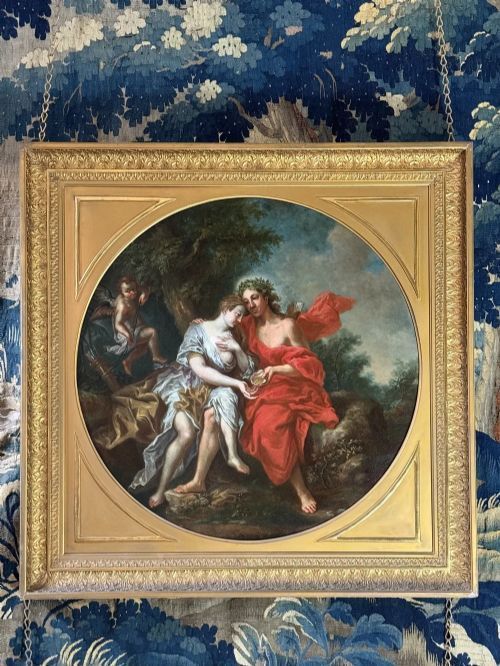
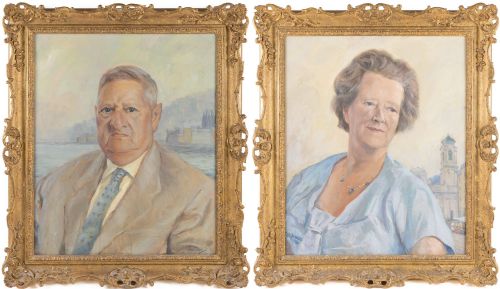
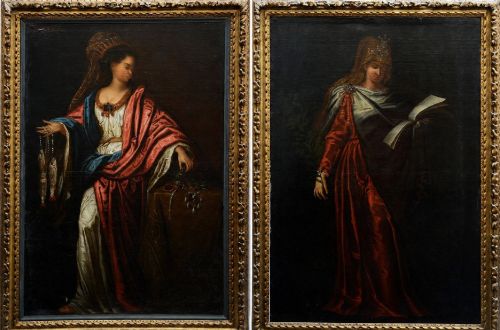
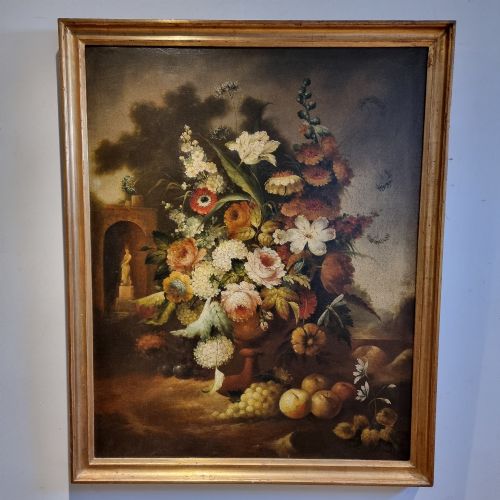
Pair Framed Canvas Paintings
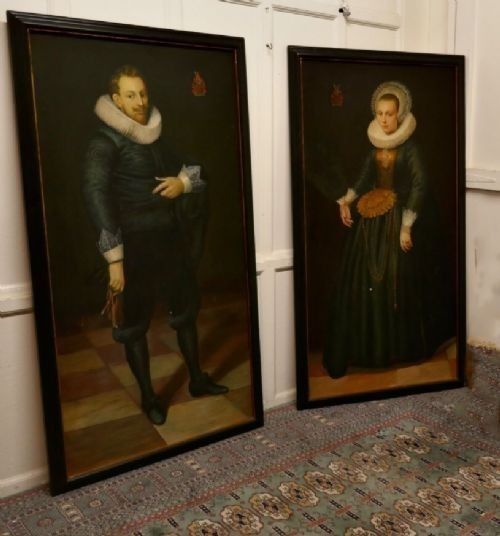
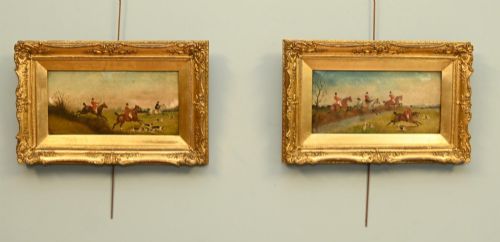
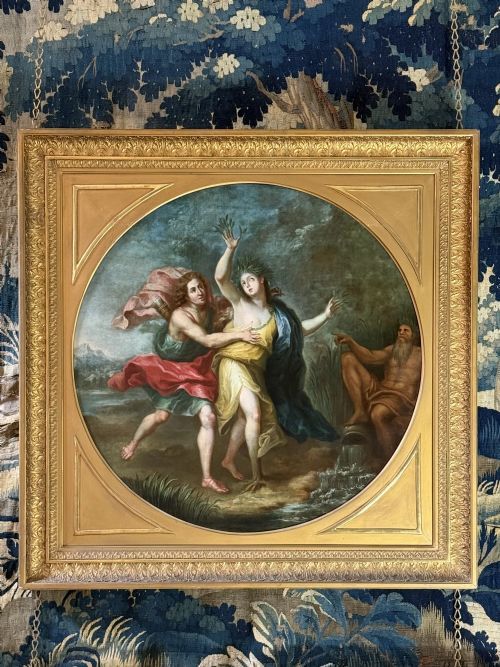
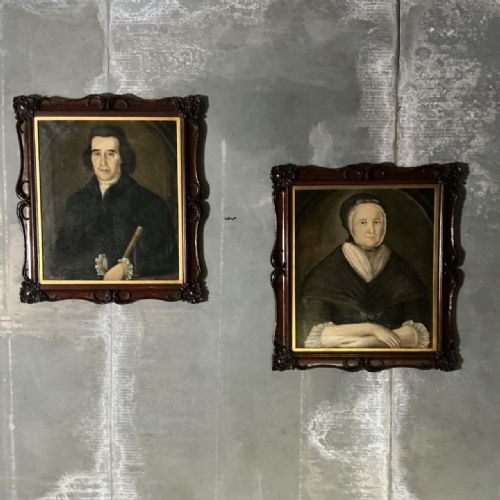
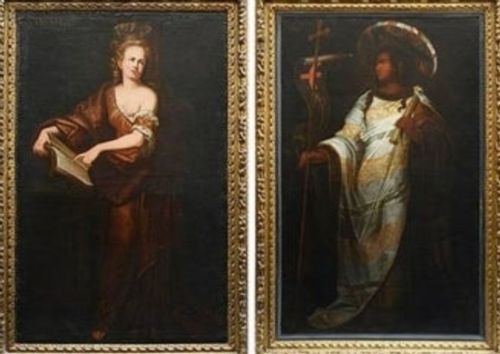
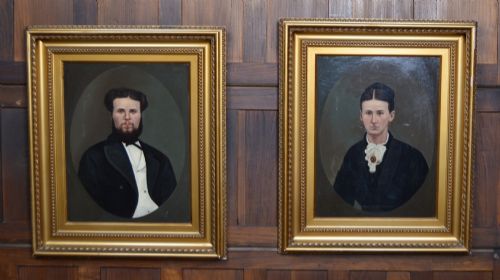
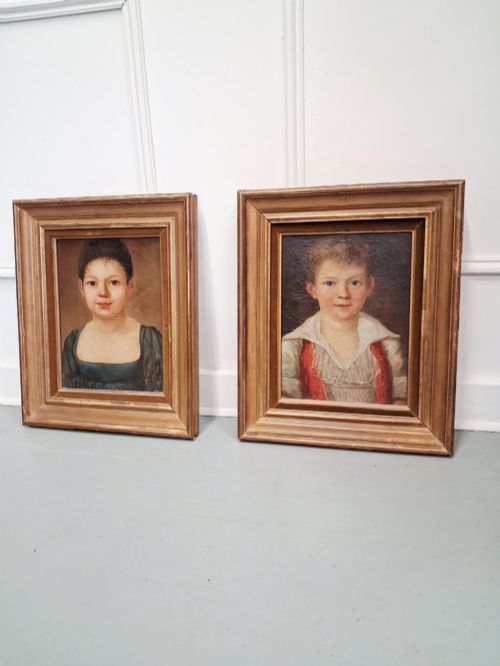
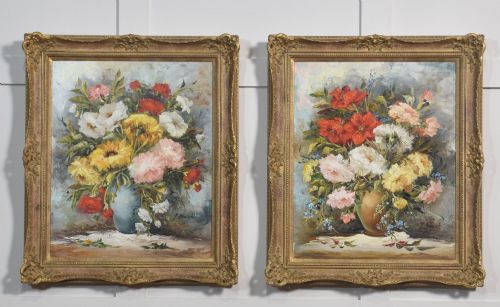
These pair framed canvas paintings offer balanced symmetry and depth, bringing historic narratives, landscapes, and portraits into residential interiors.
Pair Framed Canvas Paintings
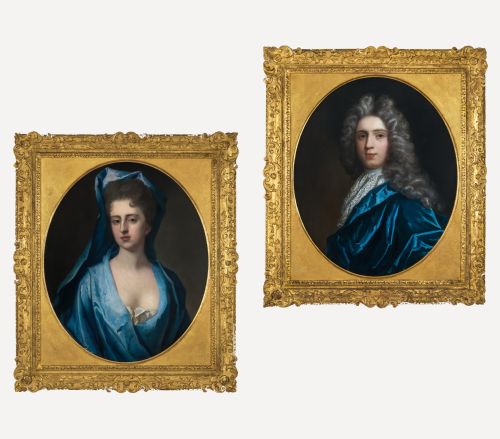
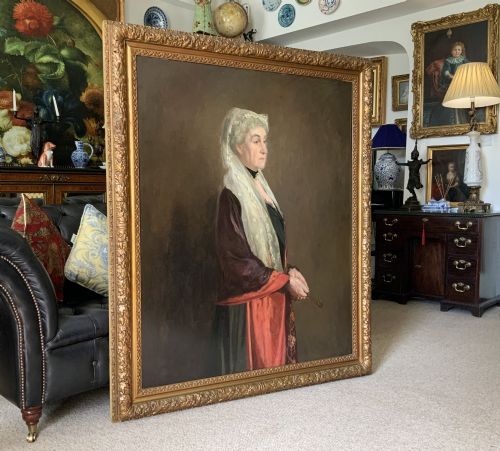
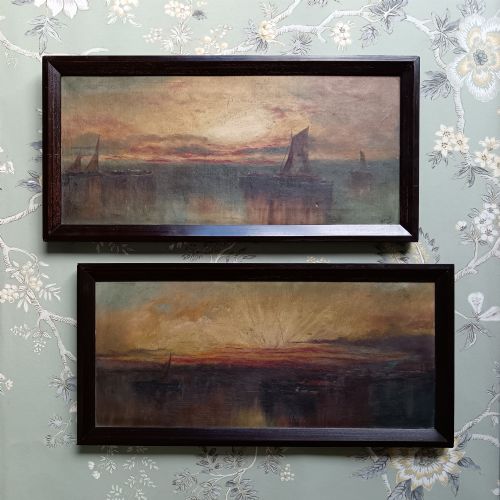
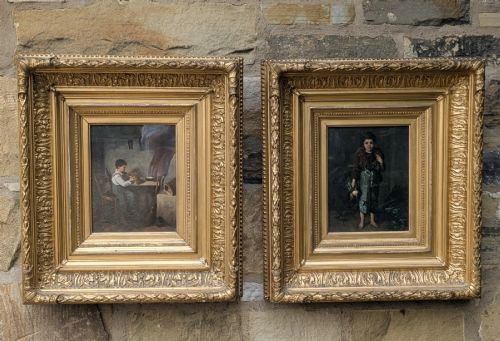
When searching for pair framed canvas paintings, buyers encounter matched sets designed to hang together, usually sharing a single subject, artist, or period aesthetic. The selection spans centuries of portraiture, maritime scenes, still lifes, and pastoral landscapes created on stretched fabric.
Nineteenth-century works dominate the selection, often featuring giltwood surrounds and oil paint mediums. Buyers also find seventeenth- and eighteenth-century classical subjects alongside Edwardian and later interpretations.
The format serves decorative symmetry, traditionally intended for placement flanking a fireplace, doorway, or central furniture piece. Each matched canvas relies on complementary palettes and balanced compositions to unify wall spaces.
Materials and Construction
The foundational support relies on woven canvas stretched across wooden stretcher frames, receiving layers of oil paint applied with brushes or palette knives. Artists built up pigment to create texture, depth, and luminosity across the pictorial surface.
Surrounding frames utilise carved wood, gesso, and applied gilding, often exhibiting swept or moulded profiles characteristic of their period of origin. These decorative surrounds protect the edges of the canvas while completing the visual weight of the artwork.
Several pairs depict farmyard chickens, cherubs, and Highland cattle, proving that historic artists enjoyed painting animals just as much as aristocracy.
Judging Quality
Quality rests upon the skill of the brushwork, anatomical or spatial accuracy, and the preservation of the original pigment surface. Superior examples display confident handling of light, shadow, and detail without heavy modern overpainting.
The integrity of the accompanying frame matters equally, where period-appropriate giltwood or original mouldings enhance the historical value. Matched pairs succeed when both canvases maintain equal condition, palette harmony, and consistent artistic output.
Charles-Antoine Coypel·Michael Dahl·Thomas Murray·Abraham Hulk I·Robert Cleminson·Johann Friedrich Voltz·Gustave De Bréanski·Clarence Henry Roe
The Pair Framed Canvas Paintings Glossary
- Canvas
- A heavy woven fabric, typically linen or cotton, used as a surface for painting after being stretched and primed.
- Giltwood
- Wood carved and coated with a thin layer of gold leaf or gold paint, frequently seen on traditional picture frames.
- Gesso
- A plaster-like mixture applied to wood or canvas to create a smooth, absorbent surface for painting or gilding.
- Provenance
- The chronological history of the ownership of a work of art, used as a guide to authenticity.
- Stretcher
- The wooden frame upon which a canvas is pulled tight and secured prior to painting.
Pair Framed Canvas Paintings: Frequently Asked Questions
How should I hang a matched pair?
Matched paintings look best arranged at eye level with consistent spacing between them, often centred over a sideboard or flanking a fireplace. Keeping them on the same plane maintains the visual balance they were created to achieve.
Ensure the hanging hardware secures the weight of both the canvas and the substantial giltwood frames safely to the wall studs.
What lighting suits oil paintings best?
Warm, indirect lighting highlights the rich pigments and prevents the reflective glare often caused by direct sunlight on varnished surfaces. Wall-mounted picture lights positioned above the frame provide even distribution.
Avoid high-heat halogen bulbs, as continuous exposure can dry out aged canvas and delicate gesso frames over time.
How do I clean antique canvas surfaces?
Surface dust should be removed gently using a very soft, dry artist brush without applying pressure to the paint layer. Moisture and domestic cleaning agents must be avoided entirely to prevent chemical damage.
Professional conservators should handle deeper cleaning, varnishing removal, or structural repairs to the canvas and stretcher.
Are original frames important?
Period frames contribute significantly to the character and historical integrity of antique artwork. Matched sets retain higher aesthetic value when housed in their original or period-appropriate gilt surrounds.
Minor losses to gesso ornament are common in older frames and typically reflect their age rather than diminishing their visual appeal.