






Pair Cut Glass Lamps
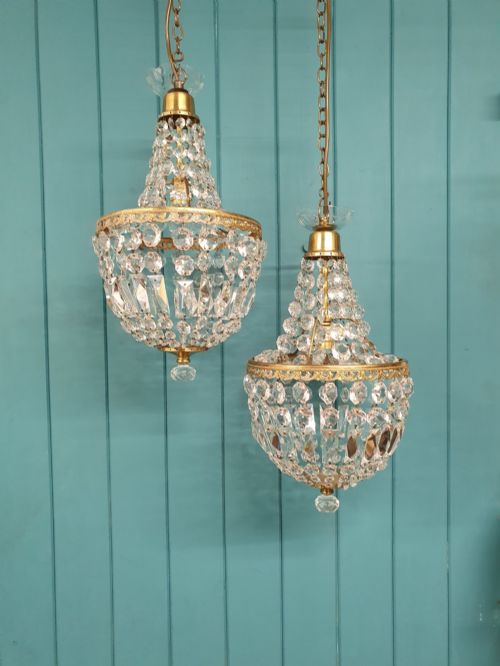
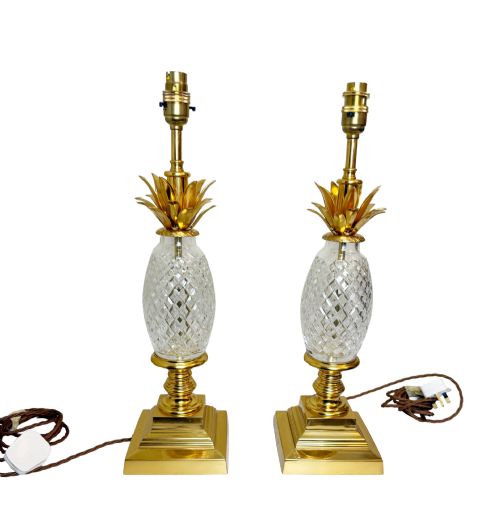
These pair cut glass lamps bring brilliant refraction and formal symmetry to a room, combining heavy glass reservoirs with polished metal mounts.
Pair Cut Glass Lamps
When you search for pair cut glass lamps, you encounter matching sets of lighting fixtures designed for tables, mantels, and walls. These items combine cut glass or crystal components with supportive metal frames, emerging across the Victorian, Edwardian, and early twentieth-century periods.
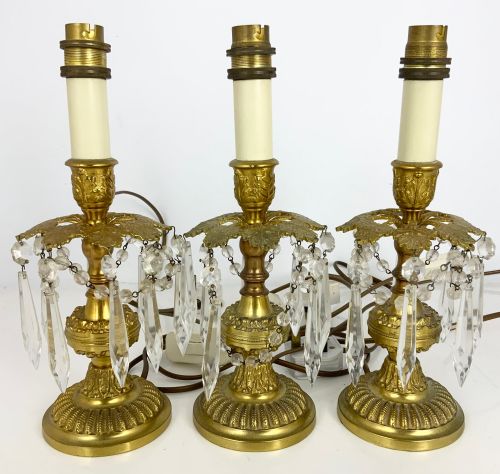
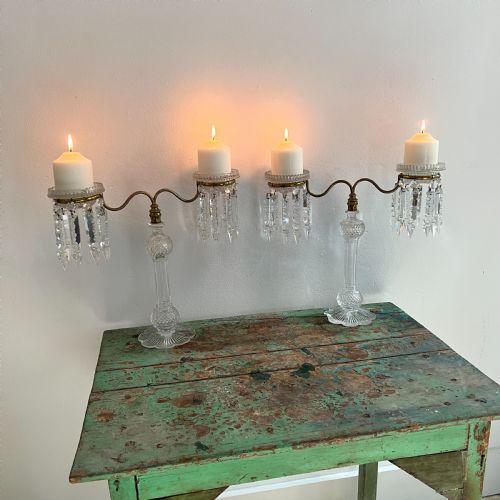
The selections available here lean heavily toward table lamps, wall lights, and lustres shaped by styles ranging from Victorian and Edwardian to Art Nouveau, French Empire, and Art Deco. Buyers frequently meet pieces featuring heavy columns, prismatic drops, or moulded glass bodies paired with brass, ormolu, and gilt bronze mounts.
How they were made
Maker workshops utilised lead crystal and clear glass, shaping them through heavy wheel-cutting and facet-polishing to maximise light reflection. These glass bodies were then combined with metal elements such as cast brass, gilt bronze, ormolu, and silver plate to provide structural support and ornamental bases.
Assembly involved mechanical fastening, threaded rods, and metal collars to secure the glass components to metallic columns or bases. Many pieces incorporated hanging crystal drops, lustres, and prisms wired or pinned onto the metal armature.
Period styles range from Victorian Corinthian columns to Art Deco glass table lamps.
What varies in quality
The distinction between standard examples and exceptional pieces rests upon the depth and crispness of the glass cutting. Sharp, clean facets catch the light cleanly, whereas softer, shallower cutting diffuses illumination rather than concentrating it.
Material selection in the mountings creates further variation, with heavy cast ormolu, gilt bronze, and chased brass marking higher-tier items. Simpler stamped or plated base metals indicate a more utilitarian grade of manufacture.
F. & C. Osler·Clarke
The Pair Cut Glass Lamps Glossary
- Cut glass
- Glass decorated by grinding facets or patterns onto the surface using a rotating wheel. This technique creates sharp geometric edges that refract light intensely.
- Ormolu
- A metallic technique involving the application of finely ground high-carat gold to a bronze or brass base. It provides a rich, durable golden finish without solid gold construction.
- Lustre
- A decorative glass ornament or candlestick hung with crystal pendants. These drops catch and multiply the ambient light in a room.
- Cricklite
- A patented glass candlestick and shade system often mounted in brass. It was designed to burn specific night lights safely behind protective glass domes.
Pair Cut Glass Lamps: Frequently Asked Questions
How do I date a pair of cut glass lamps?
Dating relies upon observing the style of the metal mounts, the wiring holes, and the assembly techniques used in the base. Victorian and Edwardian examples often feature heavier brass or column designs, while later twentieth-century pieces adopt cleaner Art Deco lines.
Examining the wear on the base and the type of cut glass ornamentation helps place the piece within the nineteenth or twentieth century. Makers' marks or patent names stamped into the metal provide definitive chronological anchors.
Were these lamps originally electric?
Many older pieces began as oil lamps, gas fixtures, or candle holders before being converted to electricity later in their lifespan. Conversion often involved drilling through the metal or glass or running cords through existing central channels.
Finding evidence of an older burner assembly, such as a threaded collar or wick mechanism, indicates a conversion from oil. Professional rewiring ensures these older fittings meet modern safety standards while retaining their period mounts.
How should I clean cut glass lamps?
Cleaning requires removing any detachable crystal drops and wiping the glass surfaces with a soft cloth dampened in lukewarm water. Strong chemical solvents can damage the finish of the surrounding brass, ormolu, or silver-plated mounts.
Metal components should be dusted gently rather than polished aggressively to preserve any original gilding or patination. Care must be taken around vintage wiring and vintage sockets to prevent moisture ingress during maintenance.